
Blog

Who is supporting our friend Denise in her sponsored run?
From September 10th to 16th, an international team will complete a special sponsored run in Ladakh. Would you like to support this project and the work of Himalayan Life?
Empathy
Nepali migrant workers in Ladakh live under challenging conditions. They are constantly exposed to the thin air and harsh climate of the high Himalayas. To raise awareness of the living conditions of the people in the Himalayas and to raise funds for school and vocational training for young Nepalis, Daniel Bürgi, CEO of Himalayan Life , and a group of five other people from Switzerland, Canada, the USA and Nepal will cycle around 600 km through the high Himalayas from September 10th to 16th. They will be cycling over the two highest drivable passes in the world - the Chang La Pass at 5,391 m above sea level and the Kardung La Pass at 5,602 m above sea level. "With this event, we can at least get a small insight into the reality of the Nepali migrant workers and show them that we are connected to them. That's why we are making the effort to hold this special sponsored run on site," says Daniel Bürgi.

Denise is the only woman to take on the challenge of cycling 600 km in the thin Himalayan air
Support the only woman on the team
Our friend Denise Wiltse from Alaska is the only woman taking on the challenge of cycling the 600 km in the thin air. This is very brave, and we would be thrilled if you would support Denise with a donation. Every franc/euro donated goes 100% to the people of Nepal. For Denise and all the other bikers (and also for the film/photo crew...), it's a matter of honor that everyone covers their own expenses.
You can give your support via the Fundrazr platform or directly into the Himalayan Life bank account deposit, preferably with the note “ALTITUDE Denise”.
A special event on November 17
Together with Dani Rimann, I will document ALTITUDE and produce a film. Everyone who supports Denise with CHF 500 or more will be invited to the exclusive preview of our film about ALTITUDE. The event will take place on Thursday evening, November 17, in Thayngen. CEO Daniel Bürgi will be there in person and will talk about Himalayan Life's current projects. Don't miss this opportunity. Let us know if you have supported Denise with CHF 500 or more so we can add you to the guest list and keep you updated.
More information
You can find more information about ALTITUDE on the Himalayan Life homepage .

Airport reloaded
In 2017, I started an exciting experiment: What does it feel like to photograph nonstop at one location for 24 hours with just one camera and a fixed focal length? The result was a photo series at Zurich Airport. Now I've reworked the images – with the realization that the image selection can definitely change over time...
In January 2017, I planned and implemented an interesting experiment. The starting point was the question of what it would feel like to photograph for 24 hours straight at an exciting location, using only one camera and a fixed focal length. Thanks to friendly relationships, I was able to realize this project at Zurich Airport. My tool of choice was the Leica SL and the SL Summicron 1.4/50 mm, which remains one of my favorite lenses to this day. The Leica SL, with its 24 megapixels, has since been replaced by the SL2 with 47 megapixels. But the reduce-to-the-max operating concept, the outstanding image quality, and the robustness of the camera have remained. The temperature dropped to -10° Celsius overnight. The Leica SL performed flawlessly even under these challenging conditions.
It was also interesting for me to revisit the images I took back then. With some distance, you judge things differently. I removed some photos that made it to my favorites back then. Instead, I added a few new ones. So, it's definitely worth revisiting the photos from a project after a few months or even years. I also made some small adjustments to the brightness and contrast. You can see the results of this new image selection below.
And below the photo gallery, I've attached the making-of film, which my then assistant Lea made. A huge thank you again to her, as well as to Rémy Brunner, Rolf Wallner, Masis Sarkisian, and other people at Zurich Airport. Without them, this report wouldn't have been possible.
Image gallery


Making-of Film


A little black and white experiment
Fascinating black and white images through virtual filter technology
Lake Partnun above St. Antönien is a worthwhile hiking destination. At least as fascinating as the mountain lake itself are the limestone peaks that surround it. On a clear day, the rugged, bright peaks rise into the blue sky. The combination of the bright rock faces with the deep blue sky inspired me to try a little black-and-white experiment:
Anyone who, like me, used black-and-white film to photograph knows that strong color filters can significantly influence the brightness and contrast distribution in a black-and-white photo. The rule is relatively simple: Colors of the same or similar hue as the attached color filter are displayed brighter, while contrasting colors appear darker. For example, if you used an orange filter, all orange tones would be displayed brighter, and all colors in the opposite spectrum—which would be the blue tones—would be displayed darker.
In various image editing programs, such as Adobe Lightroom, you can also create this effect virtually. Here's an example:
Initial image
This is what the original color image looks like. It's practically unedited; I've only increased the sharpness a bit and slightly adjusted the contrast.
First step: Conversion to a black and white image
With a single click, I convert the color motif into a monochrome image in Adobe Lightroom. All virtual filters are still set to zero:
Second step: Applying the virtual black and white filter
Now I apply the virtual black and white filter: I can make various colors in the image brighter or darker. In this case, I dragged the blue slider to the left to darken all shades of blue (which in this case is essentially just the sky).
This works wonderfully because even though Lightroom displays the image in black and white, the original motif with all its color values is stored in the software.
Purists may frown upon this approach. But as mentioned above, this technique has already been used in analog photography. When I see Ansel Adams' dark skies, I'm pretty sure he used black and white filters for several of his magnificent shots.
Small photo gallery with pictures of the peaks around Lake Partnun


All images realized by Peter and Ursula Schäublin.

Haymaking on the Cyprian
On the road with the mountain farmers: a photo report about haymaking in the mountains
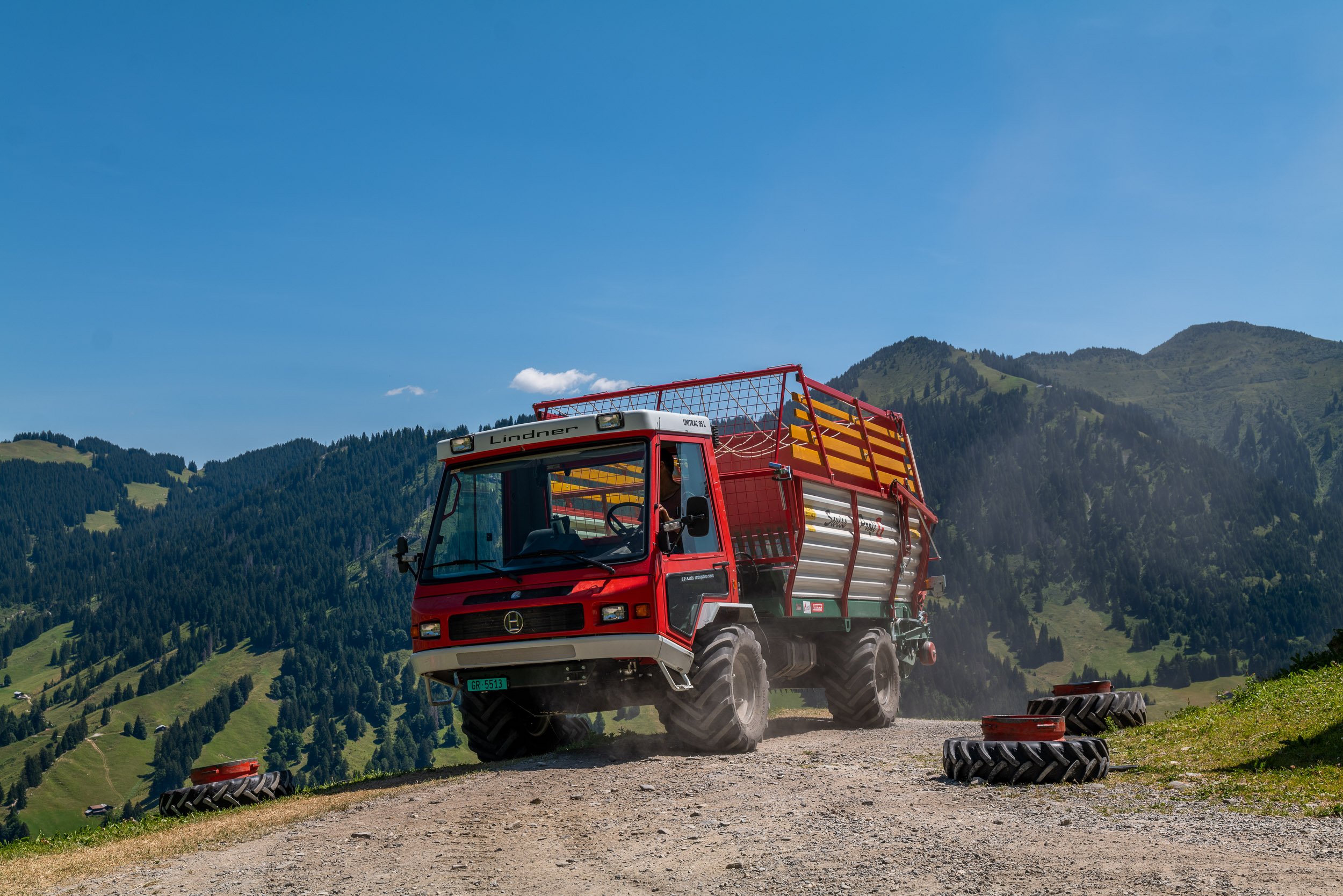
Even on vacation, I always take a camera with me ;-). And when the mountain farmers invite me to photograph their hay harvest, I'm there. I set off with Andi, Ursula, and their helpers to the highest of their fields on the Cyprian. Andi let me ride in his hay loader, which was a bit of a test of courage given the inclines and gradients ;-). It was fascinating to see how quickly and efficiently the team gathered the grass, which had already been cut the day before, into strips (we Swiss say "Mädli"), and then Andi transported it down to the valley in the hay loader. An interesting detail: in places where the hay cannot be stacked into strips mechanically, the team uses not only rakes but also leaf blowers. The mountain farmers are not only extremely hard-working, but also clever people. From 14-year-olds to 75-year-olds, everyone is involved and works together across generations. And for lunch, there's Ursi's wonderful Hörnlisalat with a panoramic view that is second to none.
As soon as the cows return from the alpine pastures to the barn, they are fed hay. I will also document this step later.
I shot this photo reportage with the Leica SL2 and the Leica Q2. Especially when you need to work quickly, these two cameras, with their sophisticated operating concept and excellent SL zoom lenses, are my first choice. I shot the drone images with the DJI Mavic Pro3.



POWER OF THE ELEMENTS: new pictures from Frankfurt
A symbiosis of the highest order: The office space in the Omnitower Frankfurt with our pictures from THE POWER OF THE ELEMENTS series
On February 7, Ursula and I drove to Frankfurt in a friend's VW bus. In the cargo area were 31 paintings from our fine art project THE POWER OF THE ELEMENTS . We've already reported on the planning phase and the delivery of the paintings in our blog . Meanwhile, the office space is fully furnished, and I had the great honor of creating paintings of the paintings, so to speak...
Upon entering the space in the Omniturm, you're immediately struck by the harmonious design concept of architect Sabina Blaeser and interior designer Nazanin Malek. It's a kind of hybrid between a workplace and a home. Cozy lounges alternate with offices.
The sensitivity with which Nazanin Malek selected her images is also fascinating. Everything seems harmonious. For me, there are five themes I'd like to highlight:
Picture in the team area
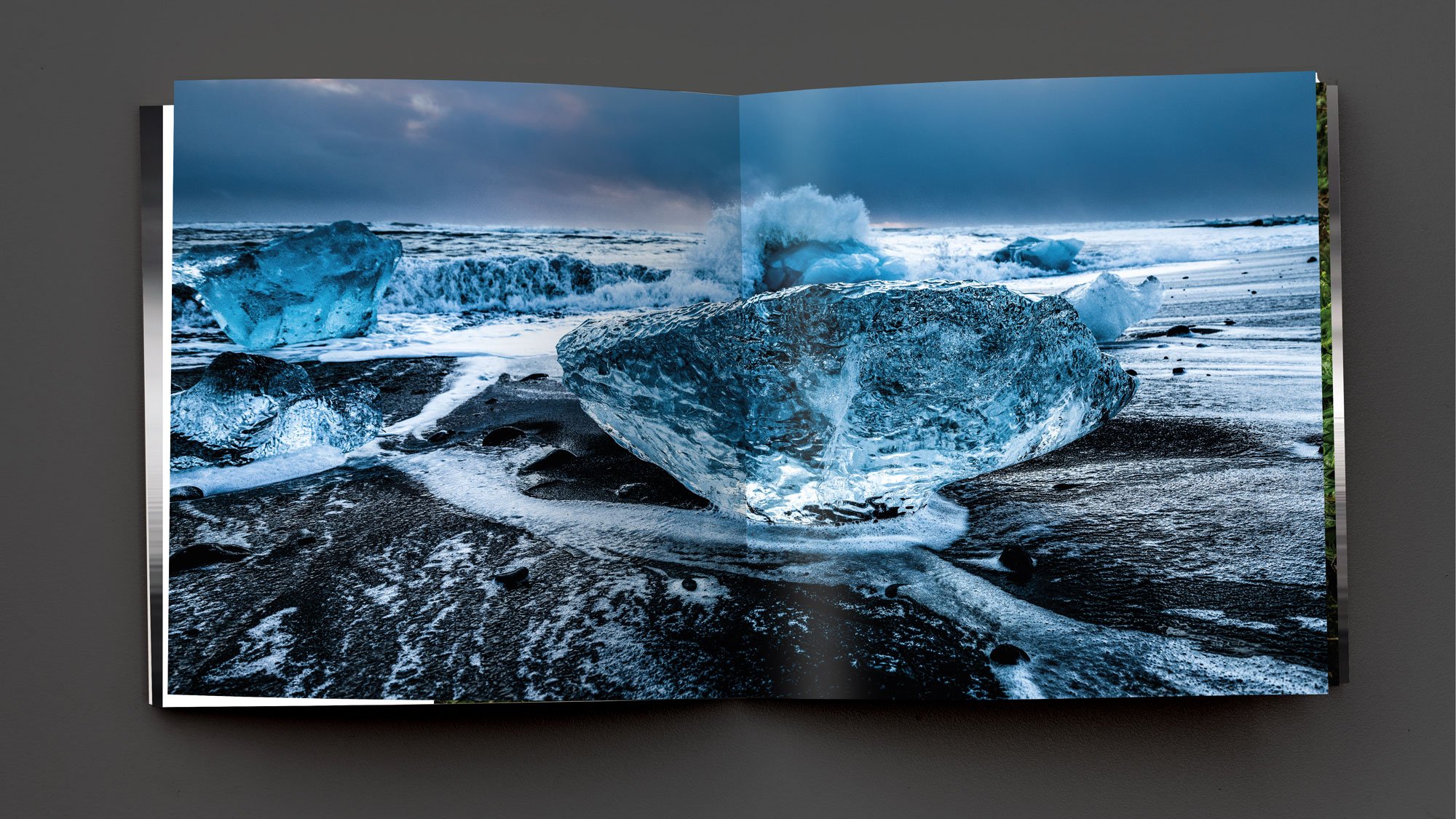
Everyone agreed: This picture is tailor-made for this location. It captures the colors of the space so perfectly that one might think the image was planned based on the space. Or vice versa. But the fact is that the photo was taken in 2020 on an icy winter day in Iceland, as I walked from the famous airplane wreck back to the parking lot. With the wind howling, I captured the monolith with the lighting oscillating from warm orange to cool blue.


Picture in one of the lounges
For this blue-painted wall, Nazanin chose one of my favorite motifs. The spray from Dettifoss covers the basalt wall. The whole thing looks more like an abstract painting than a photograph. Interesting detail: To my left, dozens of tourists were standing there, photographing the waterfall. But no one seemed to notice the almost mystical stone wall with the spray...


The «Rust picture»
During our trip to Iceland in 2014, we created several so-called "photo originals" – unique images. We achieved this by bringing ten 125 x 125 cm steel plates back to Iceland and allowing them to corrode on site, exposing them to salt water, wind, and weather. We then mounted images from Iceland onto these steel plates, spaced a few centimeters apart, so that the photos appear to be floating on the steel plate. One of these photo originals now adorns a seating area in the Omnitower.


Diptychons
In contrast to the offices and lounges, where the pictures are presented in black oak frames with shadow gaps, all the pictures in the corridors are black and white and frameless in light oak frames. This creates a new presentation level, which I find very exciting. From the abundance of motifs in the corridors, I chose two photos: One shows a silvery river flowing into the sea on black lava sand. This photo was taken on Iceland's south coast, near Jökulsarlon. The second was taken on the northeast coast of the Pacific Ocean. It shows a group of humpback whales feeding on bubble nets.


Employee offices
Each employee was allowed to choose a picture for their workstation. These pictures were then placed on the sideboards instead of hanging them. I've never seen this before, but I think it looks very harmonious:


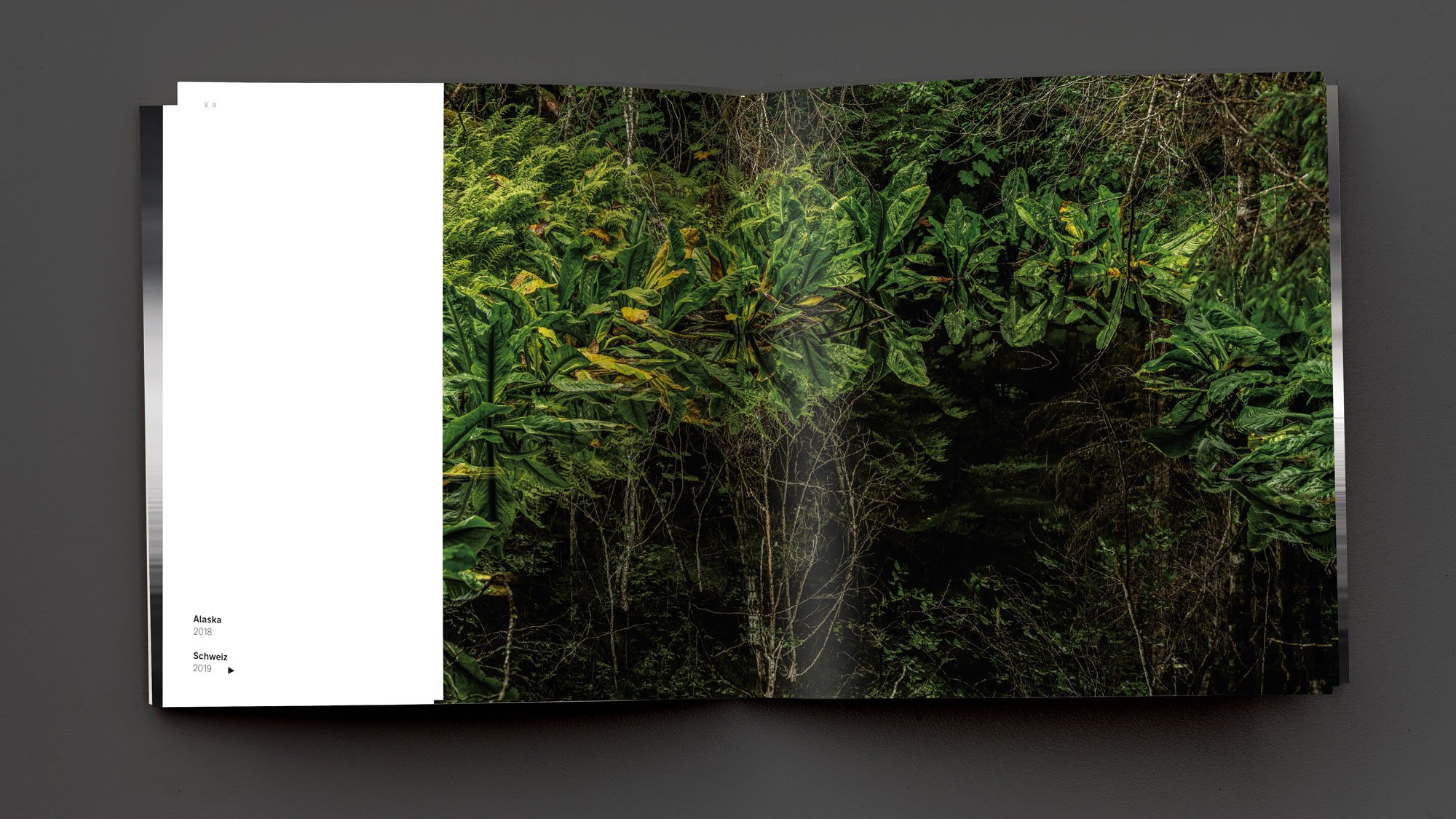
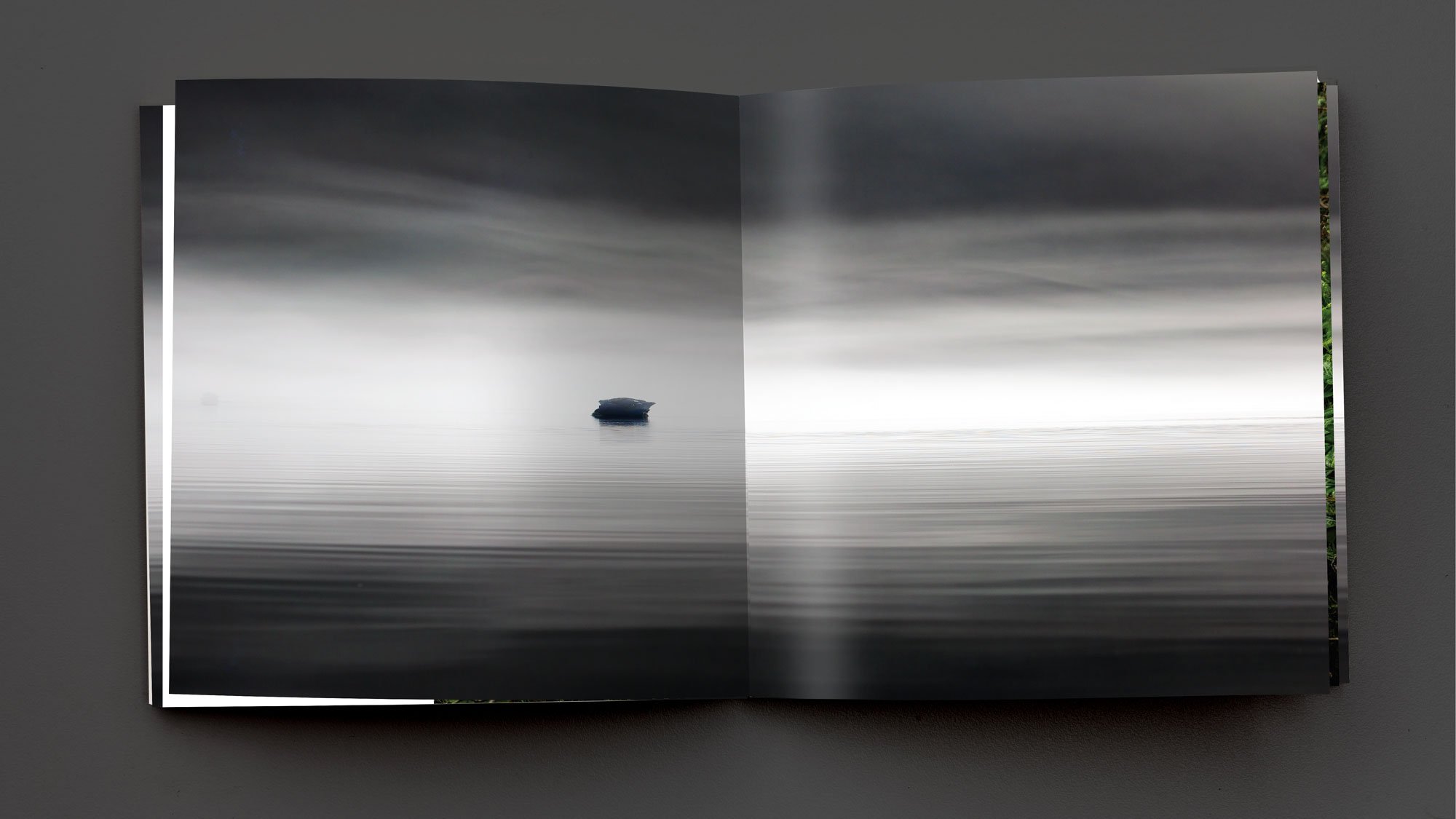

Impressions from Frankfurt
In this blog post, you'll find out why Frankfurt's skyscrapers inspired me to create a series of photographs and reflect on philosophical ideas...
The large project with images from THE POWER OF THE ELEMENTS brought me back to Frankfurt. I was commissioned to photograph the office space decorated with my images. These images are in progress, and I will present a selection on the blog later. During my breaks, I went out with my camera to explore Frankfurt's high-rise district, looking for exciting perspectives on the imposing skyscrapers. This resulted in a small series of heavily edited black-and-white photos.
I viewed the skyscrapers with mixed feelings. For me, they symbolize the human spirit's ever-increasing striving for higher heights, and how so much good can emerge. But what if this spirit frees itself from all responsibility and, like in the myth of Icarus, soars higher and higher, unchecked and without any moral obligation? Will the fall eventually come? But perhaps these are all far too philosophical thoughts, and one should simply enjoy this spectacle of lines, shapes, and surface structures:


I took the pictures with the Leica Q2 and the Leica S3.

Carte blanche in Island
Iceland always amazes us with its rugged and infinitely beautiful nature. What a privilege to travel through this country and capture its atmosphere with my camera.
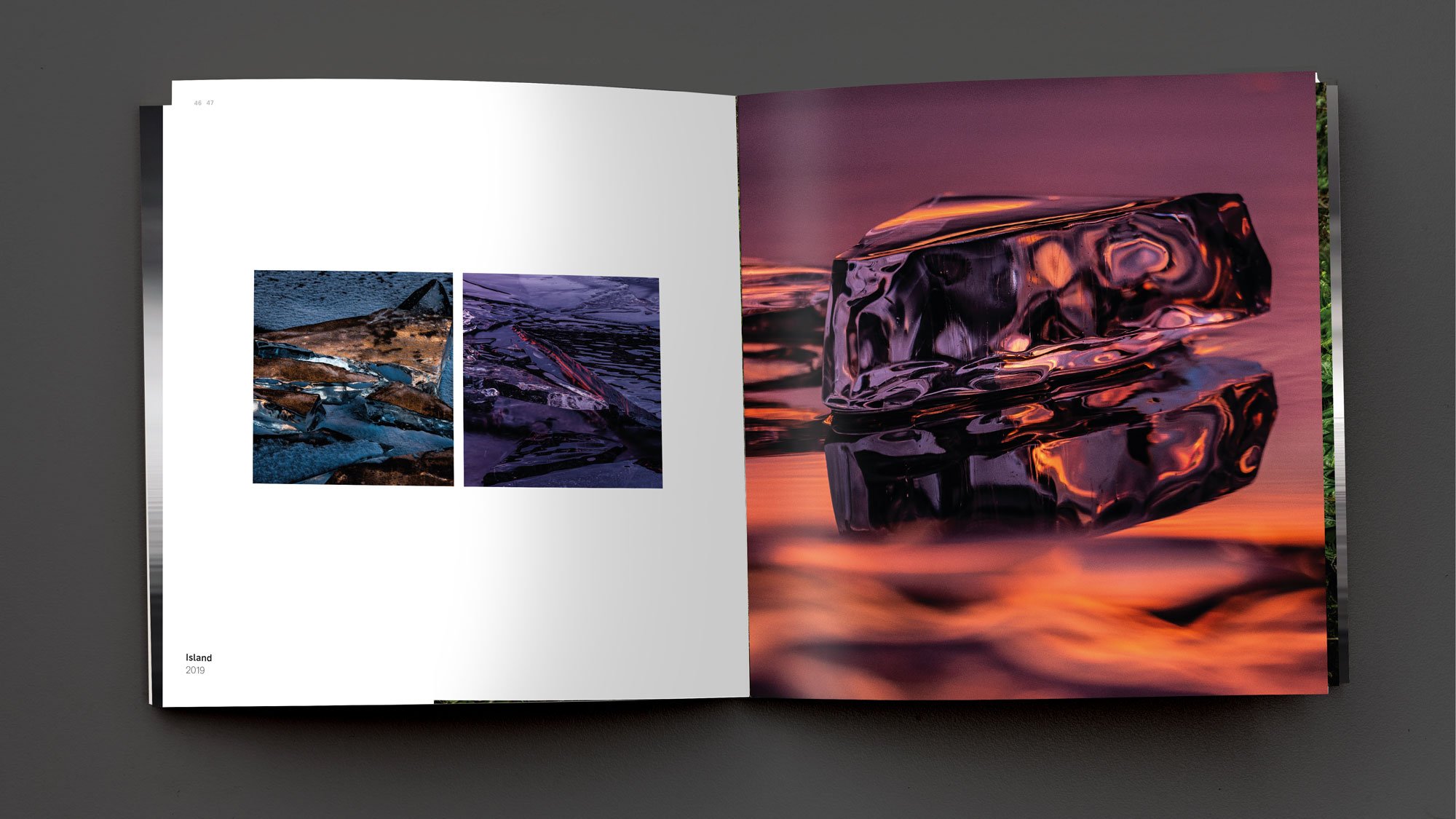
Whenever possible, Ursula and I travel to an exciting location once a year to photograph without a particular concept—a kind of carte blanche. Through photography, we perceive our surroundings more intensely. We observe and sometimes take a long time to notice and record changes in the light. I edit the images afterwards without limits. In other words, it's about conveying a mood, not showing what the situation was like on site. Interestingly, I edited some photos almost nothing, while others were heavily edited. Just as with photography, I let my intuition guide me when editing. Anything goes.
The photographers
Even before we met, Ursula loved taking photographs, "albeit without any sense or reason," as she always says. Well, I don't entirely agree with that, because she always thinks very carefully about what she does. She acquired all the technical knowledge herself. On this trip, she took photographs with her own camera equipment for the first time. I'm very proud that some of her pictures made it into the selection of the best photos.

Ursula photographed mainly with the Leica SL2 and also with the SL2S

I mainly photographed with the Leica S3
The cameras
Anyone who knows me knows that I'm a big fan of Leica cameras. The outstanding quality of Leica lenses and the ease of use make them my first choice for almost all projects. Furthermore, the cameras and lenses are very solidly built, which is particularly advantageous in challenging weather conditions. Ursula shot with the Leica SL2. The camera delivers outstanding images with almost 50 megapixels and a huge dynamic range. I shot with the Leica S3. In my opinion, this medium format camera delivers the most beautiful image files, but it's not very forgiving. You have to work extremely precisely to exploit the full potential of the 63 megapixels. Practically all of my images were shot on a tripod. I also love the slower pace of composing subjects with the S3. When I then heavily edit the data in post-production, you get a grain that is very reminiscent of analog images.
On screen, you can't see any difference between the SL2 and S3 images. However, when you print the images at a larger size—and by that, I mean prints at a size of, say, 150 x 100 cm—you're overwhelmed by the wealth of detail in the S3 images.
When you look at the galleries, you will notice that a few motifs were shot with a drone.
The pictures
Iceland is actually visual overkill. For me, the barren landscape with its ice-blue, olive, and anthracite color schemes, with their infinite nuances and splashes of color, is always overwhelming. Choosing from the realized motifs is sometimes difficult. Perhaps you would favor completely different images than I do. But that's one aspect I love so much about photography: everyone finds their own way of approaching the images. These two galleries are therefore my very personal selection. Some images will definitely find their way into our long-term project "The Power of the Elements."
Iceland in color


Iceland in black and white


Vote and win: The new IHT logo
Vote for which logo design you like best and with a little luck you could win a fine bottle of wine
IHT Ingenieurbüro für Holz + Technik is having us redesign its visual identity. Four different logo versions have now been created. Vote for your favorite design by May 15th and, with a little luck, win one of three fine bottles of wine. We'll show you three versions of each logo, plus a first-look business card:
Variant 1


Variant 2


Variant 3


Variant 4


You can vote for two designs – the design you like best receives three points. The design you like second best receives one point. Voting for the same design twice is not permitted. Doing so would disqualify you from the prize draw. ;-(. And that would be a shame, because among all the feedback, we're giving away three bottles of fine wine from WeinStamm Thayngen, for whose new building IHT provided the engineering ( and we provided some great photos ).
My vote on the IHT logo designs:

New pictures and clips for altra schaffhausen
Even after seven years, every film and photo shoot for altra schaffhausen remains a truly amazing experience. Here are the latest pictures and clips.
Filming and photographing for altra Schaffhausen is something very special for me. I've been producing a large portion of the images for this wonderful institution for seven years now. Of course, I keep meeting the same people. It's a great joy every time (I hope for both of us ;-)). Over the past few weeks, I've been working intensively with Brigitte Zimmerann from altra.
The style of the images is always very similar, so that a corporate style is recognizable in the photography: The employees look cheerfully into the camera, and the images have a very tight depth of field. Virtually all shots were taken with the Leica SL2 and the Summilux SL 1.4/50 mm at wide aperture.
I generally shoot in color and later convert some images to black and white for myself. There are some photos that I think look better in color, and others that look better in black and white. However, there are also images that look great in both black and white and color—they may have a different vibe, but both are great. So, here are my favorite images in a color and a black and white gallery:
Color Gallery


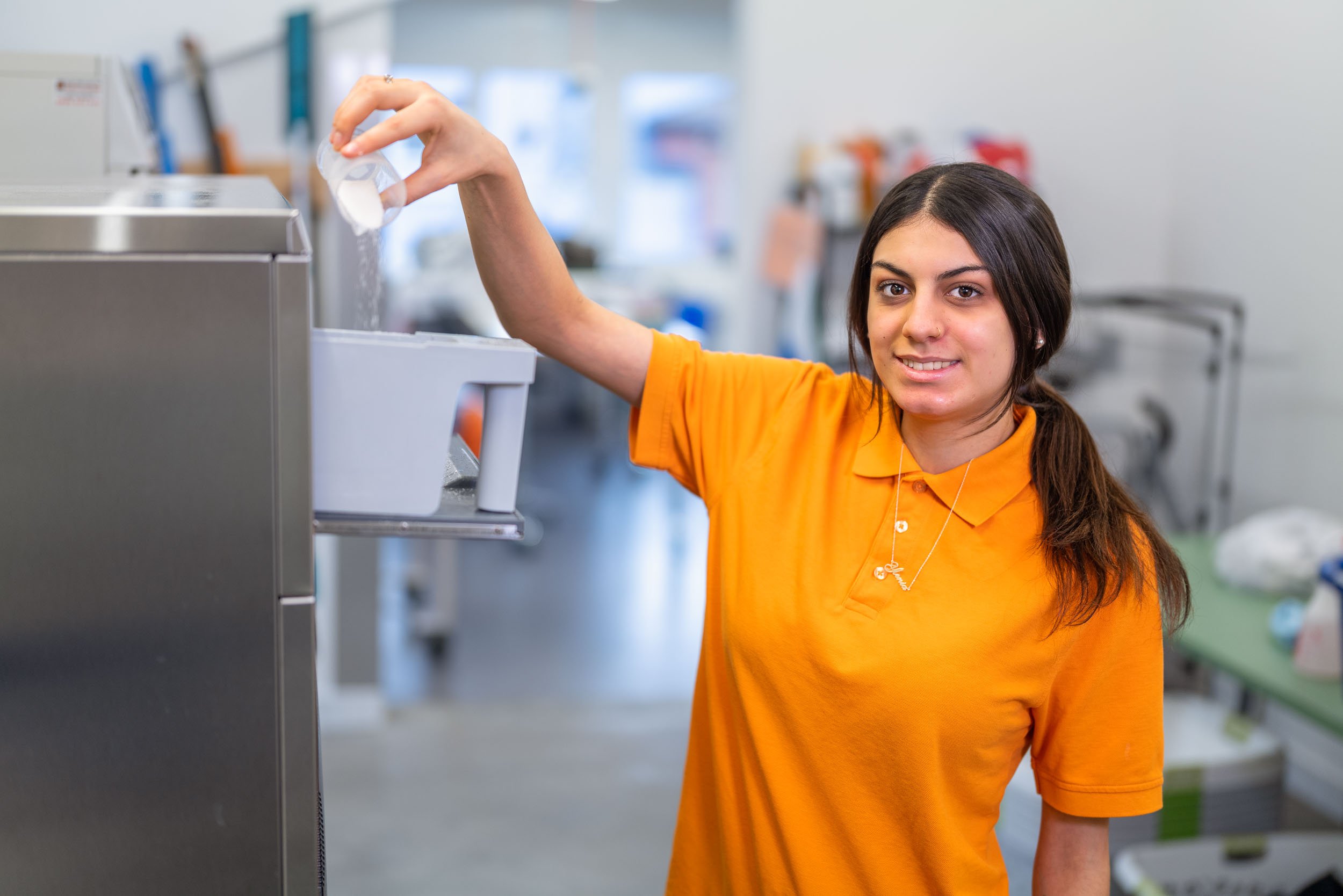
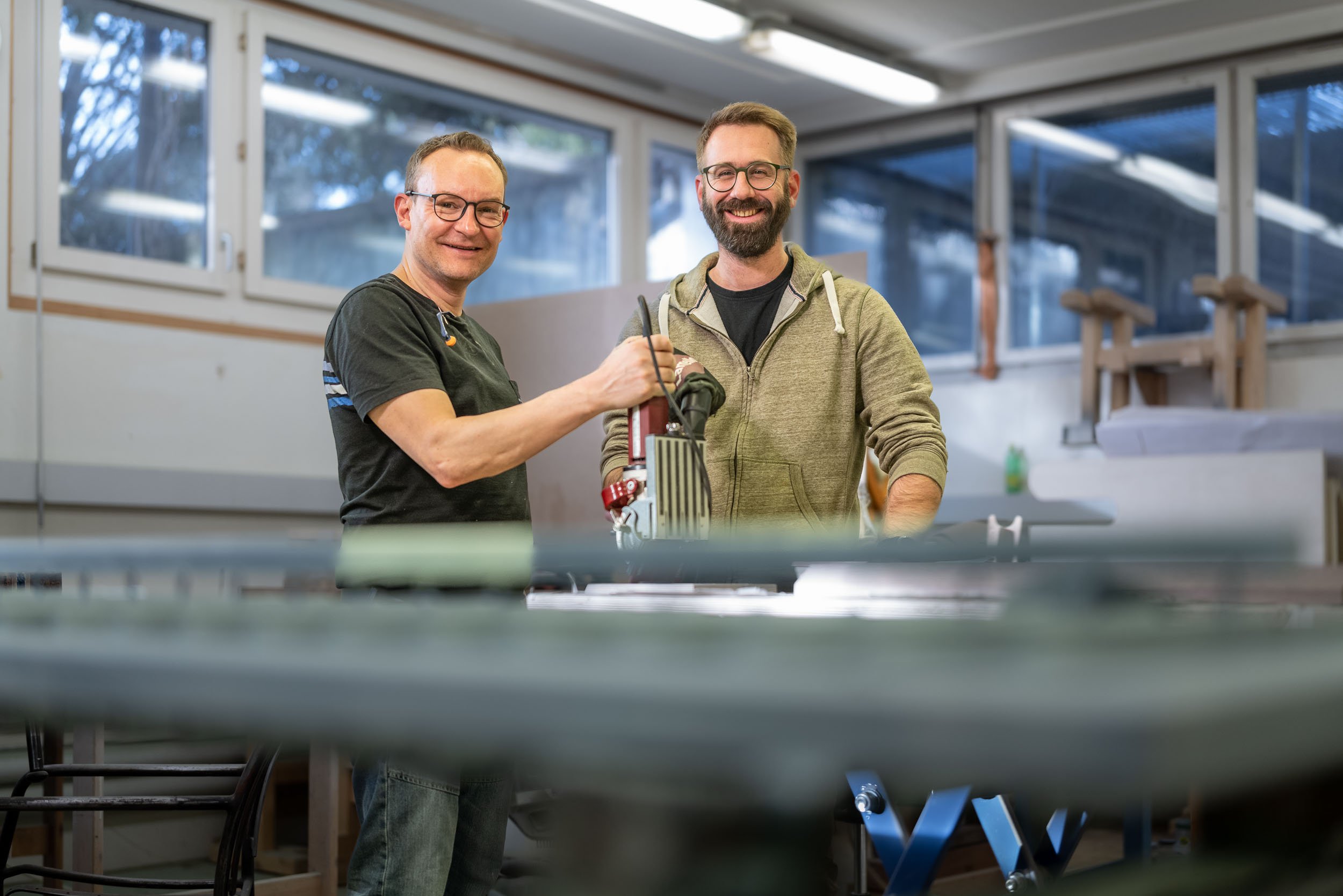


Black and White Gallery

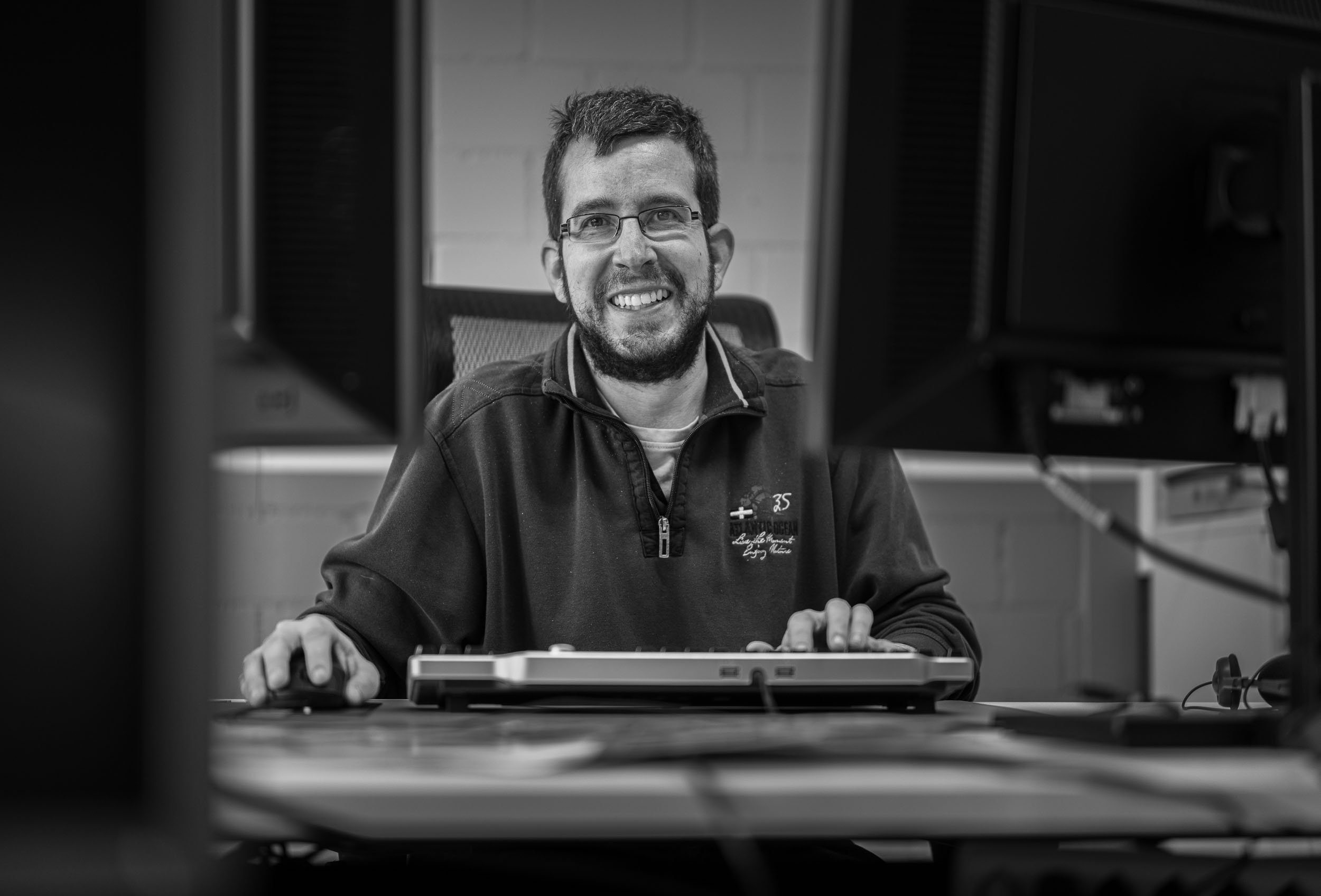


A few making-of impressions
Katrin Baumann from altra schaffhausen accompanied Brigitte and me on part of the shoot this year and shot images for altra's social media channels. A big thank you to Katrin for allowing me to share some of her photos, which give you a glimpse behind the scenes:


The film clip
For the altra homepage, I filmed several employees at work. After a few seconds, they look into the camera and smile at the viewer. The film is shown in the header of this blog post, below, or on the altra homepage .


Photo shoots for Clientis Thayngen
Photo shoots for Clientis Bank in Thayngen for a national campaign and pictures with oversized gold bars
MyMix
For the nationwide MyMix campaign, we were privileged to photograph two employees of Clientis Thayngen . Juline and Alina-Fiona are "real" employees of the bank, adding authenticity to the campaign. Photos taken with Leica SL2 and S3. Click on the images to enlarge.


The gold bar photos
Monika Weber from Clientis Bank Thayngen had the idea of photographing employees on gold bars. Since there aren't any gold bars that large ;-), we used Photoshop to help. Because the photo turned out so well, we created a second motif with a large gold bar this year.


Working with the Clientis team is always a lot of fun, and we're already looking forward to the next shoot.
back to the news →

Kleiner Making-of-Film
Just for fun: a short making-of film from today's shooting day at Egli Federnfabrik AG
Simply for fun
Today we filmed again at Egli Federnfabrik AG. Following the short films about water cutting , laser cutting, and coiling, we're now filming a film about coiling springs from wire. We'll be editing and adding sound to the "real" film over the course of the next month. Here's a little teaser with making-of footage that Gabi filmed with her phone, plus a slow-motion sequence that will hopefully make it into the film:

Angle finder for Leica S/SL/SL2
One of the few drawbacks of the Leica SL/SL2 is that you can't angle the screen. The very nice angle finder from the Leica Store Lisse at least partially mitigates this shortcoming.
The cameras in the Leica S and SL series combine the highest image quality with the simplest operation. However, as with any camera system, these two systems also have drawbacks that become more or less significant depending on your workflow. Leica has omitted a pivoting screen from both camera series. This has the advantage of allowing a slimmer camera body and also providing better protection against cold. For example, in Iceland at minus 10 degrees Celsius, I experienced a camera with a pivoting display failing, while the SL2's screen worked flawlessly.
A non-folding screen has advantages, but also disadvantages. To at least partially eliminate these disadvantages, the Leica Store in Lisse (NL) has partnered with a German manufacturer to launch an angle finder for these cameras.
Two models are available:
• Angle finder for the Leica S / SL
• Angle finder for the Leica SL2 / SL2S
The viewfinders are handcrafted in Germany (not by Leica, but to Leica quality standards) and offer you a greater degree of flexibility when shooting. A useful detail: If you need the focus just right, you can switch from 1x magnification to 2x magnification to check the focus. The viewfinder can also be rotated sideways if needed, allowing even greater flexibility.
The viewfinder is available for order at the Leica Store Lisse NL for EUR 550 (excl. VAT, excluding shipping). If you would like to order an angle finder, please send an email to the Leica Store with the following information:
• required version (S/SL or SL2/SL2S)
• Shipping address
You will then receive an order confirmation with the account details, and the viewfinder will be delivered after your payment has been received. Here are a few pictures provided to me by the Leica Store in Lisse:


All Images © by Leica Store Lisse
back to the news →

Feedback from the photography course
It's always fun to see the progress of my workshop groups. Here's the feedback from the last group.
The second photography course of 2021 was also fantastic. Four intensive, educational days are behind us. For the first time, we were given the task of creating a pair of images of a person and a second shot and composing them in Photoshop. Below is a statement from each participant about the course and the resulting photo.
You can see my pair of photos above. It shows René, a man with a tough exterior and a soft core ;-). He and his wife Margrit have always actively supported me in running my photography courses over the past few years. Now they're moving away from Rasa, and honestly, I can't really imagine Rasa without René and Margrit. Thank you both so much for your active support. I will miss you.
Would you like to take a photography course? You can find more information about the courses and registration links here .
Claudia

"Thank you for the inspiring course. It was fun to learn about the many technical possibilities and combine them with my own ideas. And all this in a pleasant atmosphere, with a great group, and in a wonderful location..."
— Claudia
Liliane

"Once again, I enjoyed the atmosphere at Rasa, taking photos, editing the images with its technical refinements, and the many inputs. Many thanks to the course leaders and participants; it was great with you!"
— Liliane
Simon

"For the second time, I was able to learn a lot in a relaxed atmosphere, both about photographic design and technology, as well as image editing. Thank you, Peter!"
— Simon
Margret

"It was great fun, the five-day course with Peter, the group, and countless wow and aha moments :)."
— Margret
Bettina

"This isn't my first course booked with Peter. And, as always, it was simply fantastic: a superb instructor who knows how to meet everyone where they are and is very patient. Lots of new ideas, possibilities, etc. A great, friendly group, a great place. Hoping for a follow-up...😉! Thank you Peter, thank you all!"
— Bettina
Markus
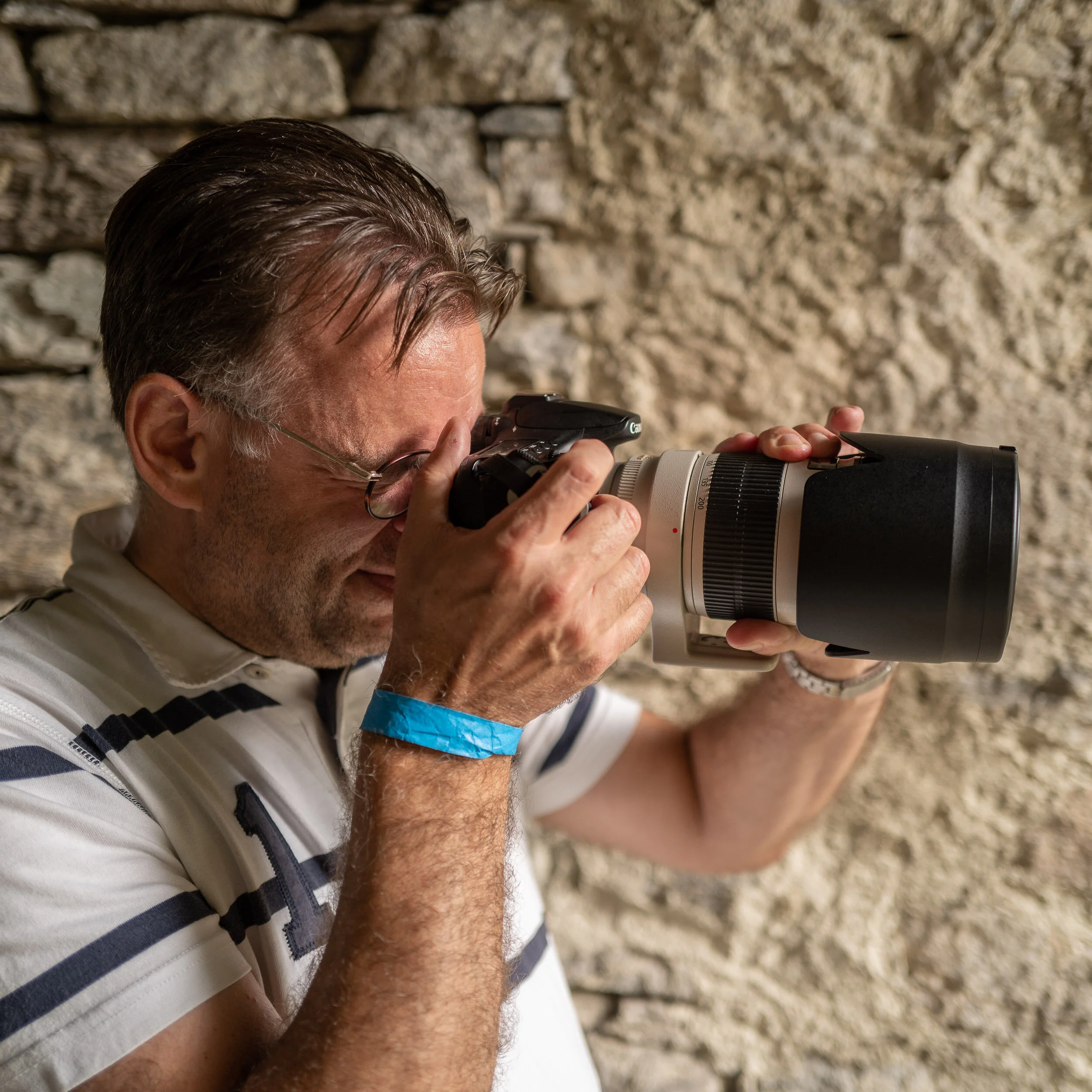
"Thanks, Peter, for the valuable tips and tricks. I've rarely learned so much in such a short time."
— Markus
Verena

"Ticino houses shrouded in fog or bathed in the evening sun, surrounded by gardens, pastures, and chestnut forests. Water reflecting polished stones and mountains or moving wildly. Interesting faces and bodies in motion – all subjects photographed from a variety of angles and then classified, developed, lassoed, and placed in the right light – the results are impressive! We were a truly great group, and Peter's enthusiasm was contagious. In short: a rich and inspiring photography course!"
— Verena
Rolf

"Anyone who loves photography, wants to improve their technique, and is looking for new ideas will be in good hands with Peter Schäublin's course. Lightroom and Photoshop are used extensively to optimize the images, and the instructions help you make good progress. The quiet place "Rasa" was also helpful. It's secluded from all traffic in an idyllic setting."
— Rolf

Magical Maggia
Rock and water in magical light, captured in black and white. By the way: All my photos are available as fine art prints, each limited to a maximum of 50 copies.
There are days when the light simply has a special quality. That's what happened this week when I was photographing with the participants of my photography course on the Maggia. The resulting images inspired me to create a series of slightly surreal black-and-white photographs. Here and there, mythical creatures can be found in the stones...


My pictures as fine art prints
All of my photographs are available as limited edition fine art prints. I print the photos on a high-end 11-color printer on the highest-quality Hahnemühle fine art paper, then mount them on D-Bond or frame them traditionally behind glass, depending on your preference. Contact me if you'd like to purchase one of my images as a fine art print. It's best if you tell me which motif interests you, approximately how large you'd like it printed, and whether you already know whether you want it mounted on D-Bond or mounted traditionally behind glass. Here are a few mockups for inspiration:


Photo shoot in the northernmost vineyard in Switzerland
Photo shoot for Hübscher Wein in Switzerland's northernmost vineyard. The images are for the new website, which we also built.
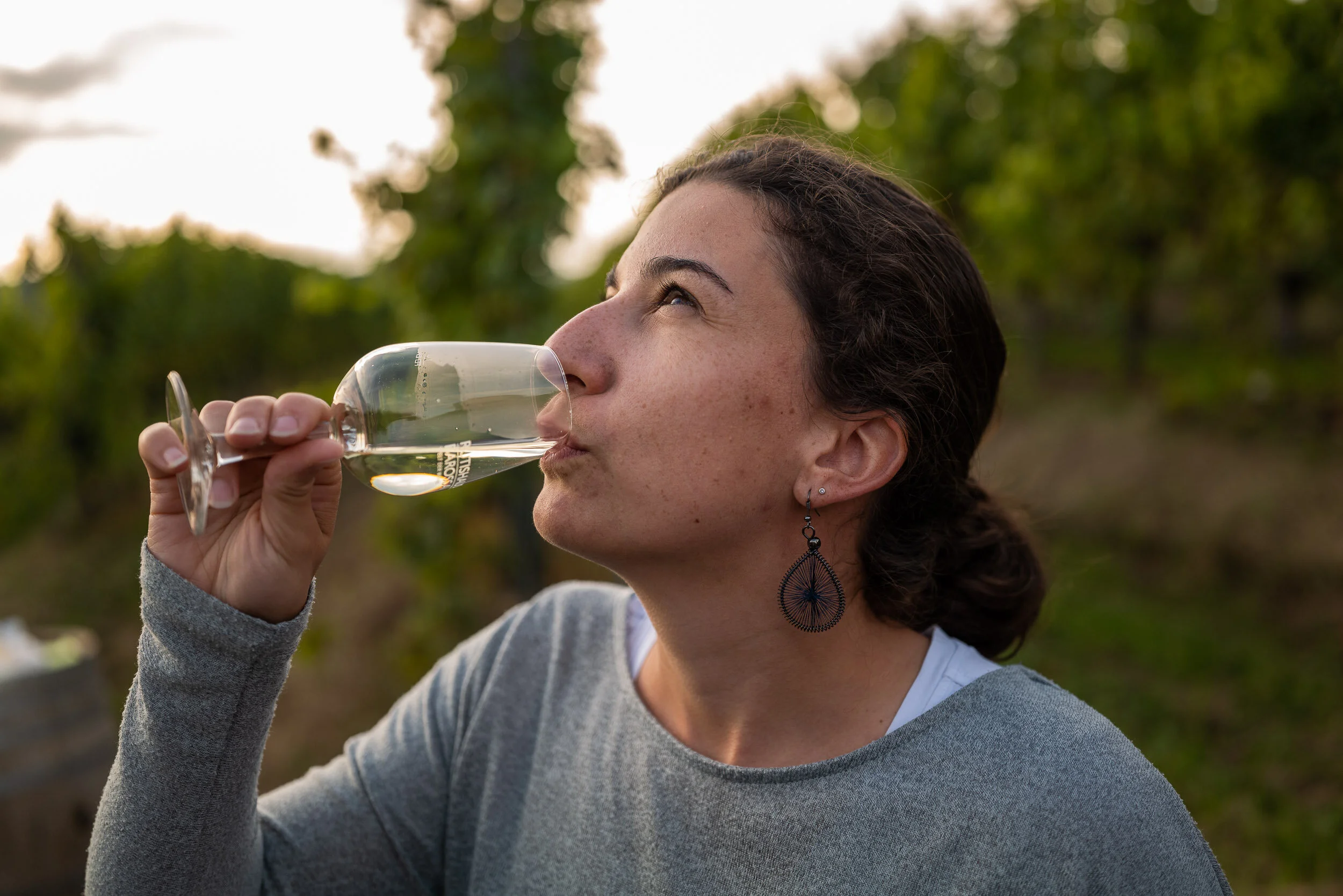
Hübscher Wein is one of the great wineries we have here in the region. This summer, we were able to design the new website and online shop for Raphael Hübscher, including the design of the new logo. Over the past few months, we've occasionally taken photos in the vineyard to ensure Raphael Hübscher has great images for his website. Yesterday, Ursula and I accompanied a wine tasting in Switzerland's northernmost vineyard. Here's a selection of the photos taken in the warm evening light:




From Logo
The homepage with online shop
A visit to the website is worthwhile – and the wines are excellent. Simply order in the online shop ... ;-)


Meetingpoint and Bock Verlag
The Meetingpoint on the Herrenacker in Schaffhausen is a new, multifunctional bistro with an XXL screen and the option to host meetings and book coworking spaces. We photographed the new location on behalf of Betz Designmöbel.
Commissioned by Betz Designmöbel, we photographed the stylish new bistro location in Schaffhausen. The meeting point on the Herrenacker Schaffhausen is a bistro, networking point, event venue, and sports bar with an XXL screen all rolled into one. A fantastic concept, with Betz's perfectly furnished interior. The offices of Bock Verlag are also integrated into the meeting point. Certainly one of the most beautiful workplaces in Schaffhausen...


How do you like the new website?
We welcome feedback on the new website. Anyone who gives us a brief comment on the new look will be entered into a raffle for a copy of our latest book, "The Power of the Elements."
Almost exactly 26 years after the company was founded and about 10 years after the last redesign of our website, peterschaeublin.com and 720.ch are appearing in a new look. We've already added several new projects and blog articles and will occasionally integrate content from the old websites onto the new platform.
If you'd like, please give us your feedback on our new website by the end of August using the contact form below. We'll be happy to summarize a selection of your feedback in a blog post without mentioning your name. We'll be giving away a copy of our limited-edition photo book "The Power of the Elements" to all participants.
My feedback on the new website of 720.ch / peterschaeublin.com:

Photo shoot for Leonie Küng and KIA
Great photoshoot for tennis player Leonie Küng and KIA
Since her junior years, we have been able to support Leonie Küng occasionally in the area of visual communication. She has now secured a fantastic sponsor in KIA, and it was a great honor for us to photograph the official handover of the new KIA to Leonie. More information about Leonie can be found on her Facebook account.
My favorite photo from the shoot:
More photos:


The influence of the lens on the image result
Five lenses with almost identical focal lengths tested: How much does the choice of lens influence the image effect?
Does the choice of lens have a greater impact on the image result than a few megapixels more or less?
This question arose after the extensive high-end camera test I conducted with my friend Christian Habermeier . Theoretically, it's clear that the choice of lens will have an impact. But how big is it? I wanted to explore this question, and fortunately, I was able to test five very different lenses in the 70/75 mm focal length range. Many thanks to Leica Camera AG Switzerland and Foto Vision Zumstein for loaning us the lenses, and also a big thank you to Iris Michel, Eva Küng, Simone Meylan, and Sam Bregenzer.
The 75mm focal length is very exciting in my opinion. A 75mm lens can be used both as a normal focal length and as a portrait focal length. This makes it very versatile. Thanks to the high resolutions of today's sensors, you can cover a wide range of subjects with a 28mm or even a 35mm lens and a 75mm lens, for example, because you can also "simulate" other focal lengths by cropping the image. Taking a 50mm crop from an image shot with a 35mm lens, or selecting a crop equivalent to a 90mm from an image shot with a 75mm lens, is easily possible with cameras with up to 50 megapixels.
The protagonists

I conducted the test with my Leica SL2, so all lenses can be attached to the L-mount directly or via adapter. Starting from left to right:
01 // Voigtländer 75 mm / 1:1.5 Nokton VM (aspherical)
Focal length: 75 mm
Overall length: 63.3 mm
Number of lenses: 7 lenses in 6 groups
Largest aperture: 1.5
Smallest aperture: 16
Closest focusing distance: 0.7 m
Filter diameter: 58 mm
Focus: manual
Weight: 350 g
Price: CHF 998
Special features: very attractive ratio of max. aperture / weight / price
02 // leica summarit-s 1:2.5/70 asph. (cs)
Focal length: 70 mm
Overall length: 93 mm
Number of lenses: 8 lenses in 6 groups
Largest aperture: 2.5
Smallest aperture: 22
Closest focusing distance: 0.5 m
Filter diameter: 82 mm
Focus: Autofocus
Weight: 740 g
Price: CHF 4640 (normal version) CHF 6030 (CS version with built-in shutter)
Special feature: the lens is designed for the (larger) Leica S-sensor and therefore has a larger image circle
03 // Sigma 70mm f2,8 DG Macro
Focal length: 70 mm
Overall length: 70.8 mm
Number of lenses: 13 lenses in 10 groups
Largest aperture: 2.8
Smallest aperture: 22
Closest focusing distance: 0.258 m
Filter diameter: 48 mm
Focus: Autofocus
Weight: 605 g
Price: CHF 648
Special: Macro
04 // Leica Noctilux-M 1:1.25 75 mm Asph
Focal length: 75 mm
Overall length: 91 mm
Number of lenses: 9 lenses in 6 groups
Largest aperture: 1.25
Smallest aperture: 22
Closest focusing distance: 0.85 m
Filter diameter: 67 mm
Focus: manual
Weight: 1055 g
Price: CHF 13,860
Special feature: fastest 75mm available
05 // Leica Apo-Summicron-SL 1:2/75 Asph
Focal length: 75 mm
Overall length: 102 mm
Number of lenses: 11 lenses in 9 groups
Largest aperture: 2.0
Smallest aperture: 22
Closest focusing distance: 0.5 m
Filter diameter: 67 mm
Focus: Autofocus
Weight: 720 g
Price: CHF 5350
Special features: Additional lenses with the same body and the same maximum aperture and characteristics are available (currently 28/35/50/75/90 mm, 21/24 mm in planning)
The Test Idea
As always with my tests, this time, too, the goal is to put the equipment to the test in practice. I have a few shoots scheduled for the test weekend: a portrait of a painter friend, a photo shoot with my friend Sam's 1969 Dodge Charger R/T 440 Magnum, and two more portrait shoots. In addition to the camera/lens combination I normally use, I'll be shooting a few images in which I'll be shooting a subject with all the test lenses. I didn't shoot any extreme backlighting situations or anything like that, but I think you can get a pretty good idea of the characteristics of the five lenses.
Before I get into the individual lenses, here are four test panels showing excerpts from the shots I took with all the lenses. I worked with the aperture fully open in three test situations. The maximum aperture varies, of course, but a fast speed is a key criterion when purchasing a lens. In my opinion, it wouldn't have made sense to have throttled down all these light giants to f/2.8. The outrageously expensive Noctilux, in particular, should and must be able to demonstrate its advantages:
Testtableau 1
Cockpit des Dodge Charger R/T 440 Magnum

All images are unedited
Testtableau 2
Feigenbaumblätter
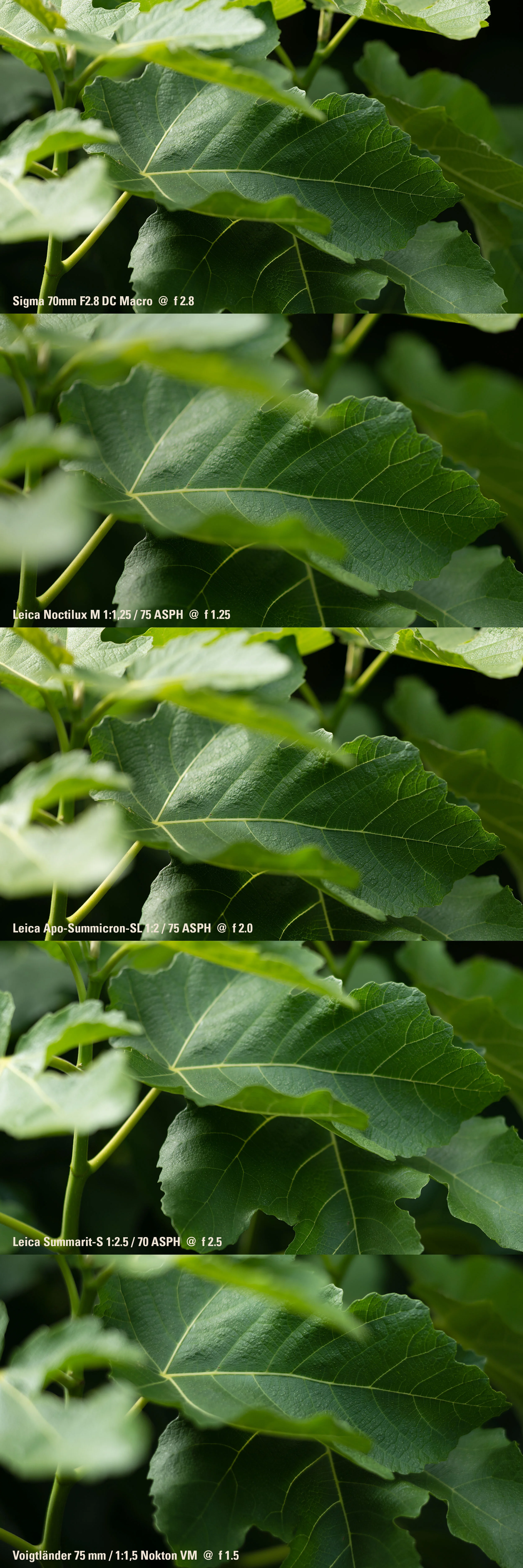
All images are unedited
Test tableau 3
Eva

All images are unedited.
Testtableau 4
Iris

All images are unedited
Practical notes on the individual lenses
01 // Voigtländer 75 mm / 1:1.5 Nokton VM (aspherical)
I would have expected a lens with such a high speed to be larger and heavier. The Nokton weighs just 350g and is priced at a price you wouldn't expect. Personally, I think the lens offers extremely good value for just under 1,000 Swiss francs. Even at full aperture, the performance is very good. It produces images a little harder than the Leica Noctilux, but softer than the other lenses. This makes it an ideal portrait lens that, especially because of its small size, is easy to take with you. Precise manual focusing was a challenge for me. With the aperture fully open, I produced quite a lot of rejects. Some images weren't too off and could easily be published on all electronic channels (Facebook, Instagram, etc.), and many of them would also be suitable for A4 printing. But my goal is to make full use of a lens's sharpness, and my error rate is significantly higher with manually focused lenses than with AF models. Perhaps it's a matter of practice. I attach a processed image for each lens, because that's what you normally do with photos. You edit them before publishing or printing them. For the Nokton, I chose an image from the Iris series. With the aperture fully open, you get beautiful bokeh, and the slightly softer detail is perfect for the portrait of this amazing artist .
Edited image
Voigtländer 75 mm / 1:1.5 Nokton VM, 1/50 sec, f 1.5, 200 ISO, daylight
02 // Leica Summarit-s 1:2.5/70 Asph. (CS)
I admit, the Summarit S 70mm is a bit of an oddity in this test series. It's designed for the larger sensor of the Leica S. However, based on my medium format test , I was very impressed by the combination of the S and the 70mm. So I couldn't resist and mounted an S 70mm with an adapter to my Leica SL2. And I wasn't disappointed. In my opinion, this lens has unobtrusive sharpness, not as "loud" as the SL 75 (more on that later), but still more accentuated than the Noctilux from the M series. And now comes the fascinating part: every photographer will develop their own style. Personal preferences and the subject matter will influence the choice of lens. However, in some cases, one lens can't cover everything, so you might want to "treat yourself" to two lenses of the same focal length to achieve, for example, a slightly softer or slightly harder rendering style. Or you can use a manually focused, wide-aperture lens plus an autofocus lens with a narrower aperture. And so on and so forth... For my style of photography, the Summarit S is the ideal portrait lens. A quick side note: On the Leica S3, the lens performs even better, and surfaces are rendered with even more nuance.
The image I chose for the Leica Summarit S is from the series I shot with Eva. She spontaneously started ruffling her hair, and she started laughing so hard from all the ruffling. And I was able to capture that exact moment. She has since posted the image on Instagram and Facebook and wrote to me that she's never received so many positive reactions to a photo of hers. I take that as a compliment ;-).
Edited image
Leica Summarit-S 1:2.5 / 70 ASPH / 1/100 sec, f 8.0, 200 ISO, flash
03 // Sigma 70mm f2,8 DG Macro
The Sigma lens is the cheapest in the test. So it's not surprising that its build quality isn't up to par with the other lenses. I bought it a while ago because the macro range of the L system is still somewhat dormant. And I have to say: Despite the low price, the Sigma delivers very good quality, and I can recommend it to anyone who needs a macro lens in the L system. At f/2.8, the aperture is the lowest in the test, but the Sigma makes up for it with its deep minimum focusing distance. A lens that delivers honest results at a very reasonable purchase price.
The image I chose as the edited photo for the Sigma lens is a still life from Iris' studio.
Edited image
Sigma 70mm F2.8 DC Macro, 1/80 sec, f 4.0, 200 ISO, daylight
04 // Leica Noctilux-M 1:1.25 75 mm Asph
The M-Noctilux is beyond all normal limits in some respects: Thanks to its maximum aperture of 1.25 (the fastest 75mm in the world), it offers the possibility of achieving the smallest depth of field. Despite this performance, it is incredibly compact. The incredible amount of power packed into such a small body becomes apparent when you pick up the lens: it weighs over a kilogram. Even at full aperture, the Noctilux delivers tremendous sharpness, which subjectively increases slightly when stopped down. It has an unobtrusive sharpness that can be further enhanced in post-production if necessary. For the edited image, I chose a photo of Sam's Dodge at the airport runway. Thanks to the full aperture, the classic car stands out beautifully from its surroundings. I selectively increased the sharpness in the area of the car a little. Under no circumstances should you focus across the entire image, as this would ruin the Noctilux's bokeh. The same applies to this lens: At full aperture, especially in portraits, despite focus peaking, I had a relatively high rate of inaccurate focus. These deviations are often in the millimeter range. For example, the tip of the model's eyelashes would be in focus instead of the eye.
Edited image
Leica Noctilux M 1:1.25 / 75 ASPH, 1/1000 sec, f 1.25, 50 ISO, daylight
05 // Leica Apo-Summicron-SL 1:2/75 Asph
The Leica SL prime lenses with an initial aperture of 2.0 have a very special look. I own the 35mm and 90mm and am a huge fan of these lenses. I don't know of any other lens in the 35mm format that delivers such sharpness in the focused range. It captures every tiny detail crisply and precisely. Out of focus, it's not quite as soft as, say, the Noctilux. This is likely due to its design and, of course, also because the initial aperture cannot be opened beyond 2.0. Leica deliberately dispensed with a larger aperture here in favor of compactness. However, because the Apo Summicron SL 75 makes such a crisp impression in the in-focus range, the difference between sharpness and blur is greater than you'd expect with an aperture of 2.0. For portrait shots where you don't necessarily need to see every detail, the Apo Summicron SL may not be the right choice. But when it comes to sharpness, this lens is in its element.
I deliberately chose a subject from my shoot with Simone as the edited image. We spontaneously did a bubble gum session with her Audrey Hepburn shirt. I think the harsh light from my Profoto B1 and the crystal-clear sharpness of the SL 75 work perfectly together. It's a rather "loud" lens, and that also fits the subject.
Edited image
Leica Apo-Summicron-SL 1:2 / 75 ASPH / 1/250 sec, f 10, flash
The big question about the resolution
I've pointed out several times that I miss information from the manufacturers regarding lens resolution. I know that Leica goes to great lengths to maximize resolution. About six years ago, Urs Tillmanns and I visited Leica headquarters in Wetzlar about this. The gist of our visit was – from my layman's perspective: The resolution of a lens is specified in line pairs per millimeter. This value obviously can't be simply converted 1:1 into megapixels, but one could certainly calculate an order of magnitude for how many megapixels a lens can resolve.
If every manufacturer were committed to specifying resolution in line pairs per millimeter, it might be easier to understand large price differences. After all, it's obviously nonsense to buy a 50-megapixel camera when the lens resolution is only 30 megapixels. Or conversely: If you shoot with a 24-megapixel camera and know you'll never need more resolution, you don't need to buy lenses with 50 megapixel resolution.
Conclusion
The lens has a significant influence on the image. If you know your lenses, you know how to use them, where their strengths and weaknesses lie. I know that Leica makes a lot of effort to ensure that lenses of different focal lengths are available with as similar image reproduction characteristics as possible. I assume that other manufacturers do the same. Once you have a series of lenses that all produce a similar image effect, you can work very well with them. My "work lenses" are clearly the SL prime lenses, with an emphasis on the two prime lenses of 35 and 90 mm. If your budget allows, you can certainly treat yourself to a lens with a different character and then use it consciously.
However, and this is both a disappointment and a comfort: even the best lens cannot turn a mediocre picture into a great photo.
;-)
Feedback from the beginner film course
This year, we held a filmmaking course for the first time. Read the feedback and see what the participants produced together. Maybe you'll join us next year...
In addition to the already almost legendary photography courses at Rasa, I offered a film course for beginners for the first time this year. Over three days, I introduced a small group of four participants to the basics of filmmaking:
Script writing and recording planning
Realize recordings
Editing and dubbing
The goal was for each member of the group to be able to plan and execute their own film project after the course. I knew the bar was set quite high. Thanks to the tremendous commitment of all participants and excellent support from my wife Ursula, Nicola Weiss as the boat captain, and the Decorel team, we drew a positive conclusion after three fantastic days.

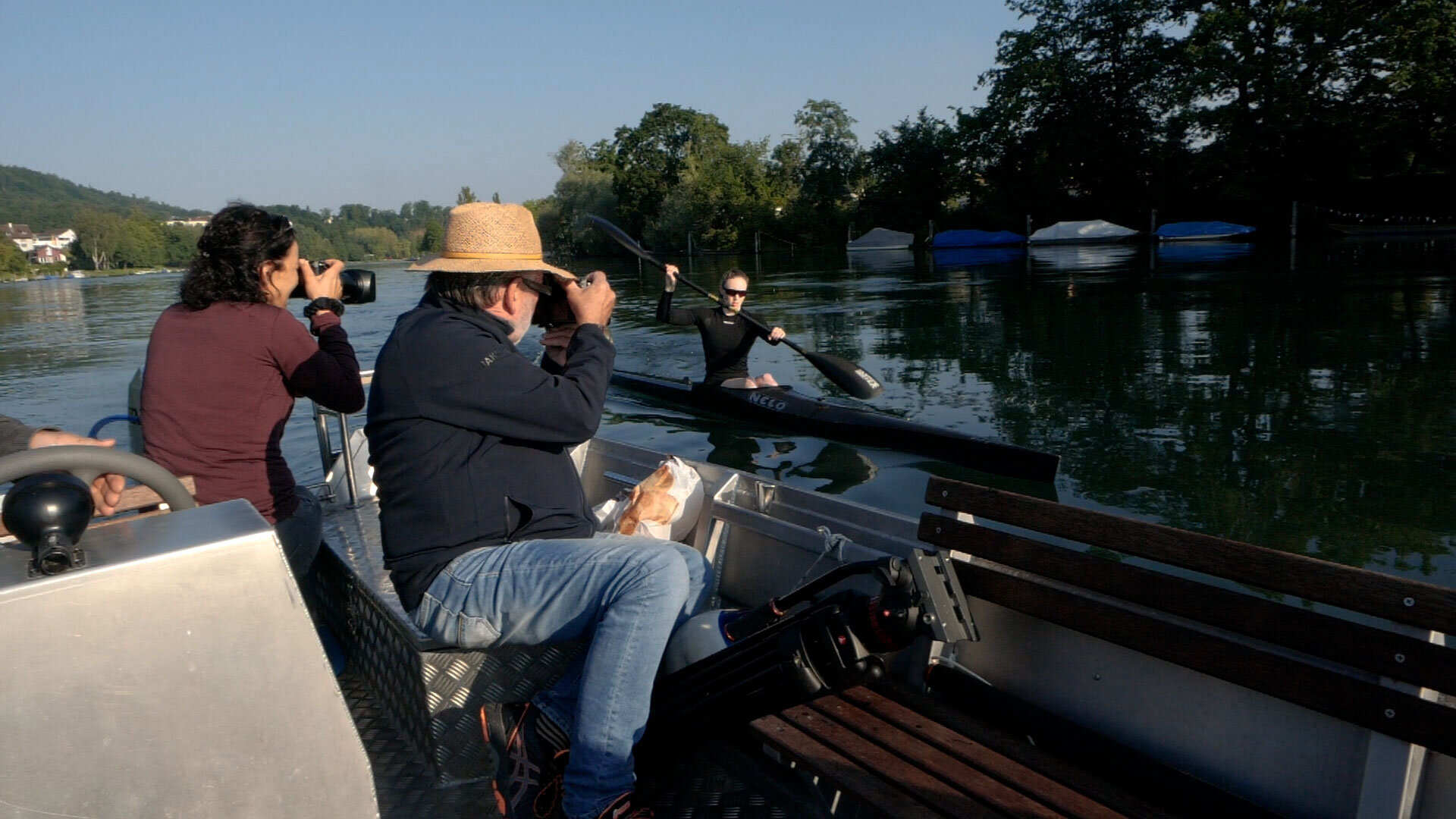
It started right away with practical exercises (all images in this blog article are screenshots from film clips of the participants)
Here is the feedback from the participants:
" Peter Schäublin's beginner's film course was both very educational and enriching. As a complete beginner, I was entering new territory when it came to filmmaking and I was not disappointed. With three thematic days, the course was well-structured and organized. With four participants, the course was well-attended, and Peter had the time and opportunity—in addition to the general theory sections—to address many individual questions and problems. I received the necessary and expected know-how and tools, and I think I could start my own film project.
Not to be forgotten and worth mentioning is the entire "surroundings" organized by Peter and his wife Ursula. This allowed us to combine intensive and busy work hours with relaxing and enjoyable coffee and lunch breaks.
For me as a beginner, I see potential for improvement in either getting to know my own or rental camera better beforehand, as well as a somewhat "gentler" introduction to the complex subject of filmmaking. Although a little nudge in the deep end never hurt anyone ;-)
Thank you so much for the fantastic 3 days. They certainly won't be the last. "

The small group allowed me to respond to the individual needs of each participant.
" The film course was very comprehensive, and I benefited greatly from the small group size. I had no prior knowledge of screenwriting, and the instructor also explained film editing with Premiere Pro to us thoroughly.
The culinary service and hospitality were wonderful.
The practical part with canoeing and boat trip on the Rhine were exceptional.
Thanks Peter and see you next time. ”

"Lisa Paddles" was the subject of our little film project. We filmed not only on land but also from the boat.
" It was an intensive and very educational three days! In a relatively short time, Peter Schäublin was able to give me the tools I needed to venture into my own film projects. With his positive and enthusiastic personality, he can inspire and motivate you to try things I would have hardly thought possible.
The group size was ideal with four participants plus the protagonists and helpers. We also thoroughly enjoyed the food and entertainment. I definitely recommend the course. However, I think it's important that participants already have a good grasp of the basics of their camera beforehand. "

Poetic shots on the water.
" It's the special atmosphere—'at home among friends'—that makes this course so unique. The small group size allows for a great deal of personal attention from the instructor and leads to intensive exchange among the group members. The diligence with which the instructor approaches the topic extends seamlessly into the areas of course organization, catering, and everything else. Simply fantastic and an enriching—above all, personally. "
The idea and the recordings of the participants resulted in a coherent short film:
We haven't set a fixed date for the next film course yet. If you're interested in a film course, please send us an email so we can let you know as soon as the next course date is set.