
Blog

Leica SL3 – a first review
Back in November, my friend Christian Habermeier and I were out and about with the Leica SL3. We put the pre-production model through a real endurance test with the cold-water surfers in Iceland.
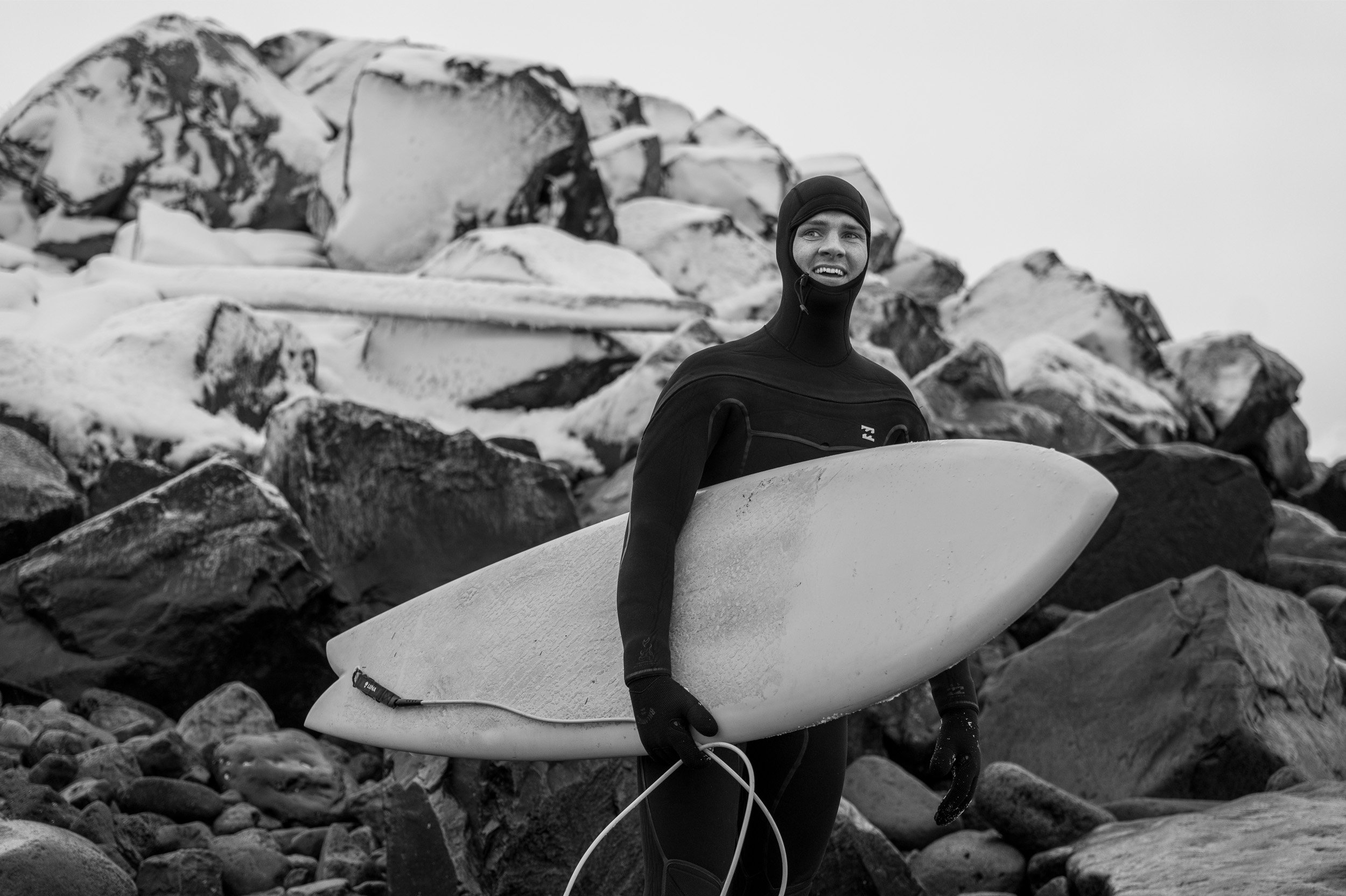
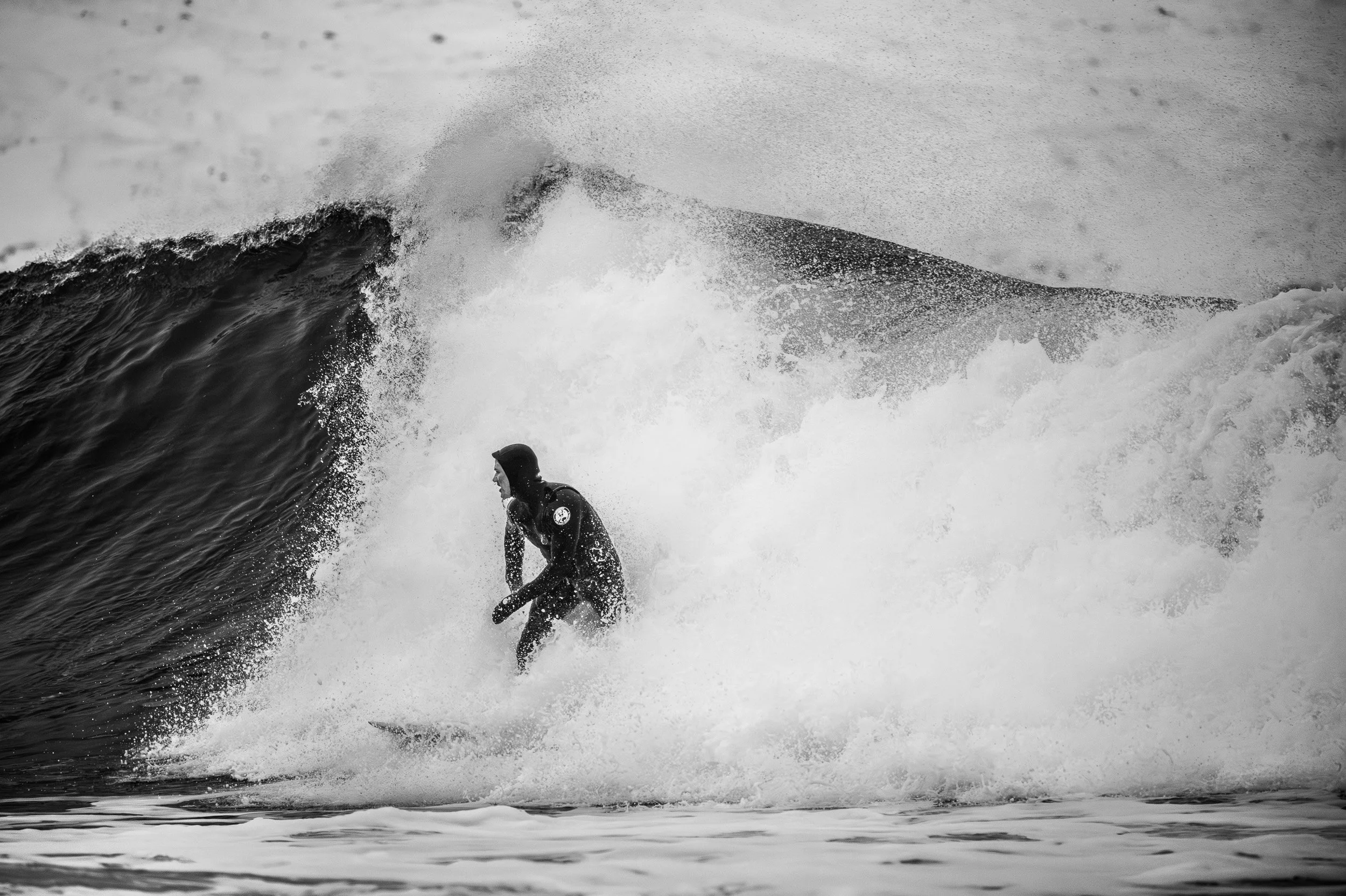
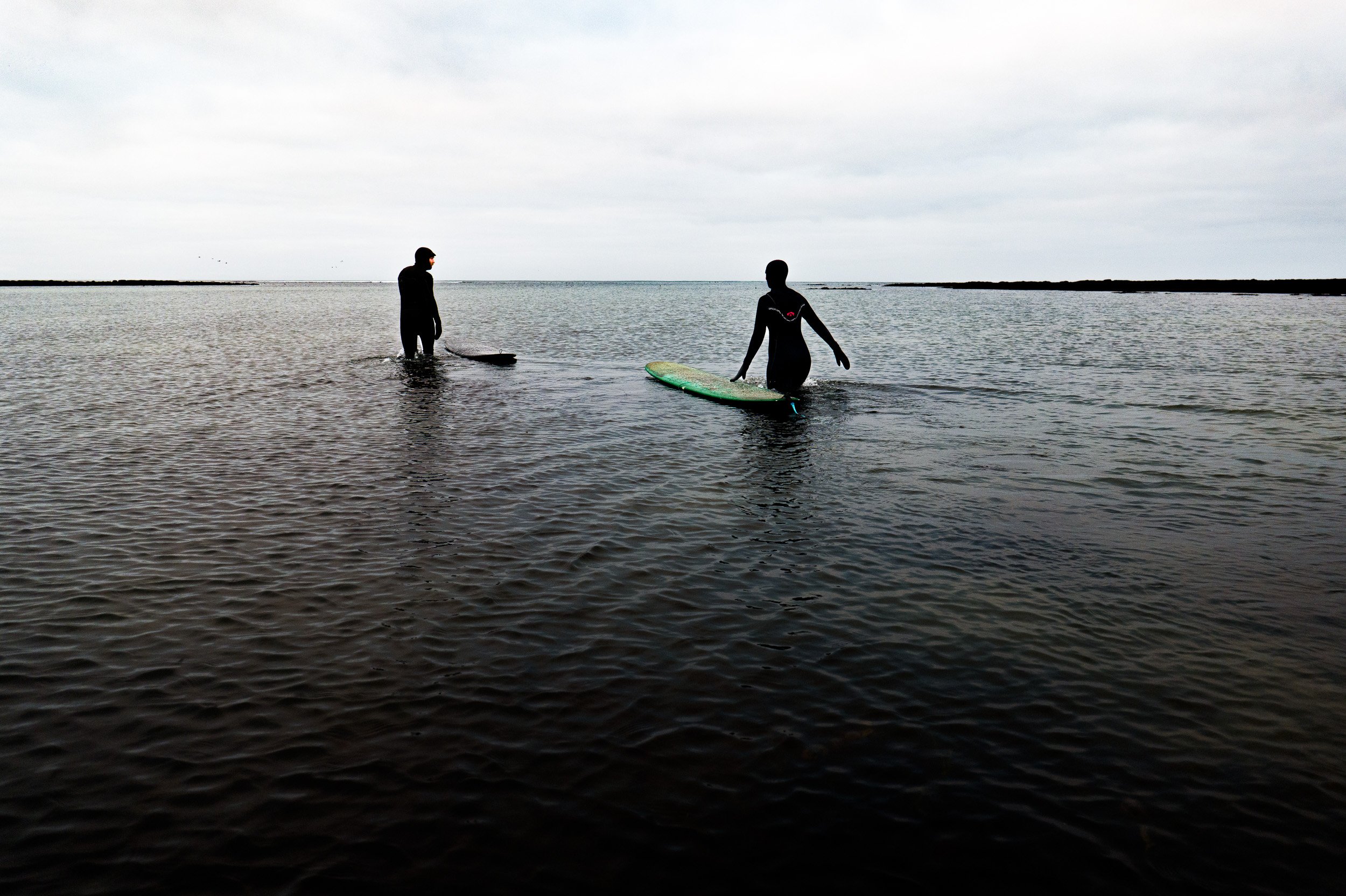
Last November, when the rumor mill hadn't yet produced any definitive reports, my friend Christian Habermeier and I were traveling in Iceland. With us were two pre-production Leica SL3s. We wanted to put the camera through its paces and push it to its limits. Iceland's cold-water surfers seemed like a brilliant project for this. And so, one early morning at minus 7 degrees Celsius in northern Iceland, we stood with clammy fingers, watching as the surfers, enthusiastic and seemingly immune to the cold, forced themselves into their wetsuits.
Tough guys. Leica SL3, 1/320 sec., f/1.4, 320 ISO, Summilux-SL 50 mm f/1.4. Image editing and black and white conversion in Lightroom.
Elli Thor, who is not only a very good surfer but also an outstanding photographer, introduced us to the cold water surfing scene. His website is definitely worth a look , and if you're planning a film or photo project in Iceland and need a local photographer/filmmaker, Elli is definitely a top choice.
Elli. Leica SL3, 1/200 sec., f/2.2, 250 ISO, Apo-Summicron SL 90 mm f/2.0. Image editing and black and white conversion in Lightroom.
What are the main differences between SL2 and SL3
How does the SL3 compare to the SL2? In my opinion, these points speak in favor of the latest model in the SL series:
Foldable screen. Leica has long resisted making the screen foldable. Now it's here with the stability that Leica values.
A high-resolution 60 megapixel sensor with the ability to capture images in both RAW and JPG formats at three resolution levels. Dynamic range and noise performance have been further improved compared to the SL2.
Faster image sequences (up to 15 frames/second)
Improved autofocus compared to the SL2
Case slightly smaller, but not as small as the cases from other providers, which in my opinion no longer fit well in the hand because they are too small, at least for me
Video in 8K
The already ingenious operating concept and menu navigation have been further improved
Elli and his wife Rachel. This photo wouldn't have been possible without the foldable screen, because I held the camera just above the water's surface. Leica SL3, 1/250 sec, f/4.5, 2500 ISO, Leica Vario Elmarit SL 24-90mm f/2.8-4.0 at 56mm. Image editing and black and white conversion in Lightroom.
How does it work with the SL3

Unrivalled ingenuity: the operating concept of the Leica SL3 (Press photo Leica)
The camera is entirely at the service of the photographer
What I appreciate so much about the Leica SL series is the fact that the camera is entirely at the photographer's service. Not a lot of fancy buttons and levers, but a focus on the essentials. In my opinion, the on-screen interface is faster and more intuitive to use than a lot of different levers and buttons. My friend Christian, who had only worked with the S3 before our trip and was unfamiliar with the SL cameras, said approvingly: "After half an hour, you'll have the camera under control. Everything is logically structured." I was very pleased that the Leica developers gave the SL3 a third dial. This allows you to adjust shutter speed, aperture, and ISO with separate dials without having to press any buttons first. The new on/off switch took a little getting used to at first, but the ability to put the camera into standby mode saves time when turning the camera on. It's ready to use from standby mode in a flash.
The SL3 is tough
We were out in minus 7 degrees Celsius, and the SL3 got a few splashes of water. But it always worked perfectly and without complaint. I've had occasional crashes with other brands' cameras in extreme weather conditions, but the SL series cameras have always worked flawlessly. For me, the reliability of a camera is a key factor in my purchasing decision.
The lenses are a dream
For me, the SL lenses—specifically those produced in Wetzlar—are fantastic. The three SL zooms, 16–35mm, 24–90mm, and 90–280mm, are, in my opinion, the best zooms for full-frame cameras on the market. I find they offer a level of quality that other systems only achieve with fixed focal lengths. The fixed focal length series for the SL with a maximum aperture of 2.0 (21/24/28/35/50 and 90mm) are so incredibly good that, in combination with the 60 megapixel sensor, you can work almost at medium format level. I have the SL 2.0/35 and the 2.0/90mm, and I absolutely love working with both of them. Thanks to the L-Mount Alliance, lenses from Panasonic and Sigma can also be attached to the SL3, although, as mentioned above, I prefer the original Leica SL lenses. But, I admit, this is a question of cost.
I like the color management
With other camera manufacturers, I often find the colors a bit oversaturated. Leica cameras are more restrained in this regard. Of course, some things can be corrected in post-production, but the closer the colors are to my optimal perception, the less time I have to spend on image editing.
A special function for architectural photography
First introduced in the Leica M series, automatic perspective correction has also been available in the SL series since the SL2. When perspective correction is activated, Leica provides each image with the information needed to correct converging lines in post-production with Lightroom at the touch of a button. When shooting in RAW, you have both an uncorrected image and, at the touch of a button, a perfectly corrected image in which all converging lines are absolutely straight. I always had the impression that perspective correction in Lightroom didn't work 100%. In my opinion, the Leica perspective correction is better.
Is there anything that speaks against the SL3?
In my workshops, I often have participants take photos with my SL2. There's a general consensus: the operating concept and image quality are top-notch. Of course, Leica isn't cheap, and not everyone is willing or able to invest that much money in a camera system—although everyone agrees that the high-quality materials and sophisticated operating concept are worth the money. One criticism occasionally comes from my "testers": the camera and lenses are heavier than competitor models. Here, you're essentially paying a price for the system's robustness, and each person must decide for themselves whether they're willing to accept the extra weight for added robustness.
And the autofocus?
Practically all reviews and forums have stated that the Leica SL2's autofocus lags behind that of its rivals. That's absolutely correct. The SL3's autofocus has been significantly improved, and the eye tracking works flawlessly. However, I don't want to hide the fact that when it comes to autofocus, the SL3 is beaten by cameras like the Sony a1 when it comes to extremely fast-paced sports. It's quite possible that Leica can improve its AF performance with firmware upgrades, but anyone who photographs Formula 1 or other fast-paced sports might be better off with a camera like the Sony a1. In "normal" situations, and even for sports that aren't ultra-fast, the SL3 is a wonderful tool. When filming, the autofocus on our pre-production model wasn't entirely problem-free. It's quite possible that things are now better on the production model. However, if you focus manually while filming, the SL3 is a camera that delivers beautiful video files at – as already mentioned – up to 8K. I also think it's interesting for filmmakers that you can create different profiles for filming. Once you've done that, you can switch back and forth between different film settings in a flash. I created a "normal" profile with 4K 30fps, one with 4K 60fps, an 8K profile, and a slow-motion profile. Switching back and forth while working is then lightning fast.
The SL3's autofocus has been significantly improved compared to the SL2. Leica SL3, 1/1000 sec, f/6.3, 3200 ISO, Sigma 100–400mm 5–6.3 DG DN OS at 288 mm
A small photo gallery of the cold water surfers







And finally a little movie
I've put together a short film clip, especially to visualize the fast-paced sequences of images. All stills were shot with the SL3. Enjoy immersing yourself in the world of cold-water surfing.

Special thanks to Elli Thor and his friends. It was an honour to be out and about with you. © aller Bilder und Videoclips by Christian Habermeier und Peter Schäublin.

And the winners are …
Voting for the cover of the SAH annual magazine is closed. These are the results and the winners...
Many thanks to everyone who participated in the vote for the cover of the new SAH annual magazine . We were delighted by the large number of participants and the feedback. All three covers received votes, but there was one design that emerged as the clear favorite. Here are the results of the vote:
Variant 1 // 24.7%
Variant 2 // 64.9%
Variant 3 // 10.4%
And the winners are
The winner of the essKultur voucher worth CHF 30 is Doris Gamper
The winner of the essKultur voucher worth CHF 20 is Hermann Augustin
Congratulations to the two winners, and once again, a huge thank you to everyone who voted. If you didn't win, don't be discouraged and participate in the next poll. The chances of winning in a 720-degree vote are significantly higher than in most other competitions and raffles ;-).
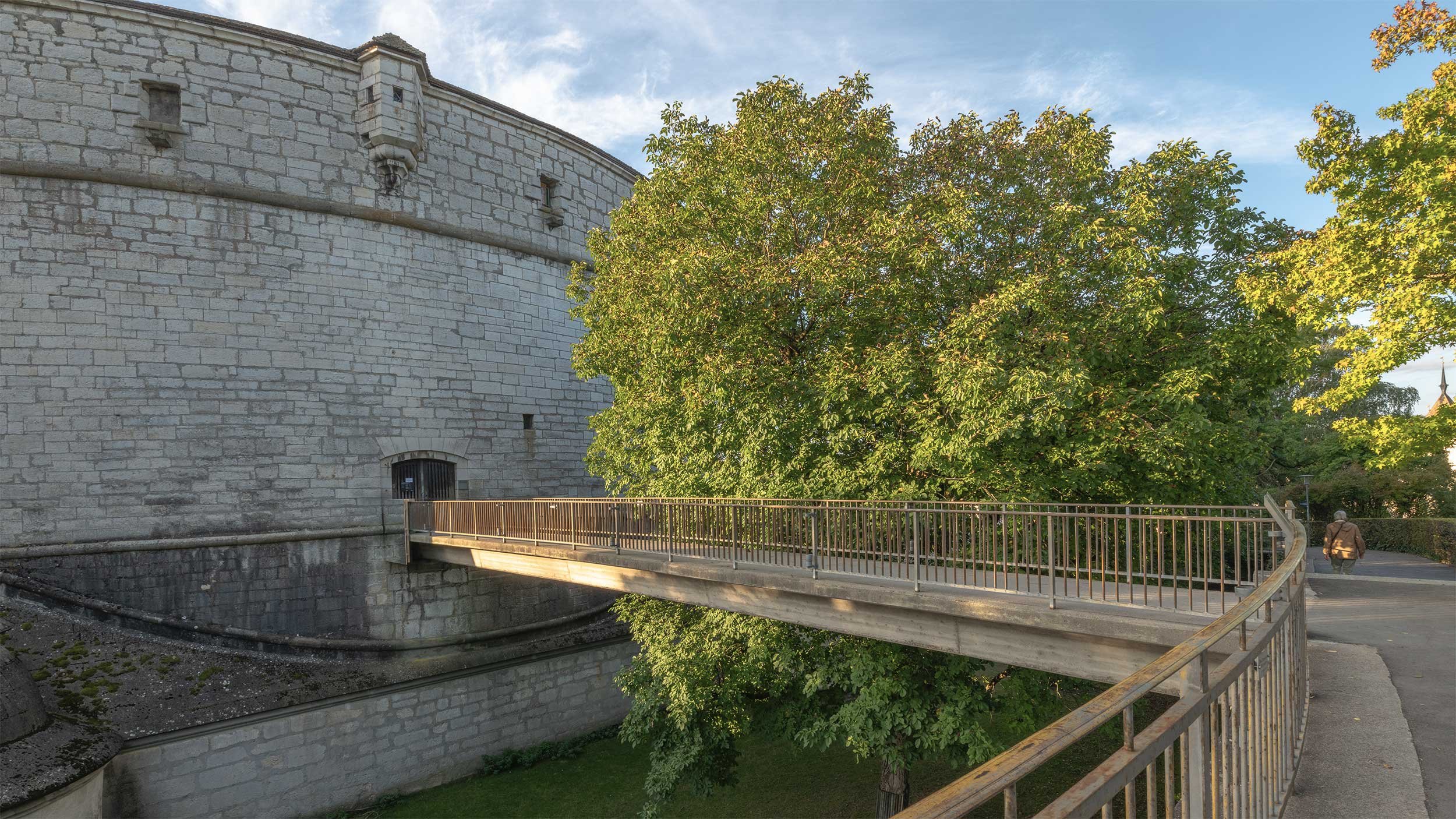
The new Munot Bridge
42 companies submitted ideas for the new Munot Bridge. One company had a very special idea: to make the bridge virtually invisible with a mirror coating. We were honored to realize the photographic implementation for the competition...
Forty-two companies participated in the ideas competition for a new bridge over the Munotgraben. It was organized by the city of Schaffhausen. One of these 42 participants is the Schaffhausen-based company IHT . Markus Zimmerman, Joshua Krebs, and the IHT team had the revolutionary idea of building a bridge that isn't really a bridge at all—because it's almost invisible. This can be achieved by covering the bridge with mirrors. But how can this be visualized for the competition submission?
There's plenty of software for 3D visualization in the world of architecture. They create astonishingly realistic images of buildings, bridges, or similar structures that don't even exist yet. But in this case, the challenge was to show that the mirror coating actually made the bridge almost invisible. But how can you simulate a reflection in software so that it's realistic? That's rather difficult. In this case, a little manual effort and Photoshop will get you there:
The IHT team had the idea of building a two-meter-wide mirror module that could be hooked onto the existing Munot Bridge and moved around. The IHT employees implemented this project together with Natürlich Meister Holzart from Thayngen . Also involved in the planning were Dost Architektur GmbH, Schaffhausen , and the association "Lernende Bauen Zukunft" (Learning to Build the Future), Schaffhausen . So one morning, I stood at the Munot with my camera and tripod to photograph the module: The IHT team hung the mirror unit and moved it by almost two meters from shot to shot. Afterward, I had precisely registered individual images, which I then assembled in Photoshop and retouched any slight misalignments.
I shot the whole thing from three different positions to demonstrate that the desired effect doesn't just work from one specific angle, but that the illusion of the disappearing bridge is real from all angles. The entire team put in a lot of effort:
The final result
After carefully assembling the individual images, three image montages were created that do not simulate the effect of the mirror bridge, but rather visualize it in real life (click on the images for a larger view):


For the one image that IHT submitted for the competition, we virtually constructed a delicate steel frame in anthracite and eliminated minor imperfections. We also added fine ribs to the mirrors. This prevents birds from flying into the bridge. This aspect was very important and was tested beforehand with experts. The result is fascinating – the bridge that is (not) one:
Unfortunately, the project didn't win. They opted for a more conventional solution, a delicate bridge. We think the idea of a mirror bridge is compelling. It would have been something completely new and a bit cheeky.
Vote and win
Vote by March 3rd and win one of two esskultur vouchers: Which cover would be your favorite?
The SAH Schaffhausen is doing a tremendous job in integrating refugees. Every year, we are given the privilege of producing a magazine in which the SAH reports on its work. Through interviews and articles, readers also learn about the lives of those who have been forced to flee. We are now in the process of gently redesigning this publication.
And this is your chance to win one of two essKultur vouchers:
The magazine is now called "Courage" and, unlike previous issues , which did not feature a photo on the cover, will now feature a photo on the front page. Since this issue features a report on two SAH participants at their sports clubs, a photo from one of these reports is a good choice for the cover. We visited the Schaffhausen Boxing Club , where Nasib trains, and the Neuhausen Table Tennis Club , where Nathalia trains. Three possible cover versions are available.
Vote by March 3rd for which cover would most motivate you to pick up and browse through SAH magazine. We'll be giving away a CHF 30 essKultur voucher and a CHF 20 voucher donated by SAH Schaffhausen to all participants.
These are the three cover variants:
Variant 1
Variant 2
Variant 3
And here you can vote:
I would choose the following cover variant:

Once on the other side of the camera
Once on the other side of the camera: Great report from the Sunday window about us on the topic of «Discovering Slowness» and our new «Silence» book
Ursula and I were quite surprised when the Sunday newspaper Fenster zum Sonntag asked us if they could make a short film about Ursula and me on the topic of "Discovering Slowness." The request was prompted by our book "Silence ," which focuses on silence and, with it, the act of disconnecting from hectic everyday life.
We wouldn't exactly call ourselves masters at carving out spaces for slowness. But we are very aware of the importance of these breaks. And we are practicing taking them again and again. Because, as paradoxical as it may sound, a lot happens precisely in times of silence. Inner processes unfold, important thoughts are given space, unprocessed thoughts become present and can be addressed and processed. New ideas pop up before our inner eyes.
The film crew visited us in our small alpine hut during a snowstorm. It was a bit of a logistical challenge, but Christof, Piet, and Michi handled it brilliantly and shot a fantastic piece. There was plenty of time for great conversations during the off-peak hours, and it was also an exciting experience to be on the other side of the camera for a change ;-).
Anyone who missed the report on SRF can watch it here on the Sunday Window’s YouTube platform :
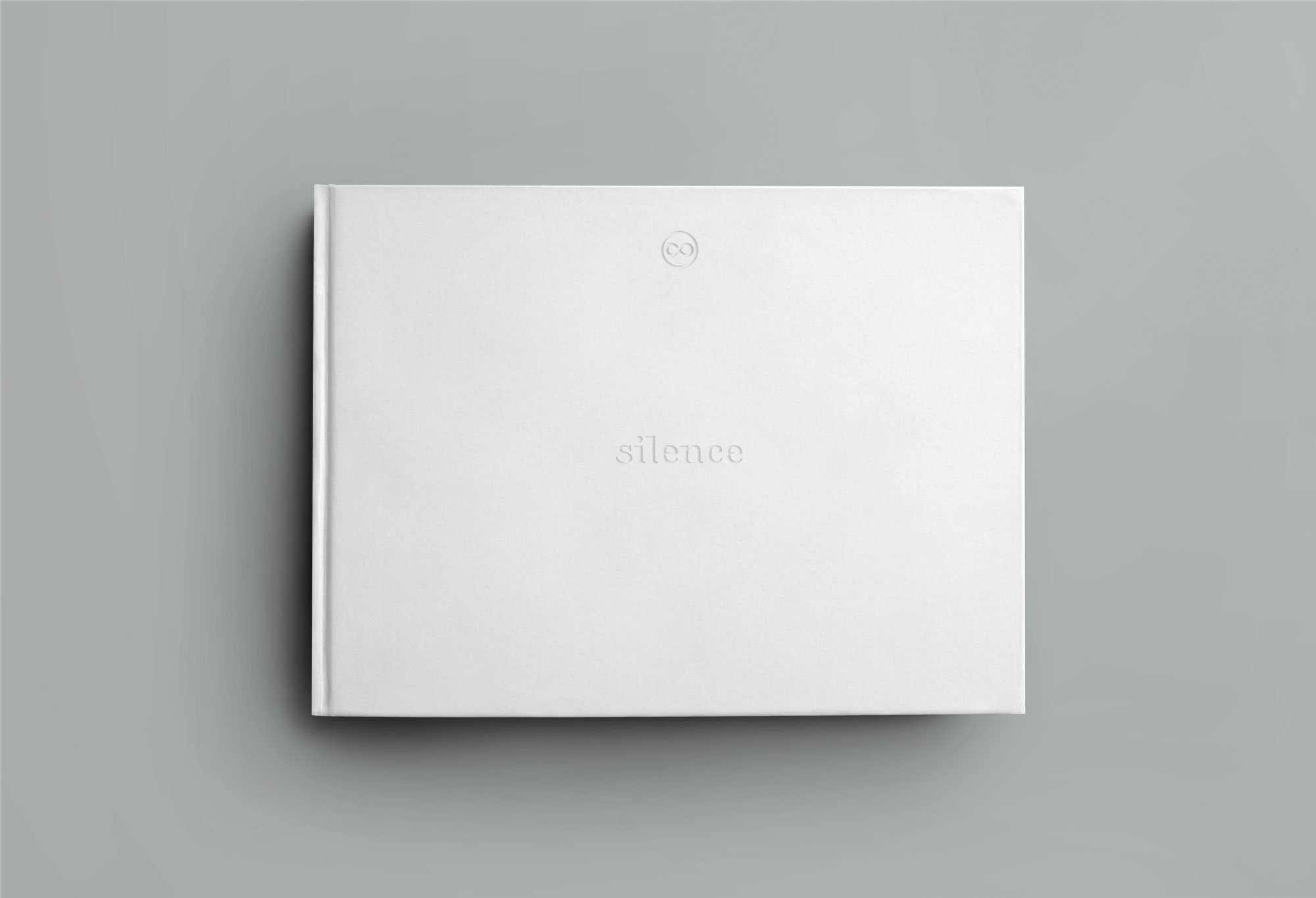
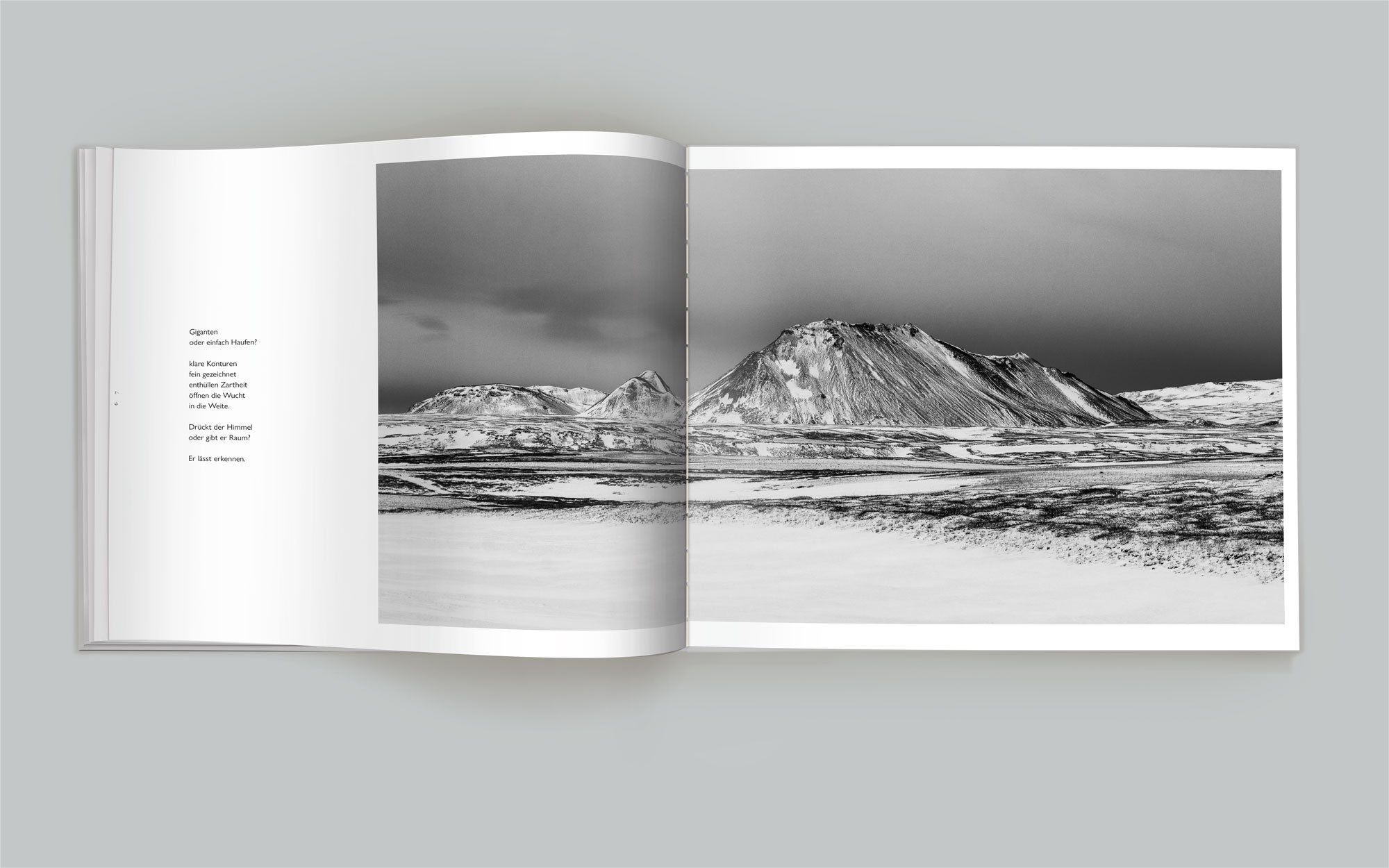
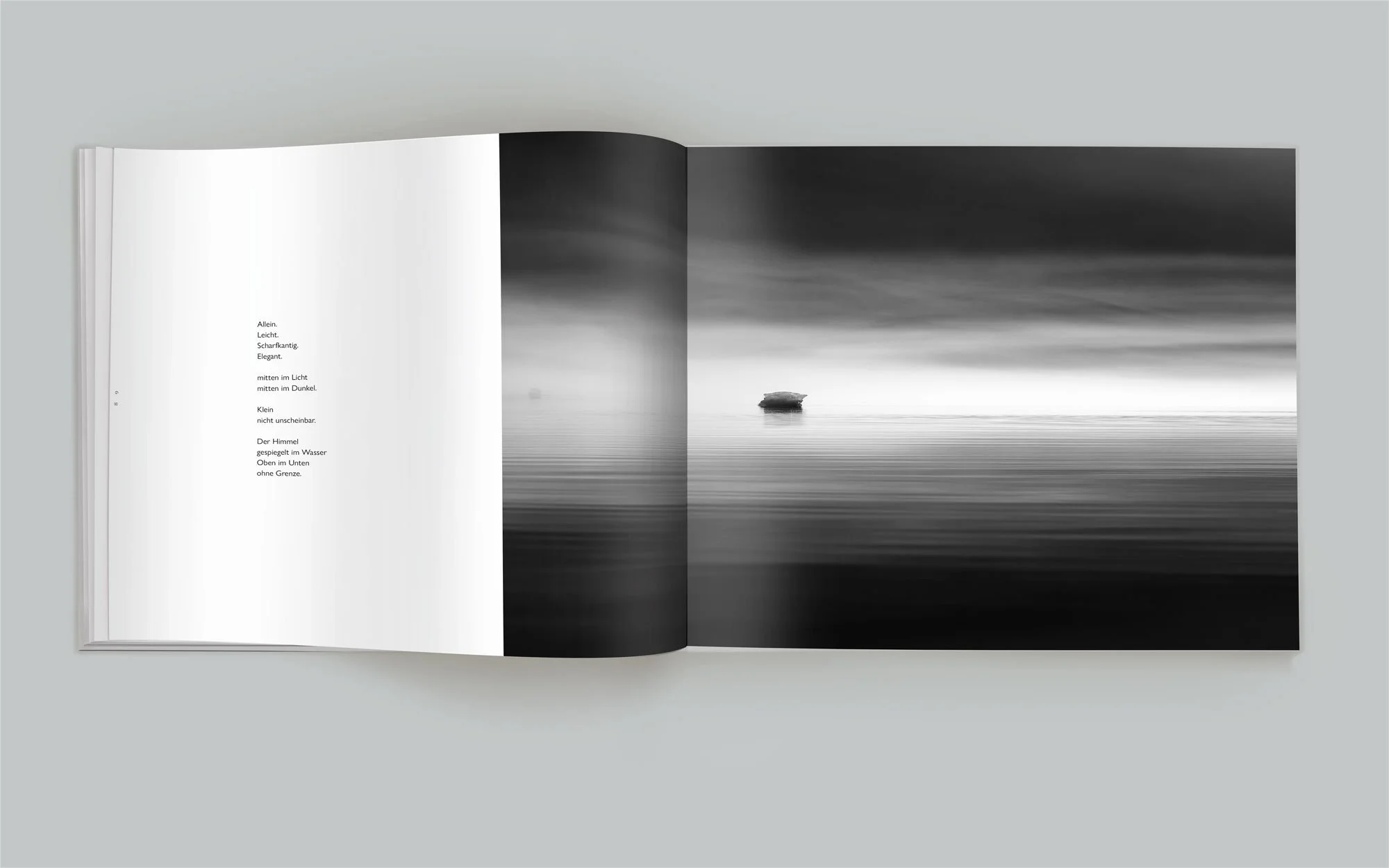
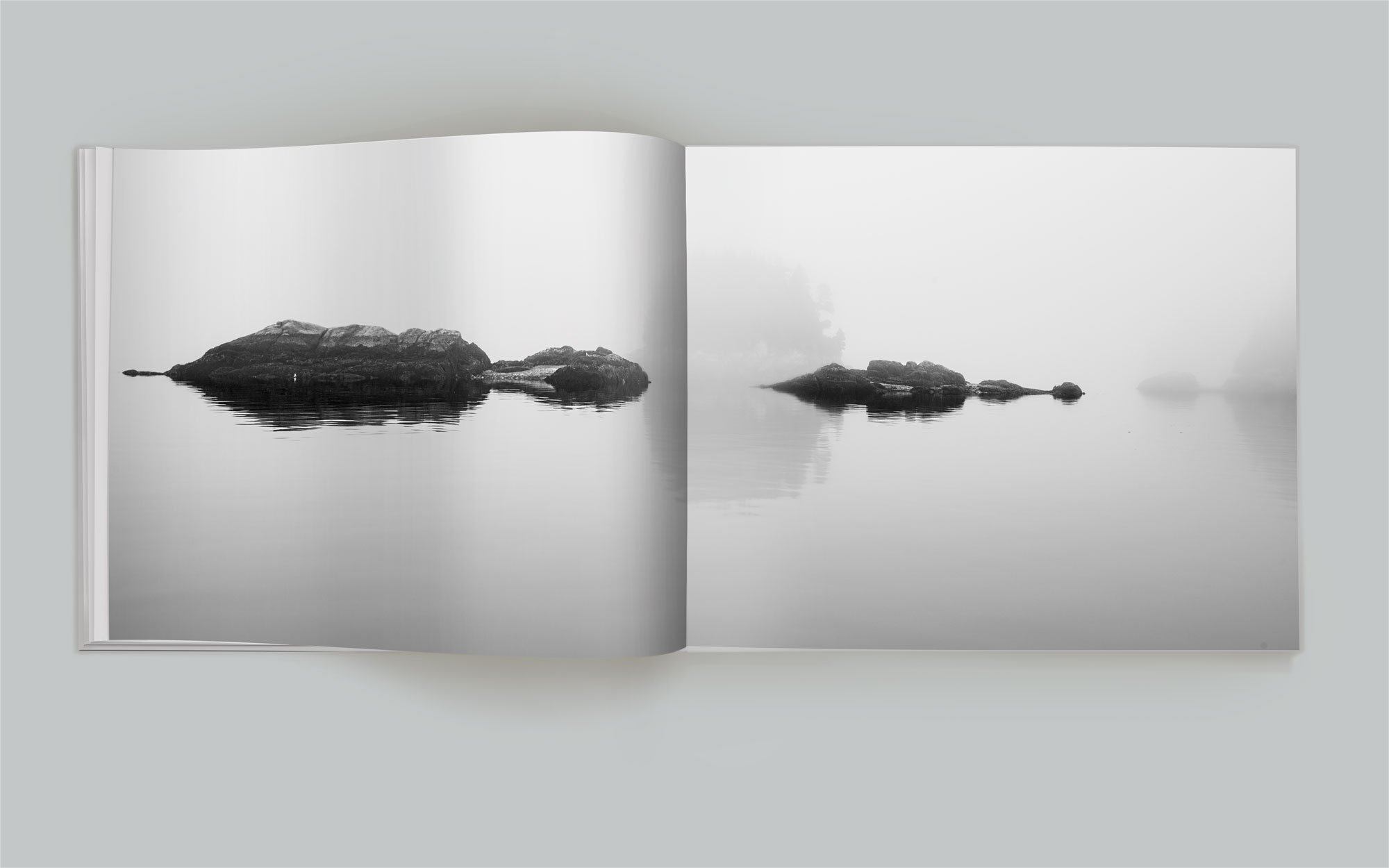
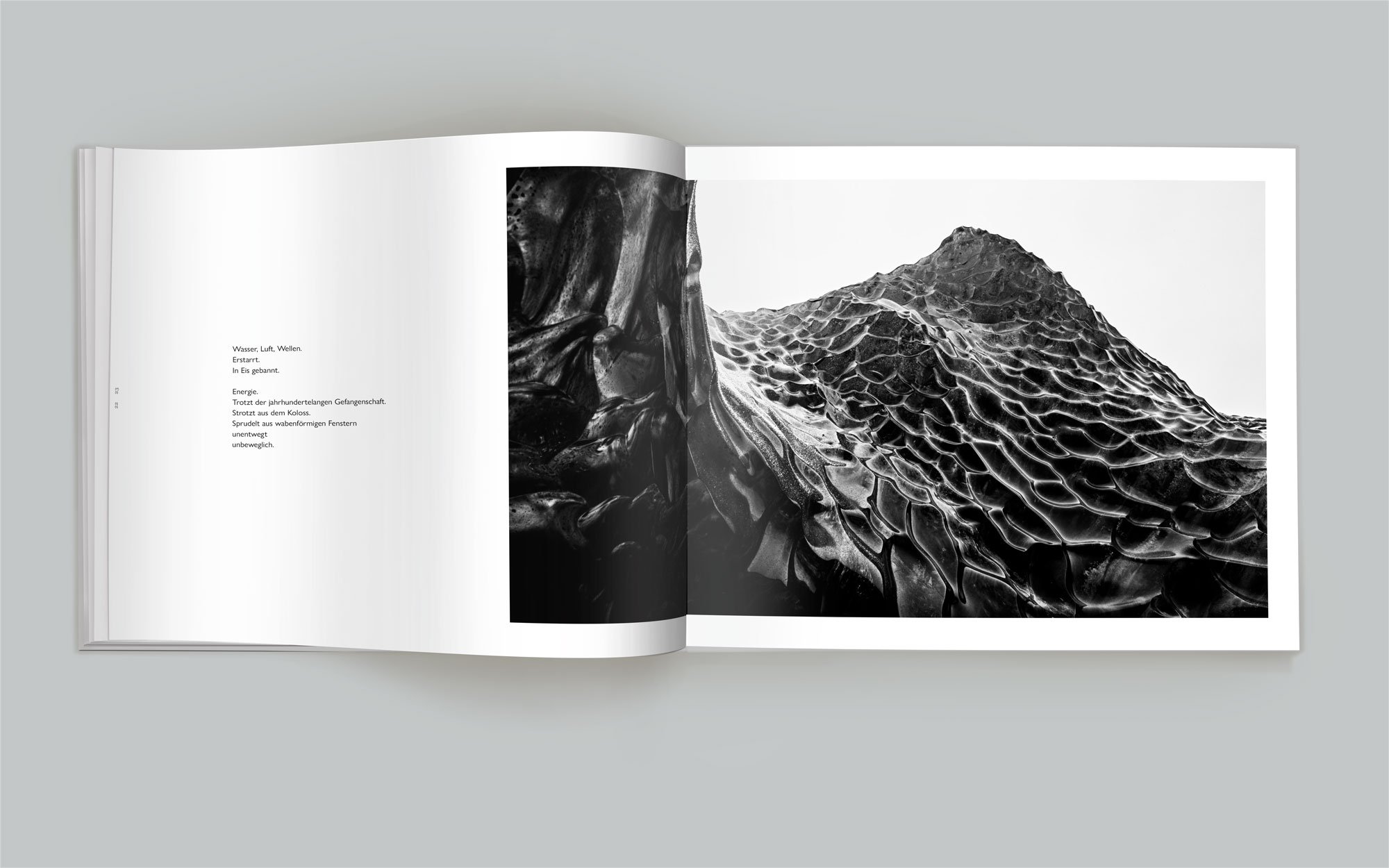
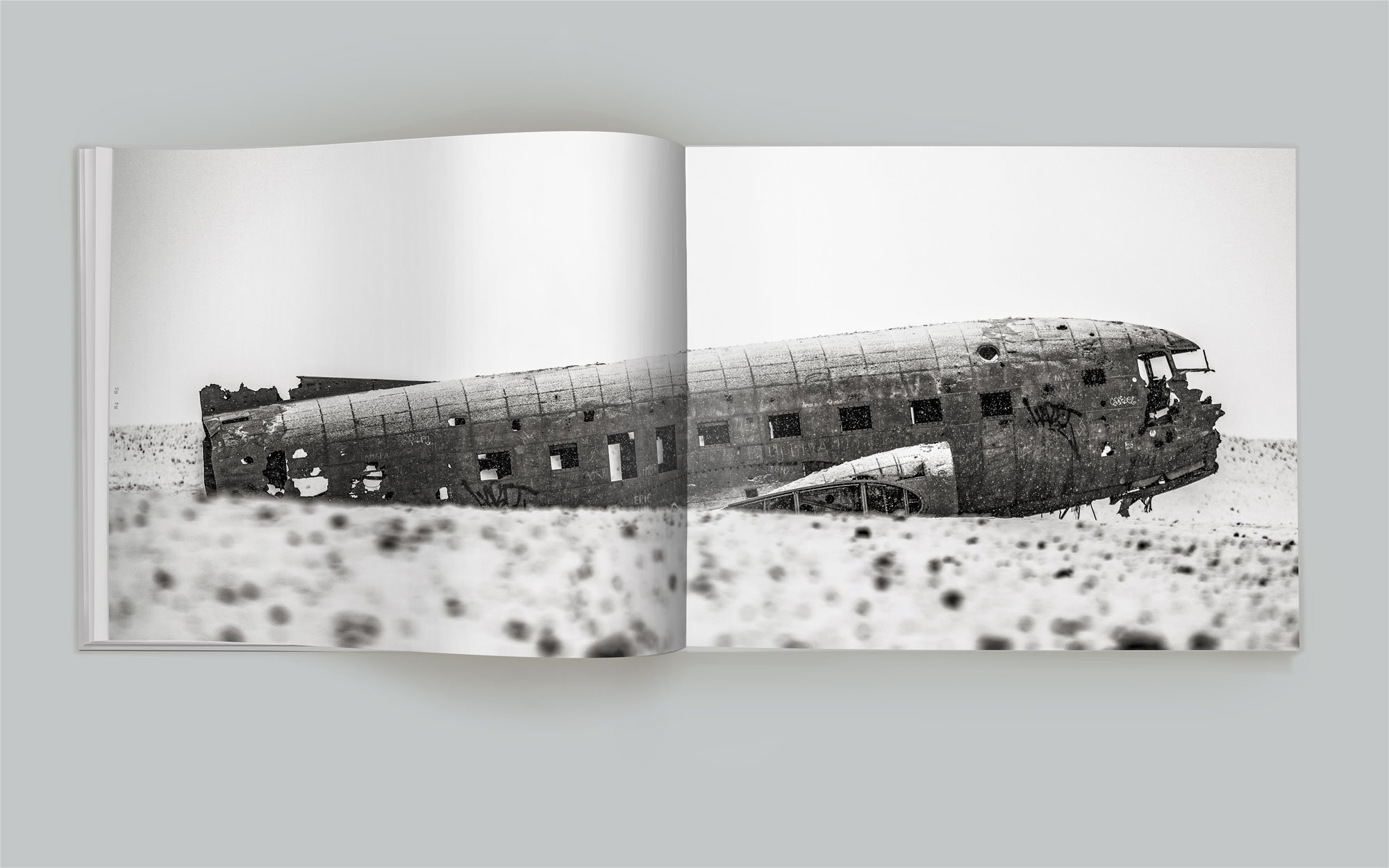
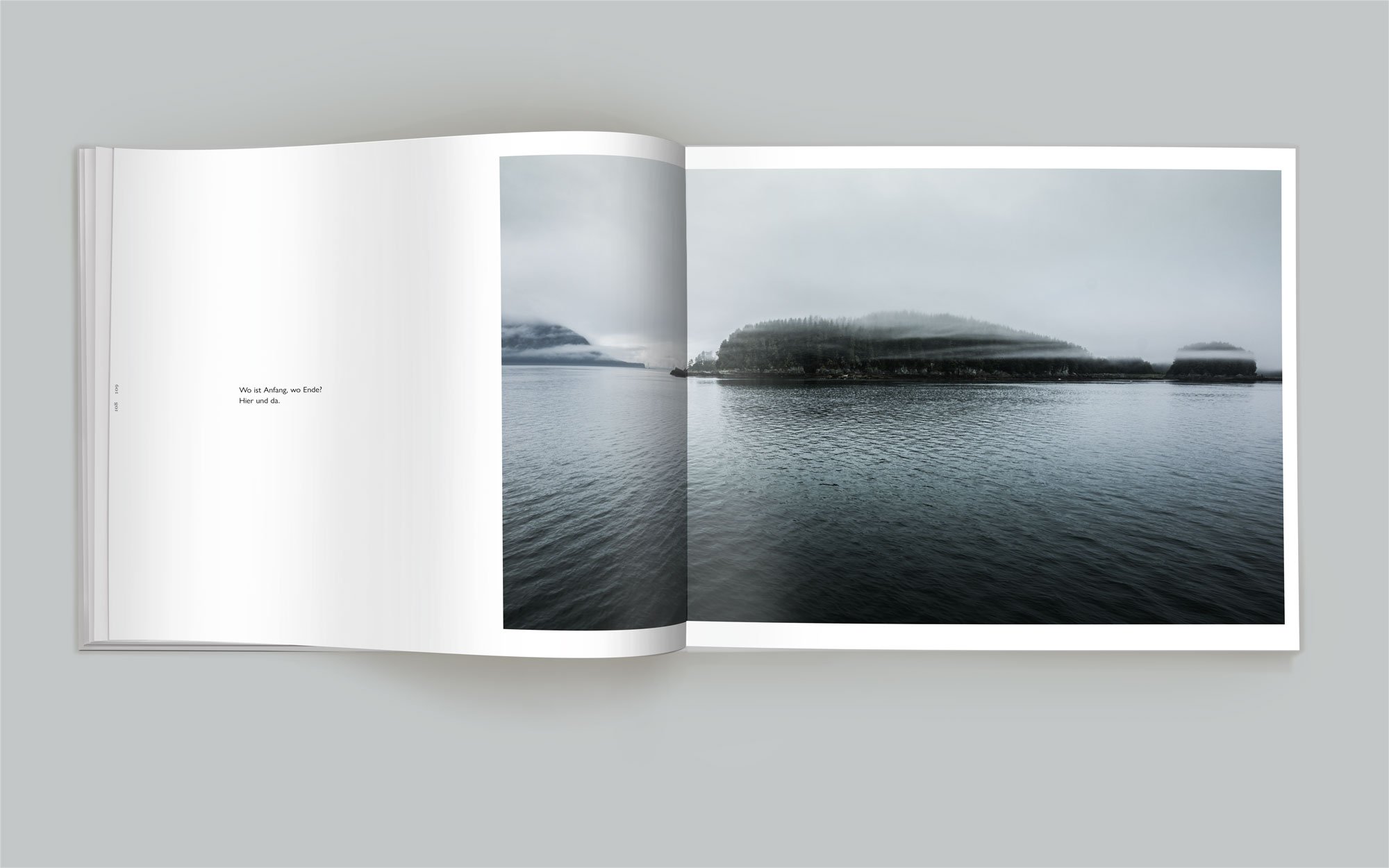
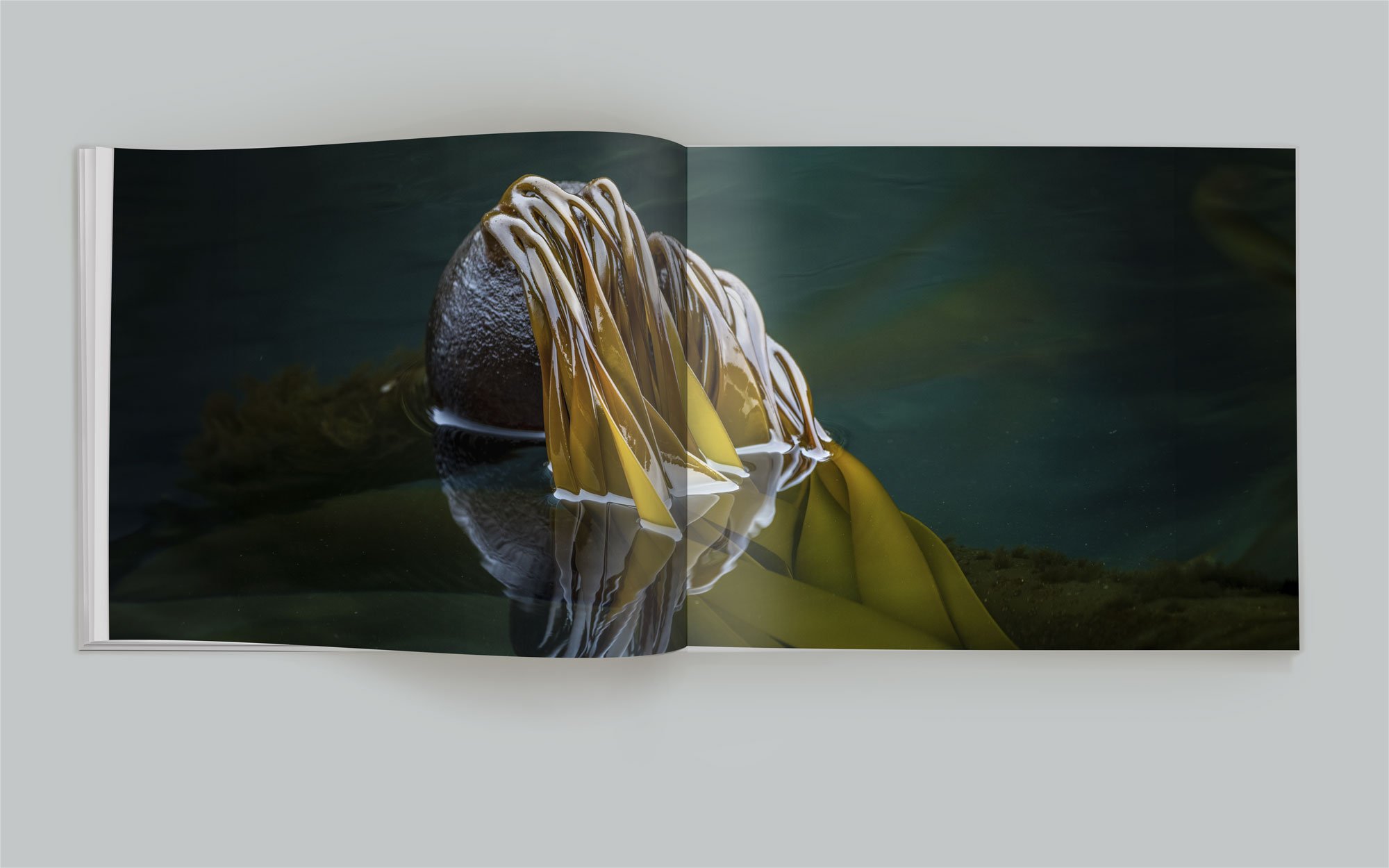
And if you'd like to purchase one of the "Silence" books, limited to 299 copies, you can order your copy in our online shop . Here's a sneak peek inside the book:

Schaffhuuse shows heart
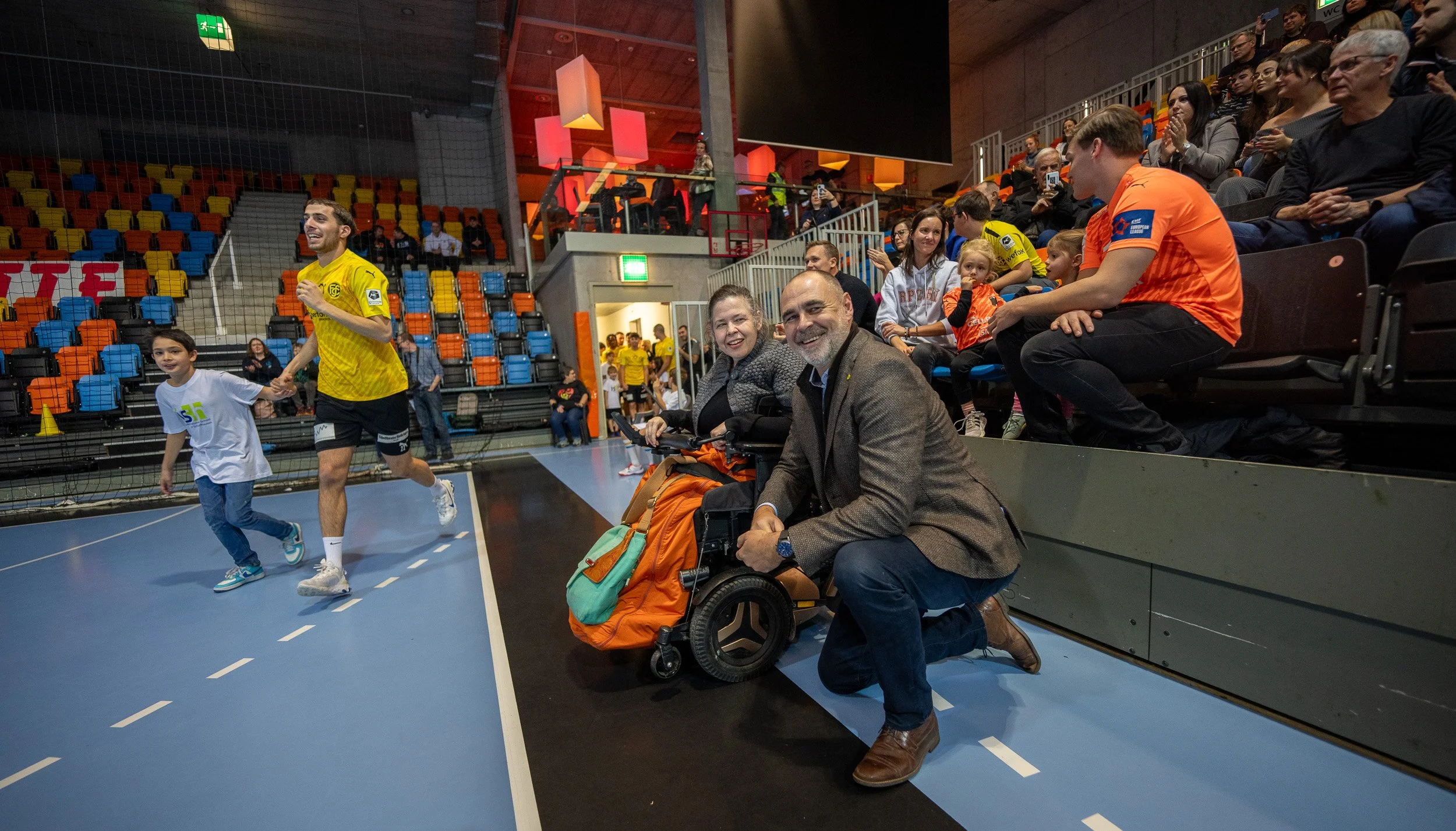
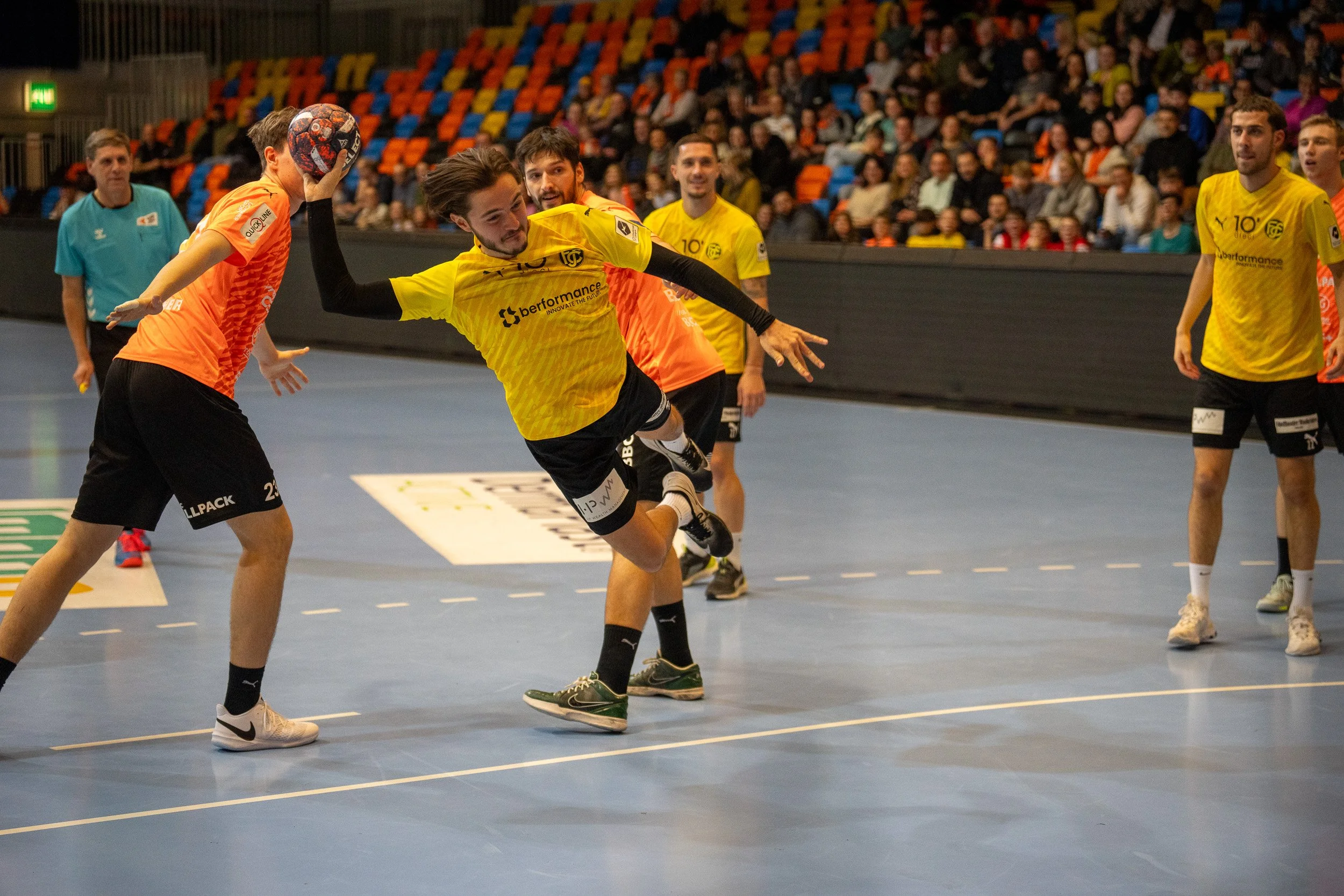
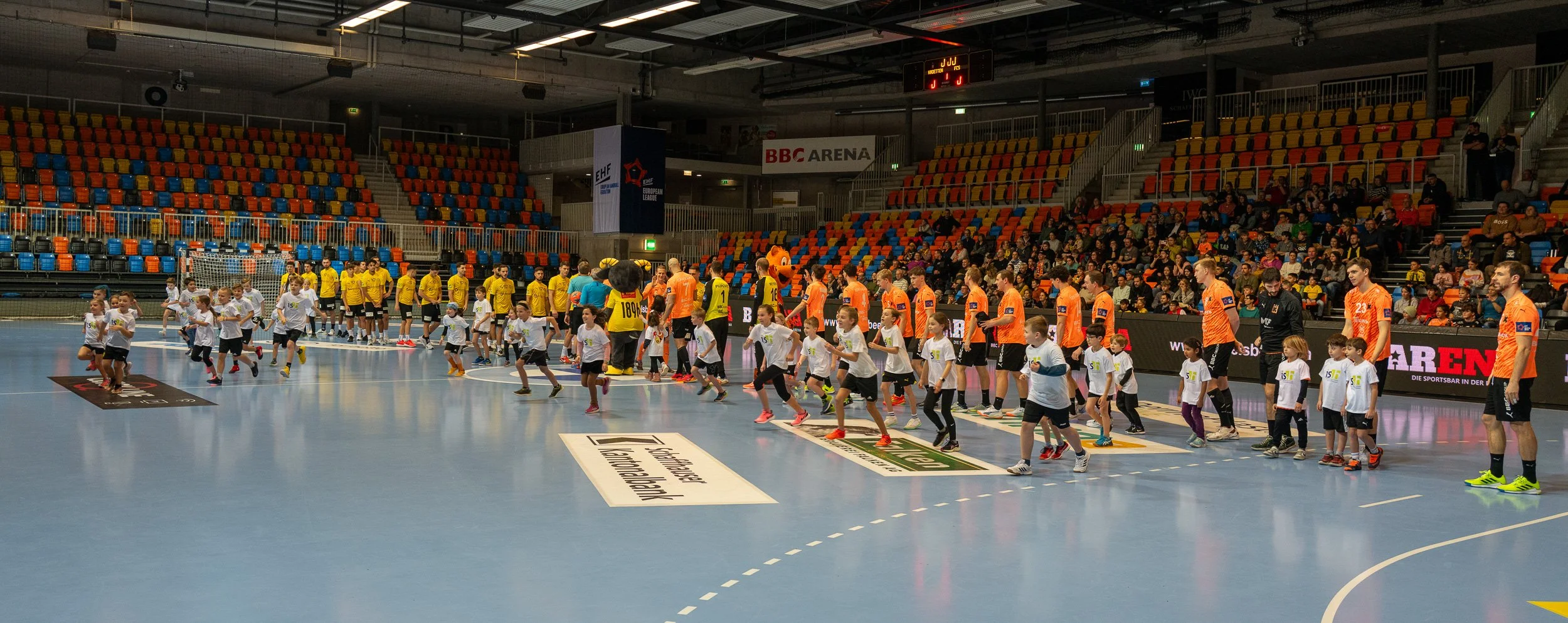
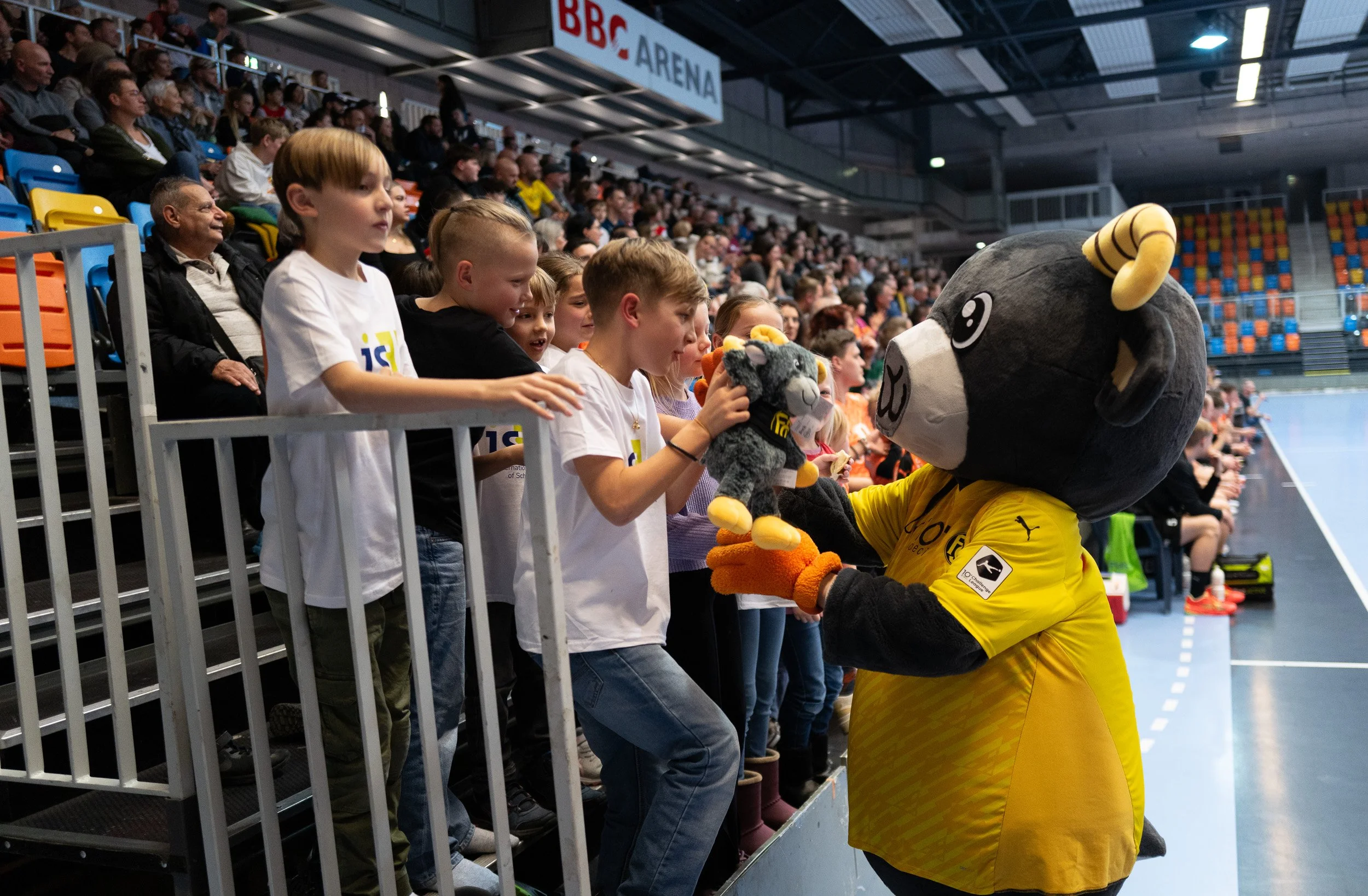
When Raúl Bobadilla isn't playing soccer for once, but is throwing like a top handball player, it's time for the charity match "Schaffhuuse shows heart." Impressions from the game.
When Raúl Bobadilla isn't playing football for once, but is taking a shot like a top handball player, it's time for the charity match "Schaffhuuse shows heart": FC Schaffhausen plays against Kadetten Schaffhausen. One half will be football, and the other half will be handball. There's plenty of showmanship and fun involved, and the audience gets their money's worth thanks to the stars' humorous performances.
This was the second time this event has been held. The proceeds are donated to a good cause – this year to the Lindli Huus . As a photographer for the Lindli Huus, I was there in person. Here are a few impressions from this fantastic event, which we hope will be held again next year.













AI second round
AI-assisted generation of AI images…
In my first article, I reflected on the fascination and dangers of AI-generated images. Now I've started a small experiment to create better AI images using AI. This might sound a bit strange at first. Here's how:
To generate an image via AI, you need to formulate a description for the image—the so-called "prompt." On Midjourney, the platform where I enter my prompts, I wrote the following text (you'll get better results using English):
Photograph of old buses in a busstation with a woman sitting in one of the buses looking out of the window with waterdrops on the window. The woman has black hair and a face with a sad expression, industrial area, night, cold colors except inside the bus with the woman, the photograph should look like a painting of edward hopper but ultrarealistic. The picture is taken from outside the bus. In the picture you can see the whole bus and other buses in the background. drone shot on dji mavic 3.
Midjourney generated four images from this text:
The results were visually appealing, but they didn't match my intention. So I enlisted the help of AI and asked Microsoft's Copilot (many thanks to Jannik for the introduction) to formulate a more detailed, ten-sentence version of my text. The result was the following text:
The photograph is an overview of an old bus station taken from outside the bus. The station is located in an industrial area and the photograph was taken at night. The photograph has a cold color palette except for the inside of the bus where the woman is sitting. The woman has black hair and a sad expression on her face. She is sitting in one of the buses and looking out of the window. The window has water droplets on it, which adds to the melancholic mood of the photograph. The photograph is taken from a drone using a DJI Mavic 3. The photograph is ultra-realistic and looks like a painting by Edward Hopper. The photograph captures the whole bus and other buses in the background. The photograph is a stunning example of how a photograph can capture the mood of a place and the emotions of a person.
With this description, Midjourney has generated new, different images:
I tried again:
The photograph is an overview of an old bus station taken from an aerial perspective. There are five busses in the busstation which is located in an industrial area and the photograph was taken at a rainy night. All buses are empty, except one bus in which a lady is sitting inside the bus. The photograph has a cold color palette except for the inside of the one bus where the woman is sitting and looking out of the window. The window has water droplets on it, which adds to the melancholic mood of the photograph. In this one bus, a warm light enlights the inside of the bus. The woman has black hair and a sad expression on her face. The photograph is taken from a drone using a DJI Mavic 3. The photograph is ultra-realistic andhas a style like an Edward Hopper painting.
Now the bus station came out better, but the scene was shown from so far away that the individual person is no longer visible:
I gave up the idea of the aerial photography and formulated a new text together with Copilot:
The photograph is an ultra-photorealistic image captured with a Leica M camera and a 21mm lens. The photograph is a strong wide-angle shot that captures the entire bus station. In the foreground, you can see a bus that is illuminated from the inside. A young woman with black hair is sitting at a window in the middle of the bus, looking sadly out of the window. The photograph was taken during the blue hour, which gives the photograph a cool color palette. However, the interior of the bus where the woman is sitting is bathed in warm light, creating a stark contrast with the cool colors outside. In the background, you can see other buses parked in the bus station. They are all empty, and no other person can be seen in the whole picture except for the one woman sitting in the illuminated bus. It is raining, and you can see drops of water on the windows of the buses.
Here is the new result:
Still not what I imagined in my mind's eye, but better. I liked the image below right the best, and I generated four versions of this photo in Midjourney:
I didn't really manage to capture what I had in mind. The image below at least somewhat captures the mood I had in mind:
Addendum
Midjourney has just been updated, and version 6.0 is now online. With this version, I managed for the first time to generate an image that is much closer to my text description. Most importantly, the system now correctly detects that the image was taken from outside the bus. Technology is advancing rapidly, and in a few months we'll see even more accurate results.

The Pope and the Dalai Lama drinking coffee...
… or: Don’t trust any image you didn’t generate yourself.
What has long been true, because Photoshop has been able to manipulate images for some time, becomes even more obvious with AI: Don't trust any image you didn't fake yourself. Therefore, let me say it right at the beginning: All images in this news story were created using artificial intelligence.
AI (Artificial Intelligence) is on everyone's lips. My curiosity piqued, and I experimented with Midjourney , one of the leading tools for translating an image description into a photo. You enter the most detailed image description possible in English, and the system generates four versions of an image. The source for this is apparently five billion photos circulating on the internet. The whole thing currently operates in a legal vacuum, because with the exception of one provider, the tools access images for which they have no right to use. This isn't (yet) a problem for experiments, but what happens if a company or brand uses AI-generated images in which one or more of the original images are still clearly recognizable? It's only a matter of time before courts have to address the question of whether an AI-generated image is a completely new work or whether the authors of the photos used must be paid a license fee.
Depending on the subject, the images, or at least parts of them, still look very artificial. Sometimes things aren't quite right—take a closer look at the hands in the last image, for example (click on the image for a larger, full view). I'm pretty sure this will improve in the future, and my still relatively limited knowledge of AI image generation probably also influences the image quality.
Why the Pope and the Dalai Lama?
I took the liberty—and please forgive me—of using the Pope and the Dalai Lama as a starting point for this article. I wanted to create an image that could exist. This earned me criticism from a dear friend, whom I greatly respect. He rightly said that this image could spread widely on the internet, and at some point the image would be so taken out of context that people would no longer know it was an AI-generated image. He suggested labeling the image as an AI photo, but unfortunately, AI is very capable of removing any annotations from an image. The latest versions of Adobe Photoshop demonstrate how frighteningly and fascinatingly advanced image editing programs have become in this area. Another acquaintance liked the idea of the two spiritual leaders and suggested generating a similar image with Putin and Zelensky—as a contribution to the peace process... This feedback demonstrates the great danger of this technology. No one knows anymore what is real and what isn't. Currently, AI-generated images still look somewhat artificial, and as mentioned above, they occasionally contain minor errors. Therefore, upon closer inspection, it's often possible to determine whether the image is a real photograph or an AI image. But in my opinion, it's only a matter of time before AI-generated images are no longer distinguishable from original photographs.
What does this do to us as a society?
When I talk to friends about AI-generated images or show them how to generate photos with AI, I feel two emotions: fascination and frustration. Fascination because it's exciting that you can describe a scene in words and have the AI generate an image from it. The sky (or rather, your own imagination) is the limit – a hackneyed saying that holds true here too. We take the wings of technology to soar ever higher. But after some reflection, my conversation partners often experience the Icarus effect: a crash. They then formulate sentences like, "Now I can no longer trust a picture." Image editing programs have already greatly reduced belief in photos as a reflection of reality. And it seems to me that AI is completely destroying what little faith remained. In a society already unsettled by the events of recent years and the tense global situation, this new technology is further increasing uncertainty. Due to the abuse of extremist groups, absolute values are frowned upon, but now that everything is becoming relative, we feel a sense of loss because there seems to be no stability left. Perhaps that's a bit dramatic, and AI-based images are perhaps just one piece of the puzzle in this whole web of uncertainty, but it seems to me that this artificial generation of images suddenly makes the uncertainty more tangible and real. We are facing major challenges as a society, and technology—which also brings many positive aspects, let me explicitly mention this here—certainly cannot be stopped. We must not lose our authenticity as humans and as a society. Much has been and continues to be written about this, and it challenges each and every one of us to confront the question of authenticity. Interestingly, the photography industry has seen this development coming and launched an exciting initiative:
Content Credentials
Content Credentials is an organization that, as far as I understand, encodes the RAW file in the camera, which identifies the original file as an unedited original. This way, you can prove at any time whether an image has been manipulated or not. In the future, photographers will have the option of having the Content Credentials code added to their images as they are taken. The first company to incorporate Content Credentials into a camera is Leica, in the Leica M11P. You can find out how it all works here.
The results of my experiment
As a curious and open-minded person who works in advertising and photography, this technology is definitely important enough for me to pursue it. The trick lies in formulating the so-called "prompt." "Prompt" is the name of the image description you enter. My first experiments with AI-based image generation showed me that even small changes in the text can have a major impact on the image. "Prompting" is a kind of programming language in which you describe the images. The trick is that sometimes you have an image in your head, and then the AI generates something completely different. While you can upload your own images as style templates to Midjourney, my first test with an uploaded image showed that while the style of the image was somewhat retained, I otherwise didn't recognize my photo in the AI-generated version (which is very good for users regarding copyright issues...).
Here are the first results of my experiments with Midjourney:


None of these images are real. They are all creations created by the AI based on my input.
And special thanks to Christian Habermeier, who introduced me to the Midjourney world.

All the best for 2024
All the best for 2024 with clips of fire and ice, accompanied by Sebastian Bach's epic music
A year full of events is drawing to a close. Much has gone awry. And at the same time, much hope is happening on our planet.
This year, we had the privilege of experiencing the primal power of creation in a very special way during the volcanic eruption at Litli-Hrutur (Iceland). Therefore, as a New Year's greeting, we would like to take you on a short journey through fire and ice, accompanied by Sebastian Bach's epic music.
The opposites of fire and ice combine in this short clip. Their power and beauty are opposites, yet similarities suddenly become apparent, creating a fascinating connection. We wish you that opposites and "headwinds" don't slow you down, but rather inspire you. That you find space to see the "other side" and discover its potential. That what seems to divide connects and power flows.
Knowing that we may also be in contact with the One who created heaven, earth, fire and ice in the new year, we wish you a good and fulfilling 2024.
Peter and Ursula Schäublin


I wait until the picture finds me
Great article by Andreas Schiendorfer in the Schaffhauser Nachrichten.
Andreas Schiendorfer has masterfully summarized a conversation I had about the new Silence book . His article appeared in the Schaffhauser Nachrichten on December 21:


Paving the way – a special event on 12.1.24 in Schaffhausen
Warm invitation to a live event with Daniel and Karin Bürgi, founders of the NGO Himalayan Life
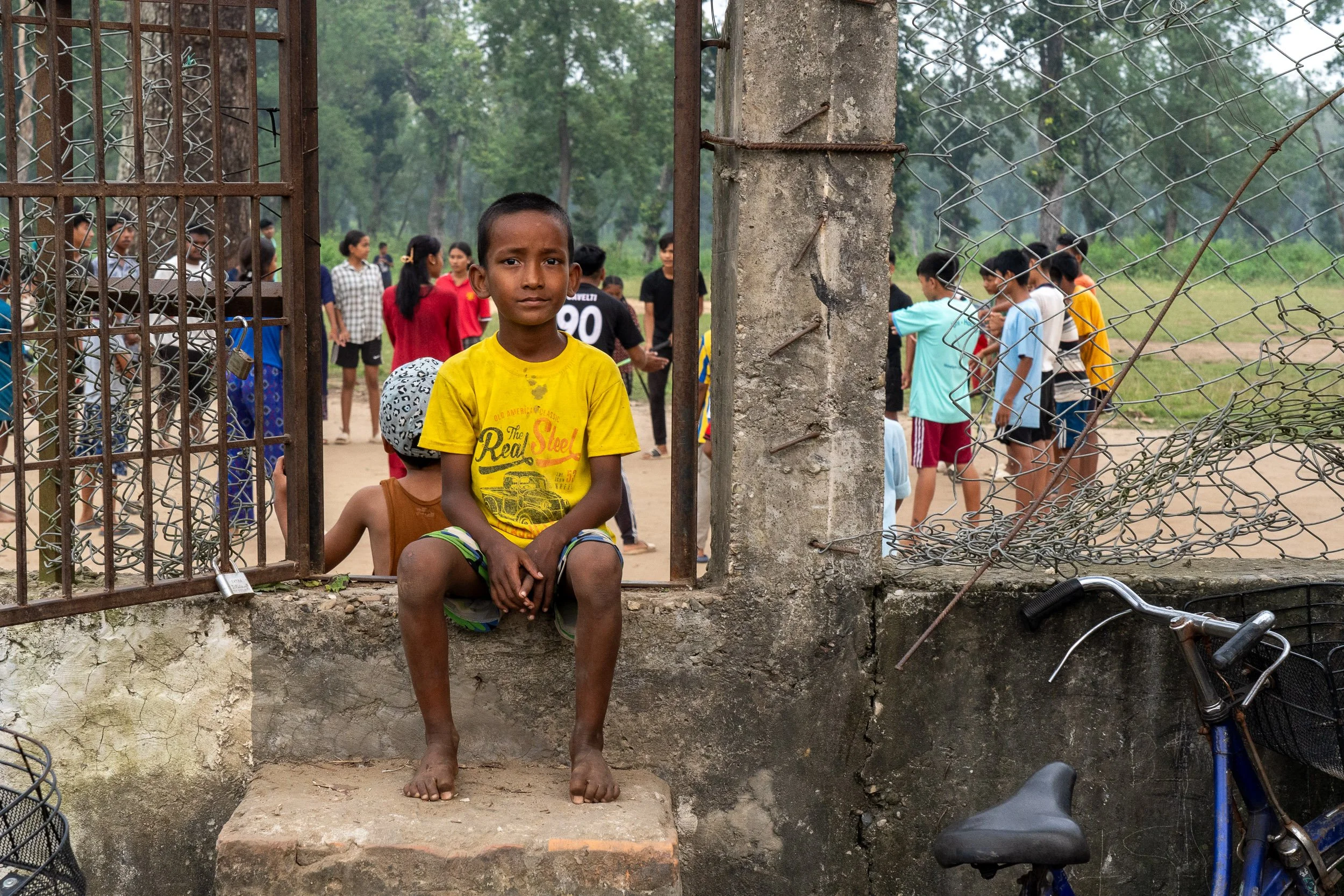
Last year, a group of five cyclists from four countries cycled 600 kilometers in the thin air of the high Himalayas to raise awareness of the living conditions of the people who work at this altitude, sometimes under extremely difficult conditions, and to raise funds for Himalayan Life 's projects. We had the honor of making a film about this sponsored bike ride. Many of our clients and friends followed the project and support Himalayan Life.
Now we have the unique opportunity to organize a live event in Schaffhausen with Dani and Karin Bürgi, founders of Himalayan Life:
Date
Friday, 12 January 2024 in Schaffhausen
Location: Werkstätte Liechtblick, Amsler-Laffon-Strasse 1, Schaffhausen, 4th floor
time
18.15 Door opening
6.30pm Aperitif
19.15 Presentation by Daniel Bürgi with short film
8:15 PM Interview and Q+A
8.45pm End
Contribution for the aperitif and drinks: CHF 39 per person. The amount can be paid on-site in cash or via TWINT. Rounding up is permitted – any excess will go entirely to Himalayan Life. To ensure we know how many people are coming, please register by January 11, 2024:
I/we will be attending the information event on January 12, 2024:
Helping people help themselves isn't just a slogan at Himalayan Life, but a lived reality. The organization builds schools, organizes sporting events across caste lines, offers programs to help street children get off drugs, founded the first PET recycling plant in Nepal, and is working to give smallholder farmers better prospects. The goal is always to pursue a long-term vision for genuinely improving living conditions. The organization employs almost exclusively locals in Nepal, thus creating jobs and imparting know-how to Nepalese people. We were inspired by this approach. On January 12, 2024, you will receive firsthand information on how development cooperation really makes a difference and how donations are used efficiently and directly to improve the living conditions of many people, especially children.




Photos and film clips in the header: Dani Rimann

First copy of «Silence» arrived
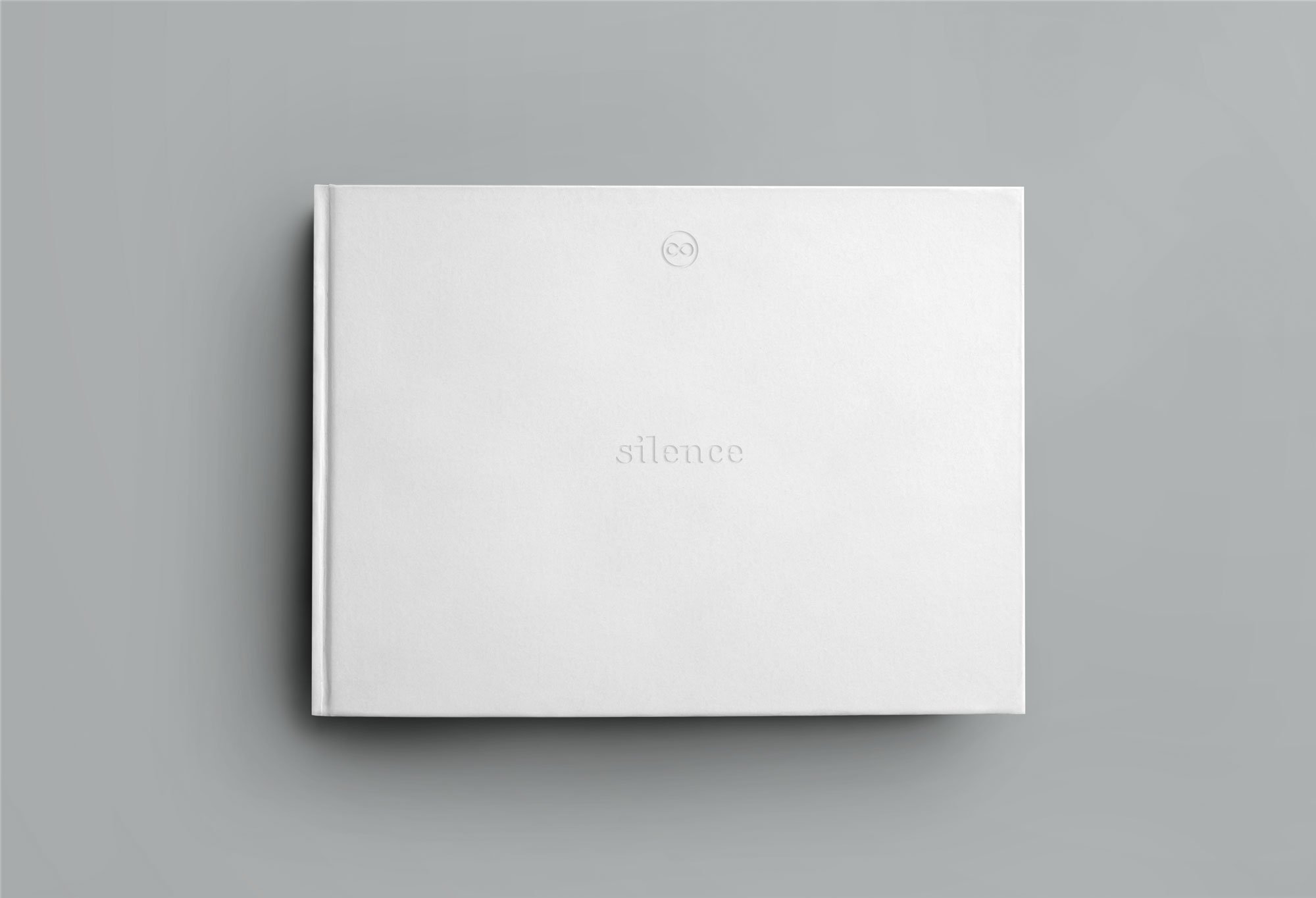
The first copy of "silence" has arrived. I'll give you an insight into the book in a short video. You can order it until November 16th for the subscription price of CHF 45 (CHF 55 afterward).
We already announced our new book in our blog posts of October 9 and November 3. The first copy has now arrived, and you can get a sneak peek via the video attached below.
Limited to 299 copies
Cover: White cardboard with embossing and partial foiling
Contents: 128 pages, including 96 pages in duplex printing (black and white) and 32 pages in color
Format: 30 x 23 cm

«Silence» in production
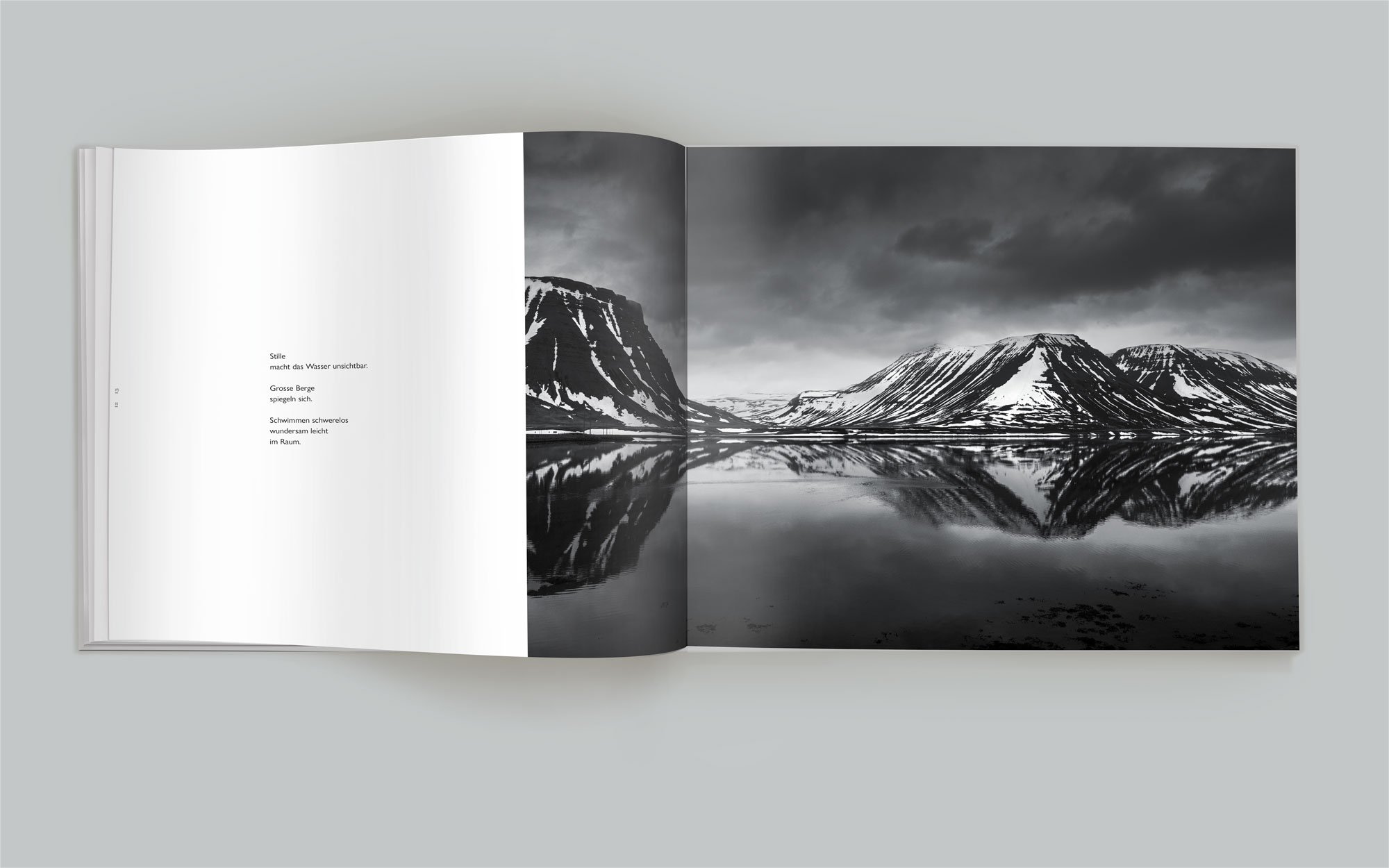
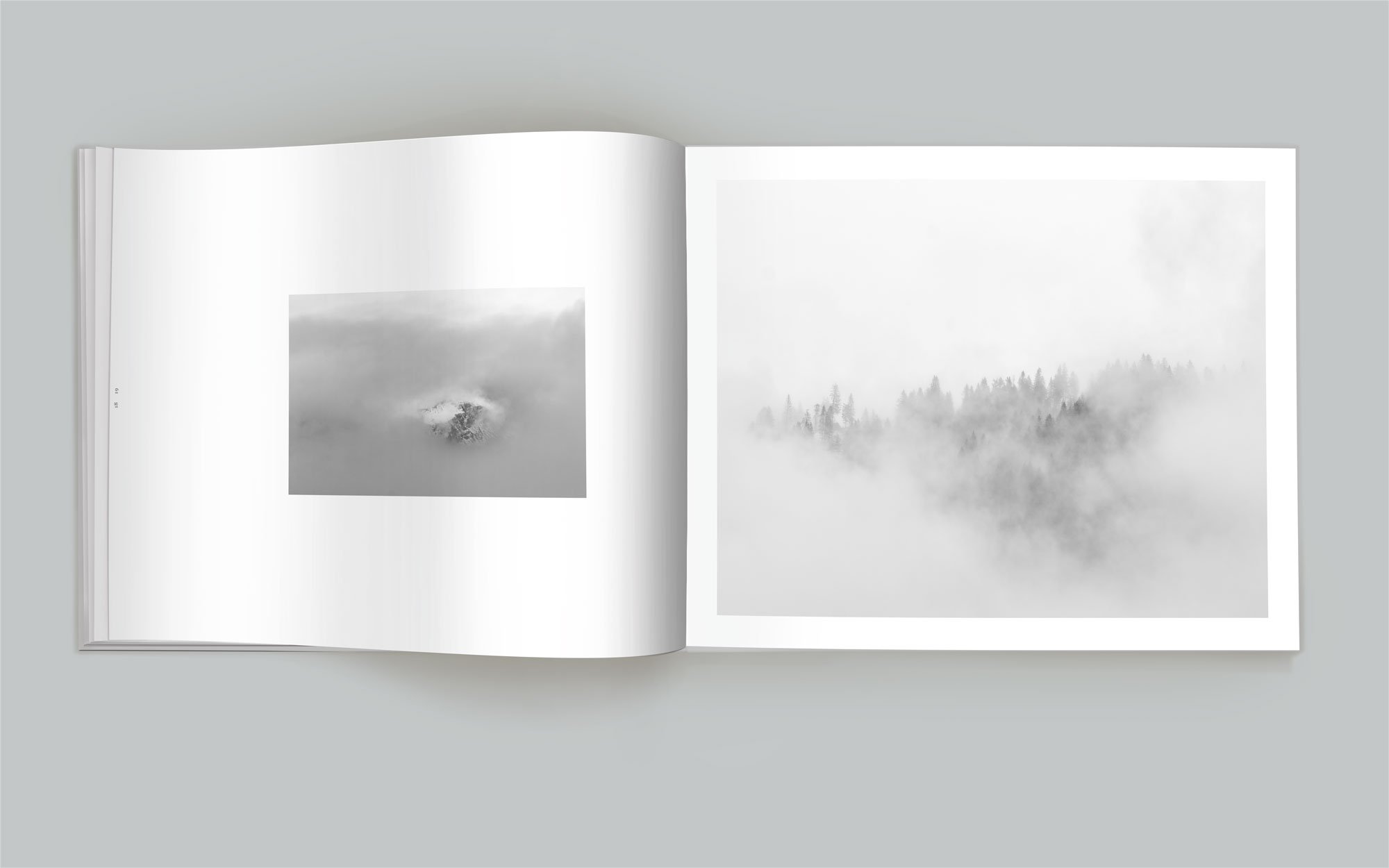
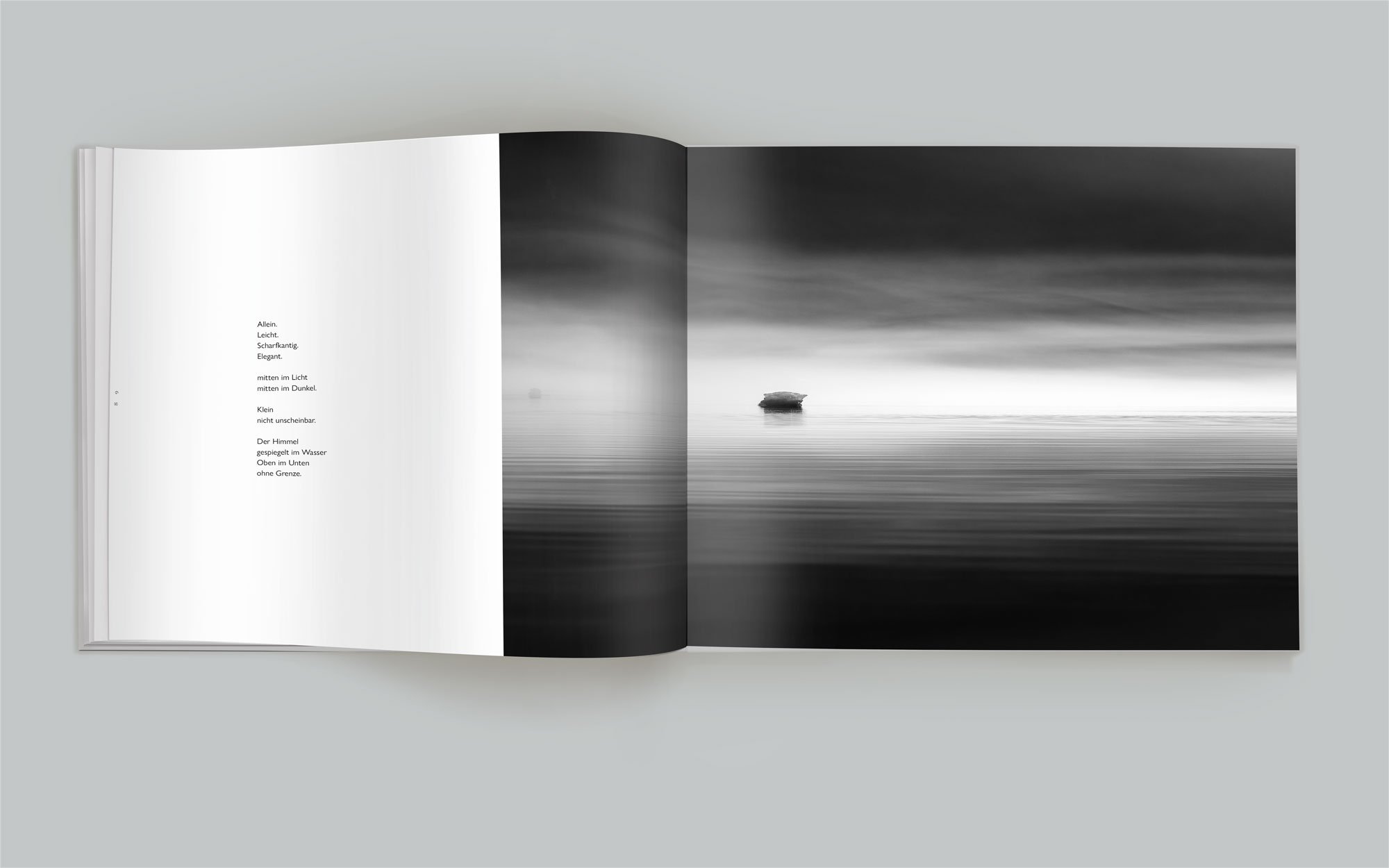
128 pages with images and short texts on the theme of "silence." Order now at the subscription price.
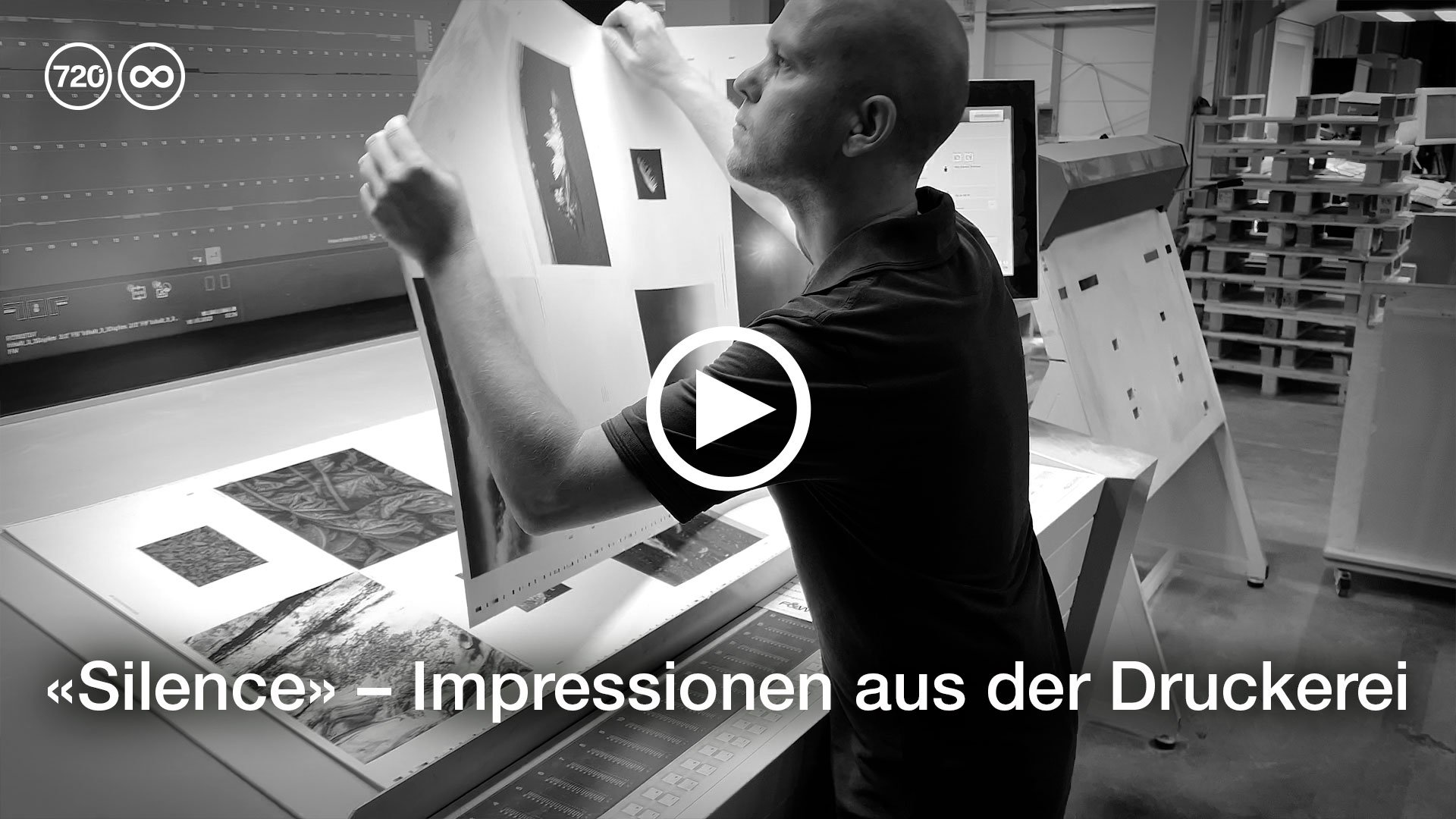
"Silence" is produced using high-quality offset printing. 96 pages are printed in duplex for the black-and-white images and 32 pages are printed in color. We traveled to the printing press specifically to inspect the printed sheets.
Here's a short clip with impressions from the printing shop. The book is being printed by our friend Benedikt Wild and his fantastic crew at F&W Druck in Kienberg.
Limited to 299 copies
Cover: White cardboard with embossing and partial foiling
Contents: 128 pages, including 96 pages in duplex printing (black and white) and 32 pages in color
Format: 30 x 23 cm

«Silence» – the new book
128 pages with images and short texts on the theme of "silence." Order now at the subscription price.
The world feels like it's spinning faster and faster. Technological innovations often don't help us have more time and leisure. Quite the opposite. The train of progress is moving at an ever-increasing pace.
We consider it a privilege that we can repeatedly escape this fast-paced life and spend time in places where the clocks tick slower and more quietly. Where no cell phone signal beeps demandingly.
Photography teaches us to absorb these precious moments deep within ourselves. Only then can we discover the motifs that the Creator offers us in nature. We would like to share with you the wonder of these magical moments in faraway lands like Iceland, Alaska, and Canada, as well as in Switzerland and France. We hope that, somewhere in your everyday life, you can carve out a little time and space to immerse yourself in the images. So that the vibrations of nature reach your heart and peace reigns. Silence.
We're publishing the book in a limited edition of 299 copies. As always, you can secure issue 001/299 by bidding. More information can be found here.
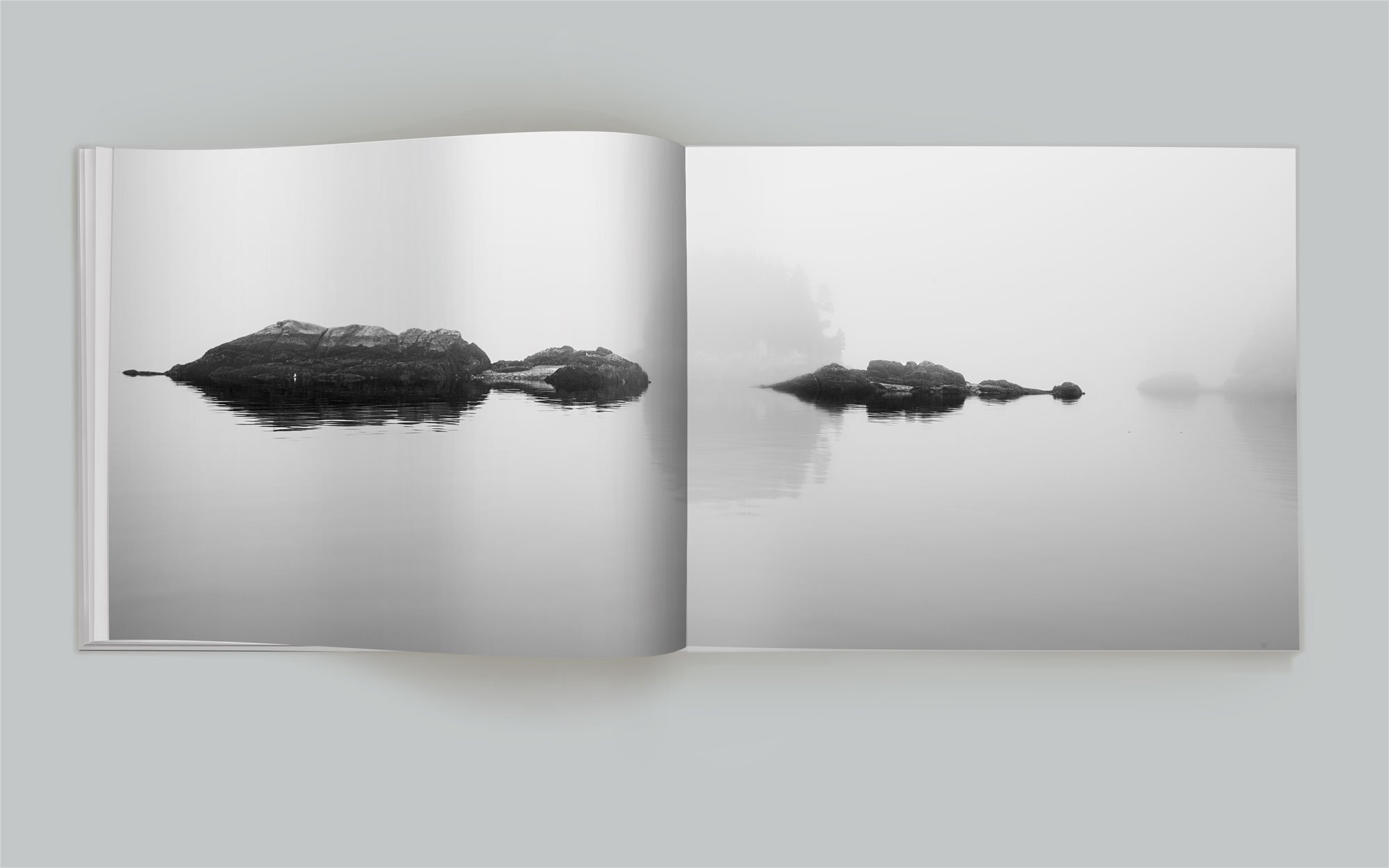
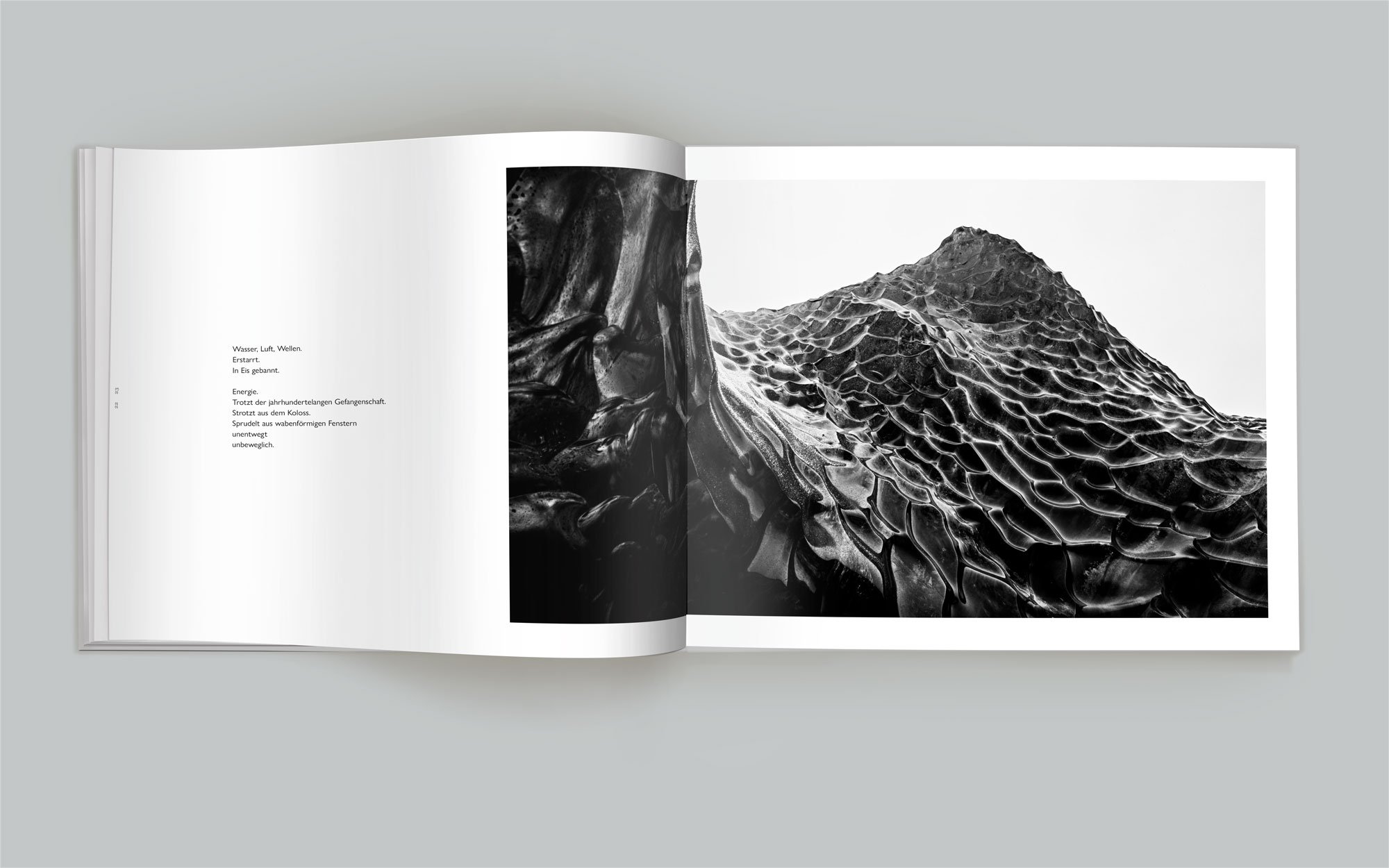
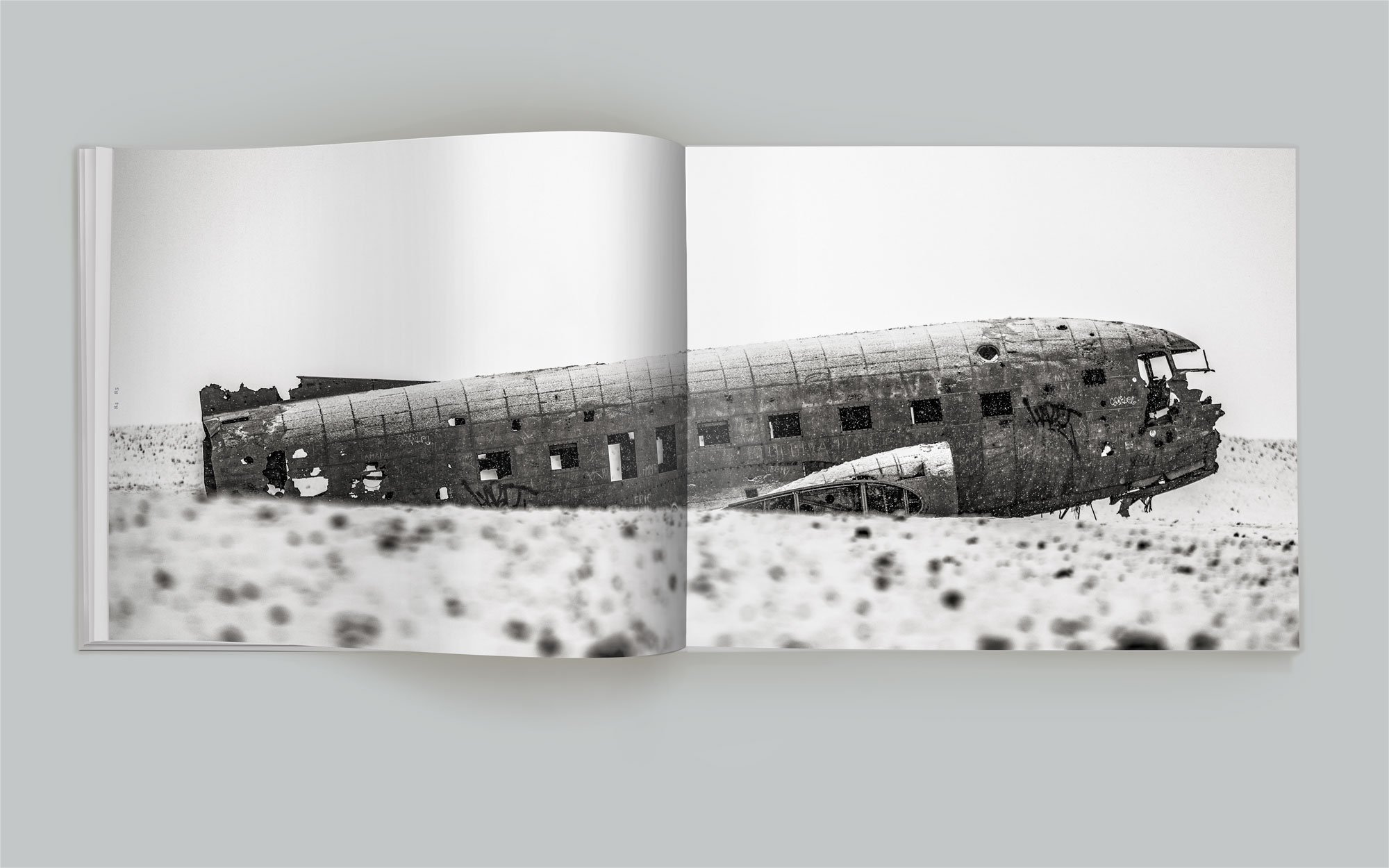
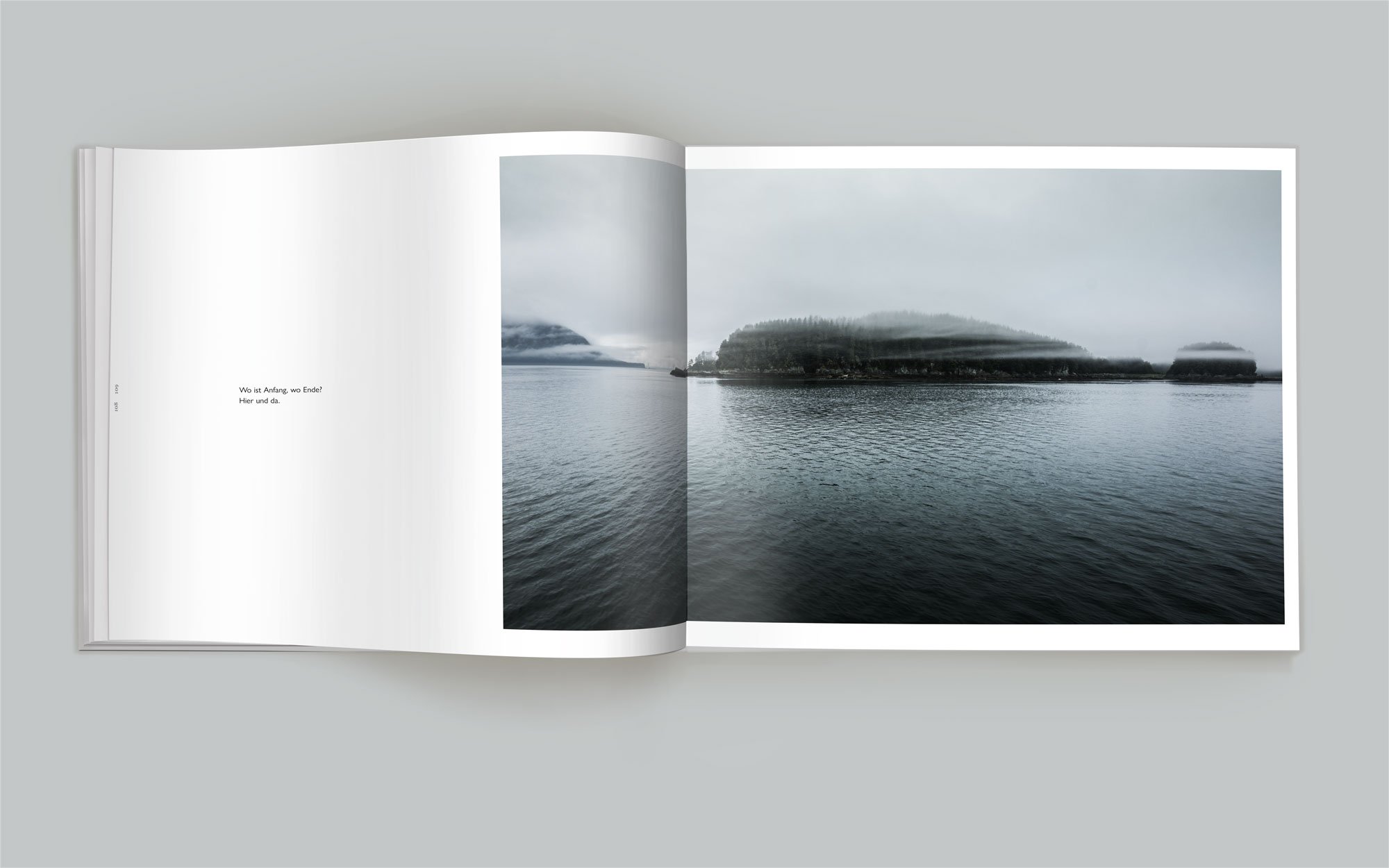
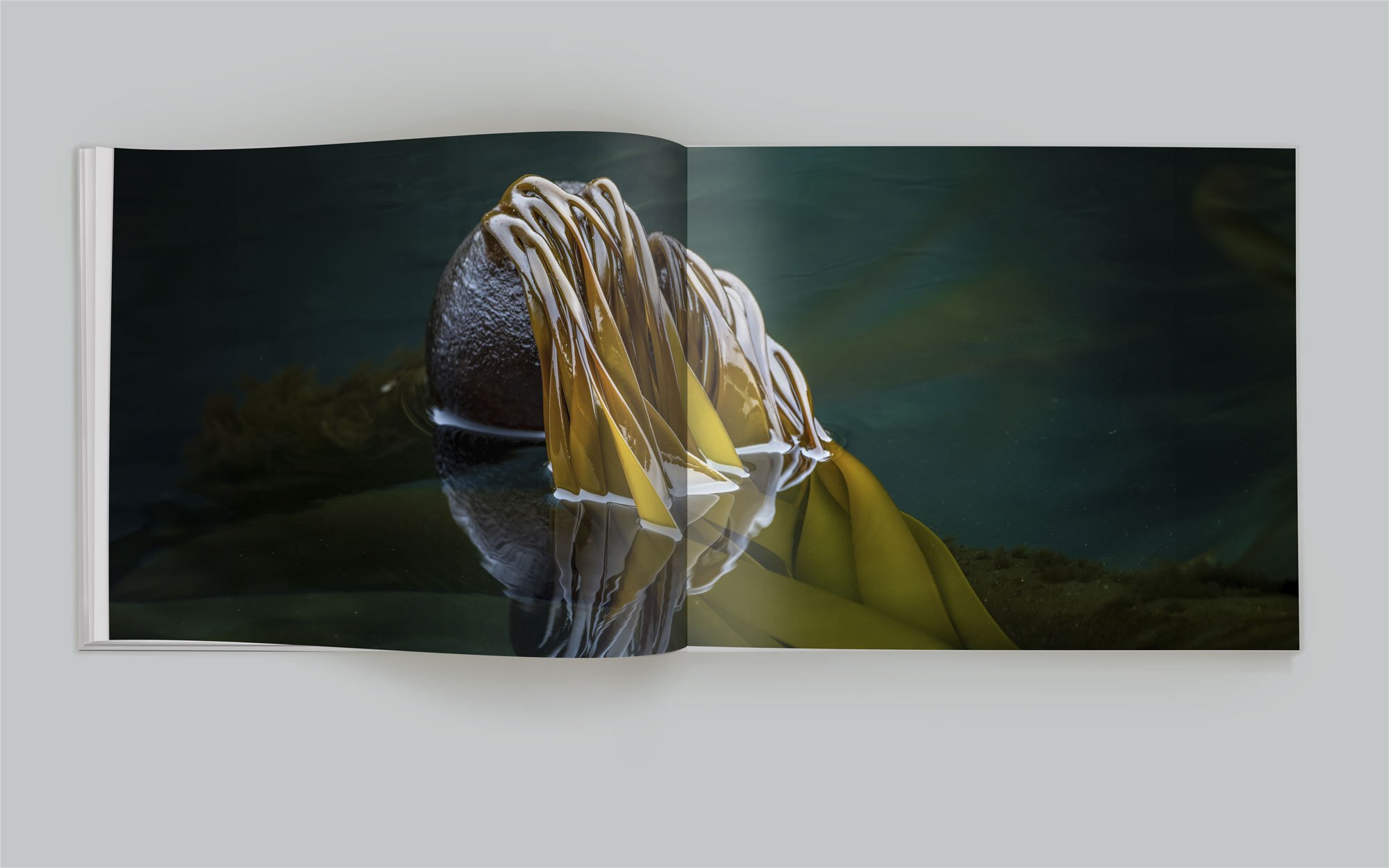
Limited to 299 copies
Cover: White cardboard with embossing and partial foiling
Contents: 128 pages, including 96 pages in duplex printing (black and white) and 32 pages in color
Format: 30 x 23 cm
Delivery/collection from the end of November.
Do you want to secure the number 1 spot?
As with every limited edition, we're selling issue 001/299 to the highest bidder. This time, we're even including an A4 fine art print of one of the images in the book. You'll receive a high-resolution PDF of the book in advance, from which you can choose which image you'd like as a fine art print. The proceeds from this offer go to Himalayan Life , the small NGO that's making a big difference.
Here you can submit your bid for number 001/299 until November 15, 2023:

Leica Q3 – first test images
The Leica Q2 was (and still is) a top-class camera. Can Leica take it to the next level with the Q3? Here's a first impression.
Last week, the Leica Q3 was introduced as the successor to the Q2. The camera has a large fan base worldwide because it's a kind of mini powerhouse: Despite its small dimensions, the Q series delivers incredibly good images. This is thanks in part to the excellent lens – a Summilux 1.7/28 mm – but also to the high manufacturing precision and the integrated electronics. The Q2 already set the bar high with 47.5 megapixels and 4K. With the Q3, Leica has upped the ante even further: 61 megapixel resolution, 8K video, plus – something Leica fans have been waiting for a long time – a pivoting screen...

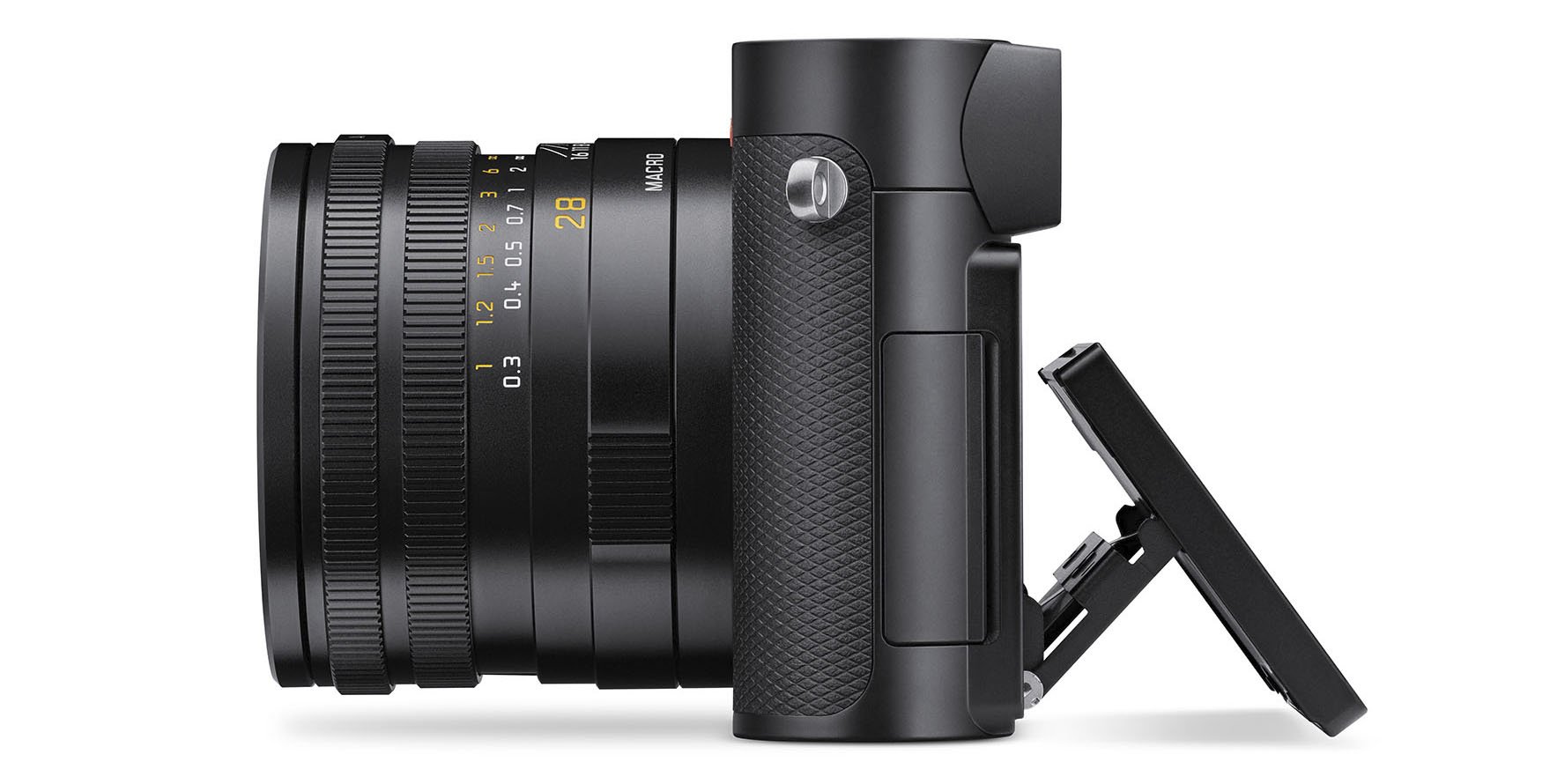
Except for the pivoting screen, the Leica Q3 is virtually identical to the Q2. However, a lot has changed inside the camera (Leica press photos).
First impression
What sets Leica cameras apart is their excellent image quality, superb craftsmanship, and ease of use. The Q3 is built precisely in this DNA. Anyone who's already shot with a Q will have virtually no adjustment required. Only the buttons on the back of the camera are arranged slightly differently, as more space was needed for the large flip-up screen. Since I only had the camera for a few hours, I went into our garden and collected impressions. Thanks to the wide-aperture lens and the macro settings, you have a lot of creative freedom despite the fixed focal length. And thanks to the generous resolution, you can even crop something.
I'm thrilled with the initial results. Here are a few photos from this first spontaneous test, edited to my liking:
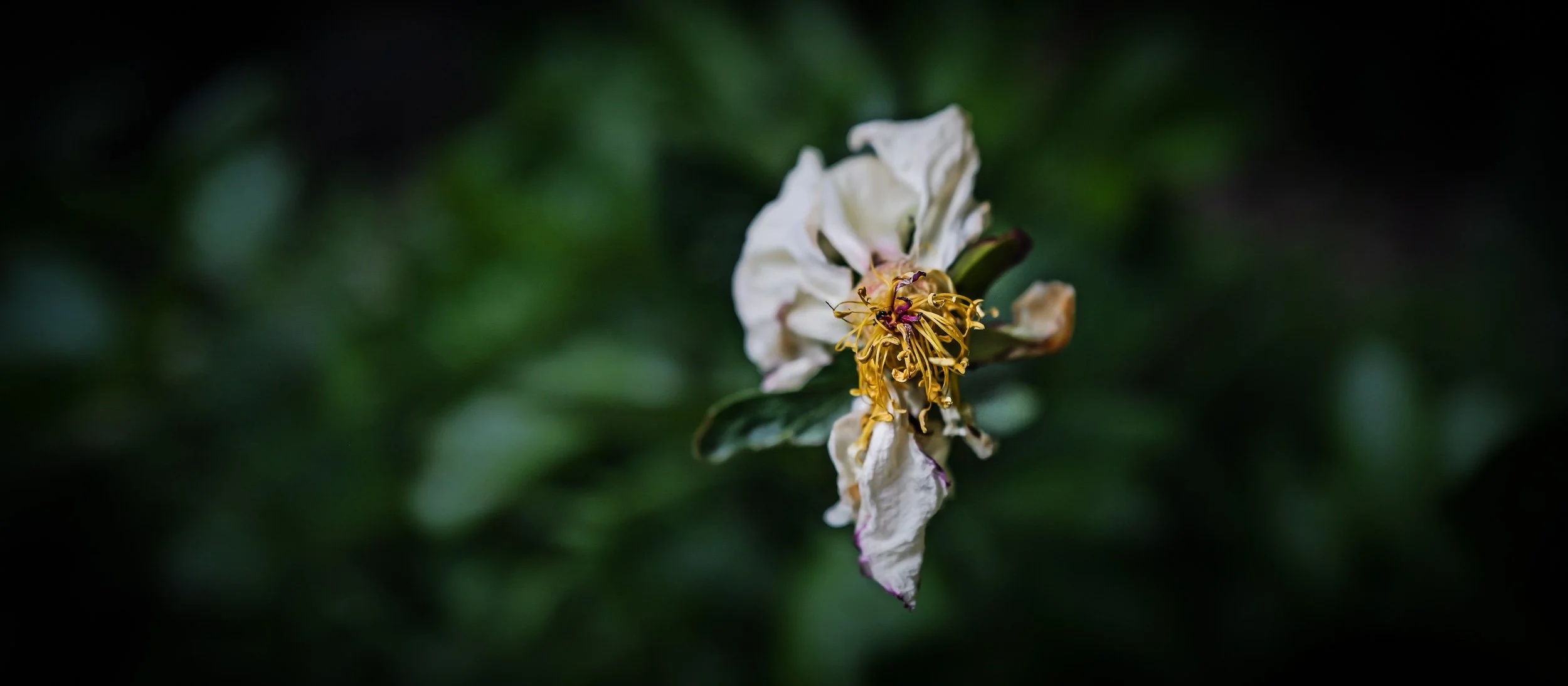


I hope to have the opportunity to test the Q3 more extensively at a later date and also try out the video features. I've shot a few short clips, and I was particularly impressed by the precise autofocus, which also works well for filming. But as I said, I need more time for a serious review.
Children's Week of the Reformed Church Thayngen
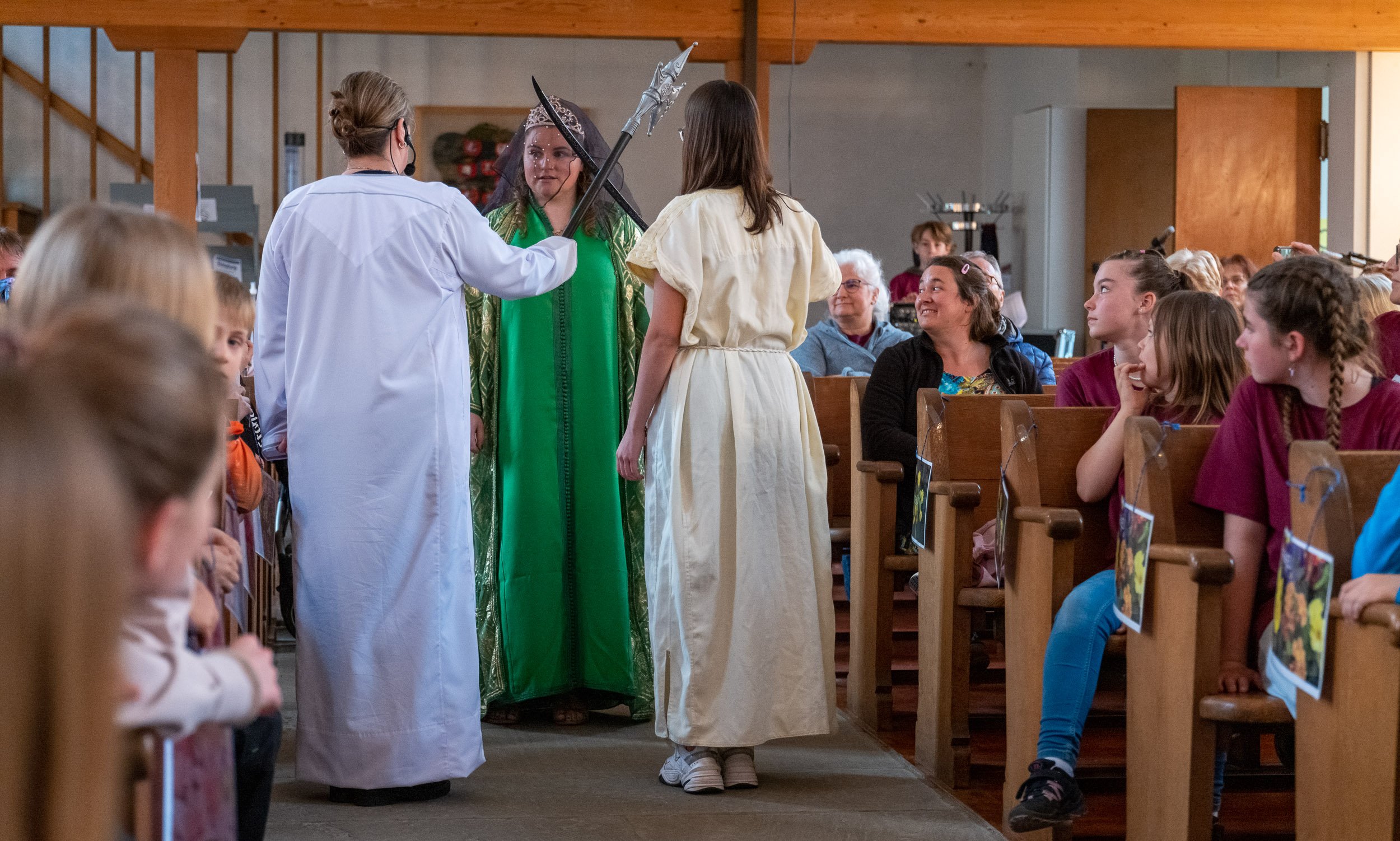
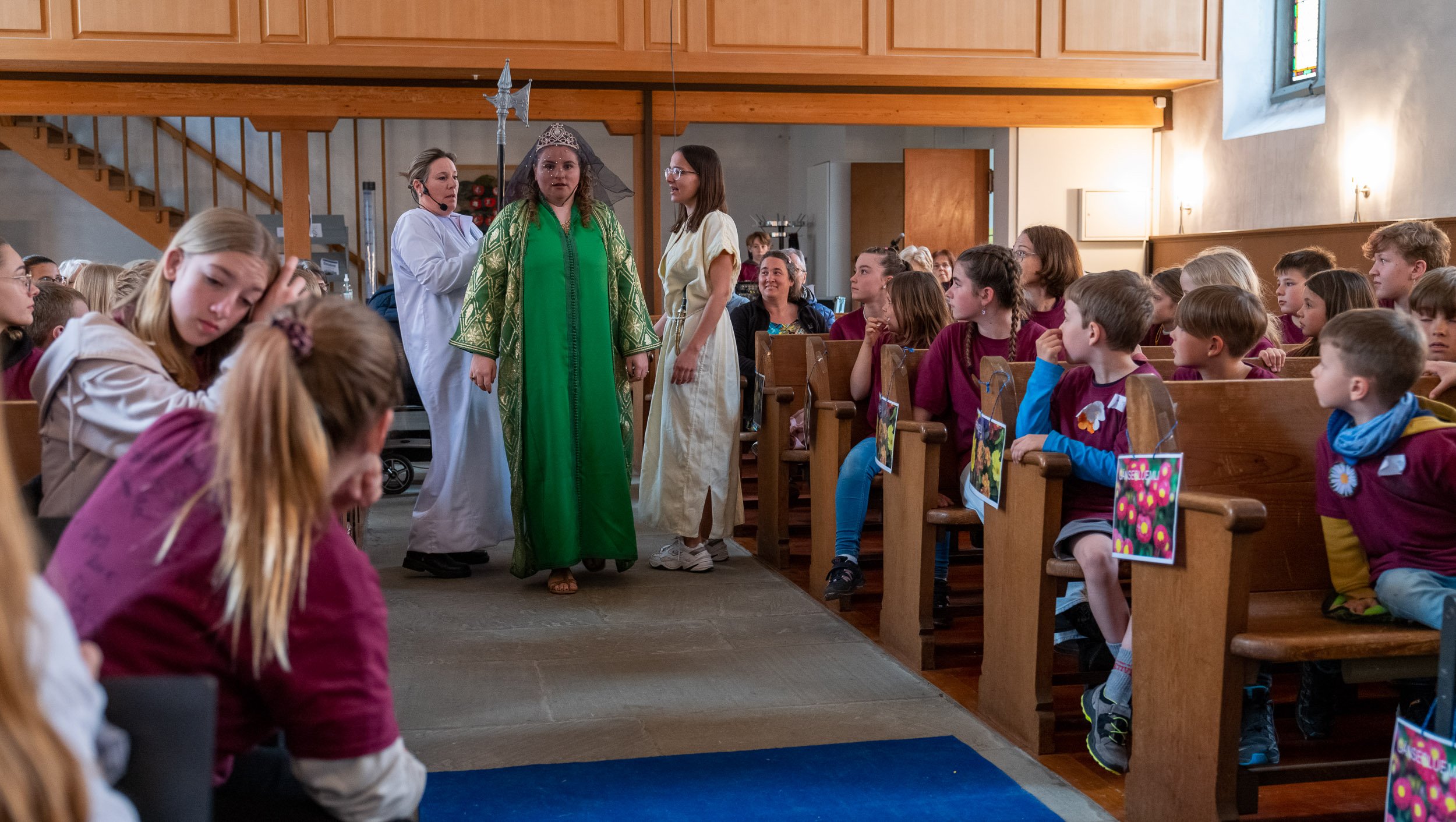
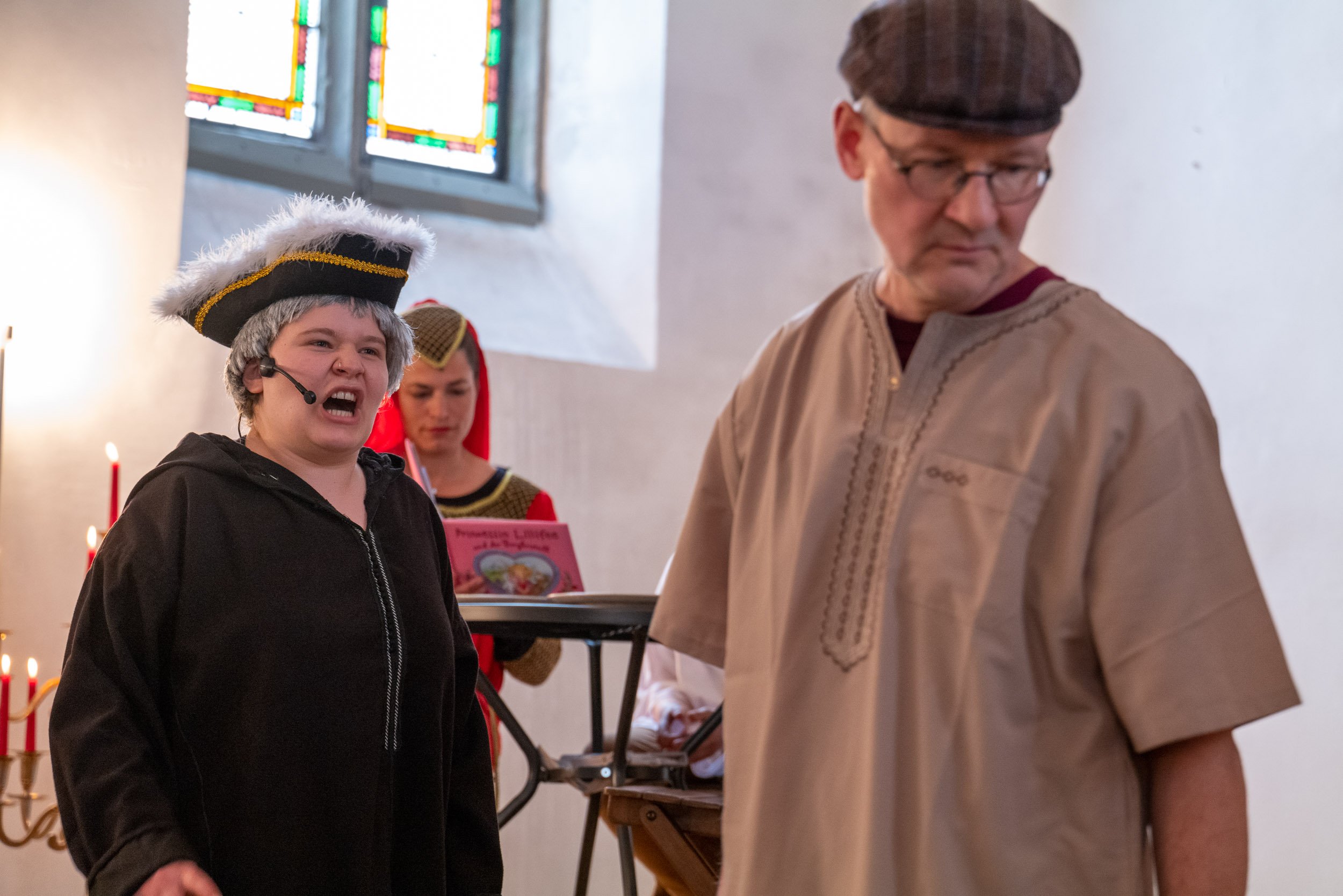
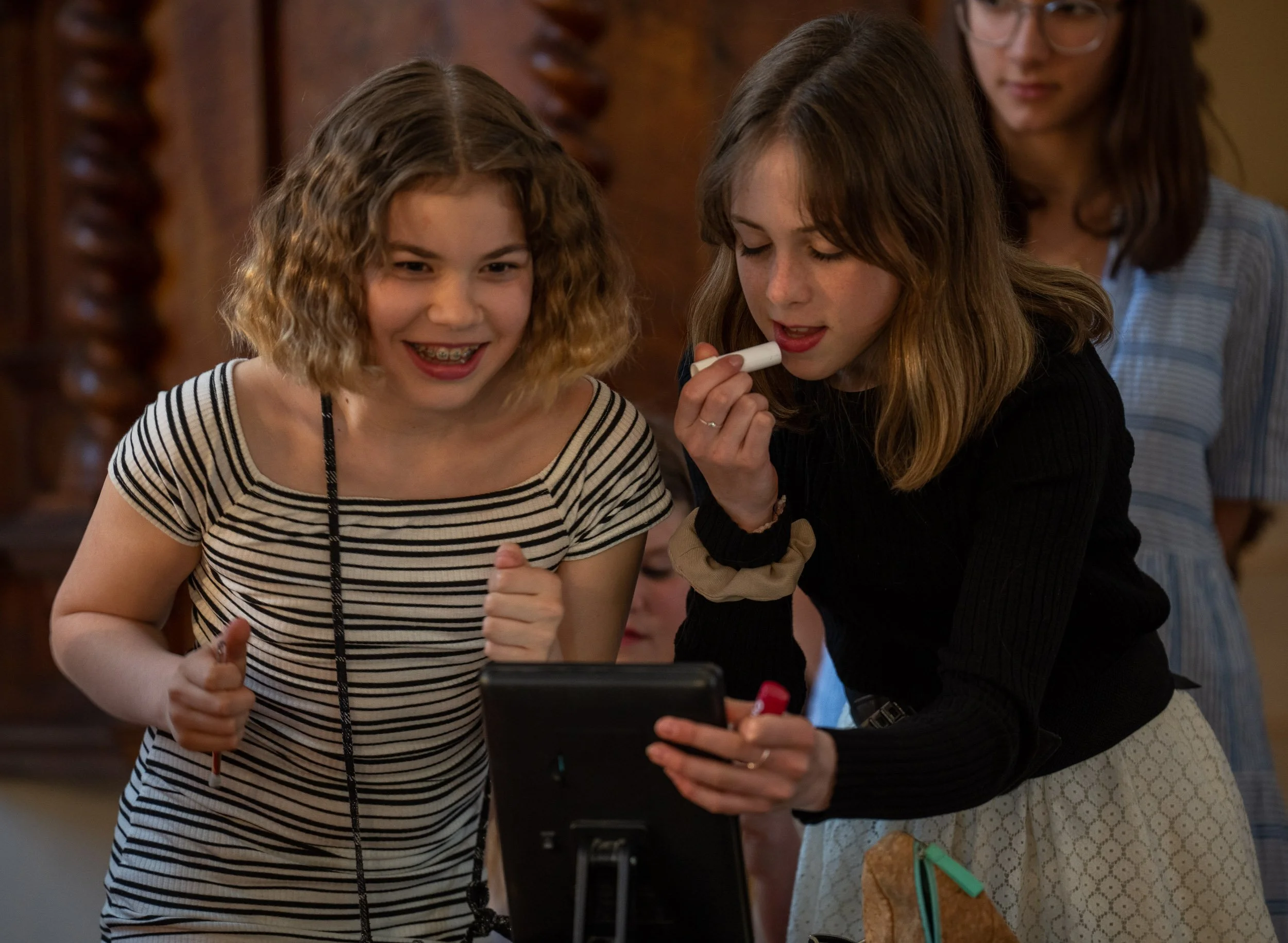
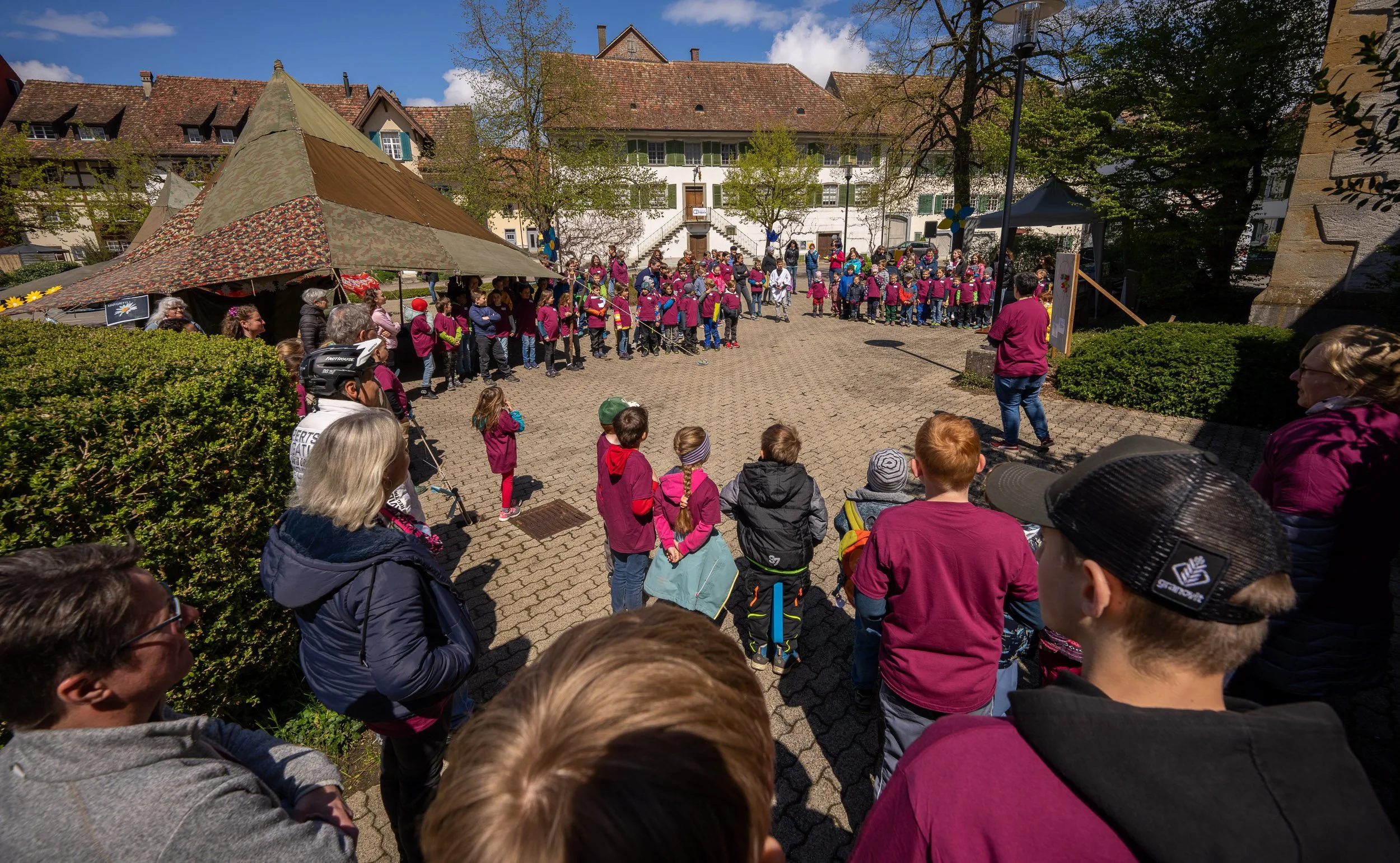
Back after the COVID-19 break, and how: the Children's Week of the Reformed Church of Thayngen. Here are some impressions.
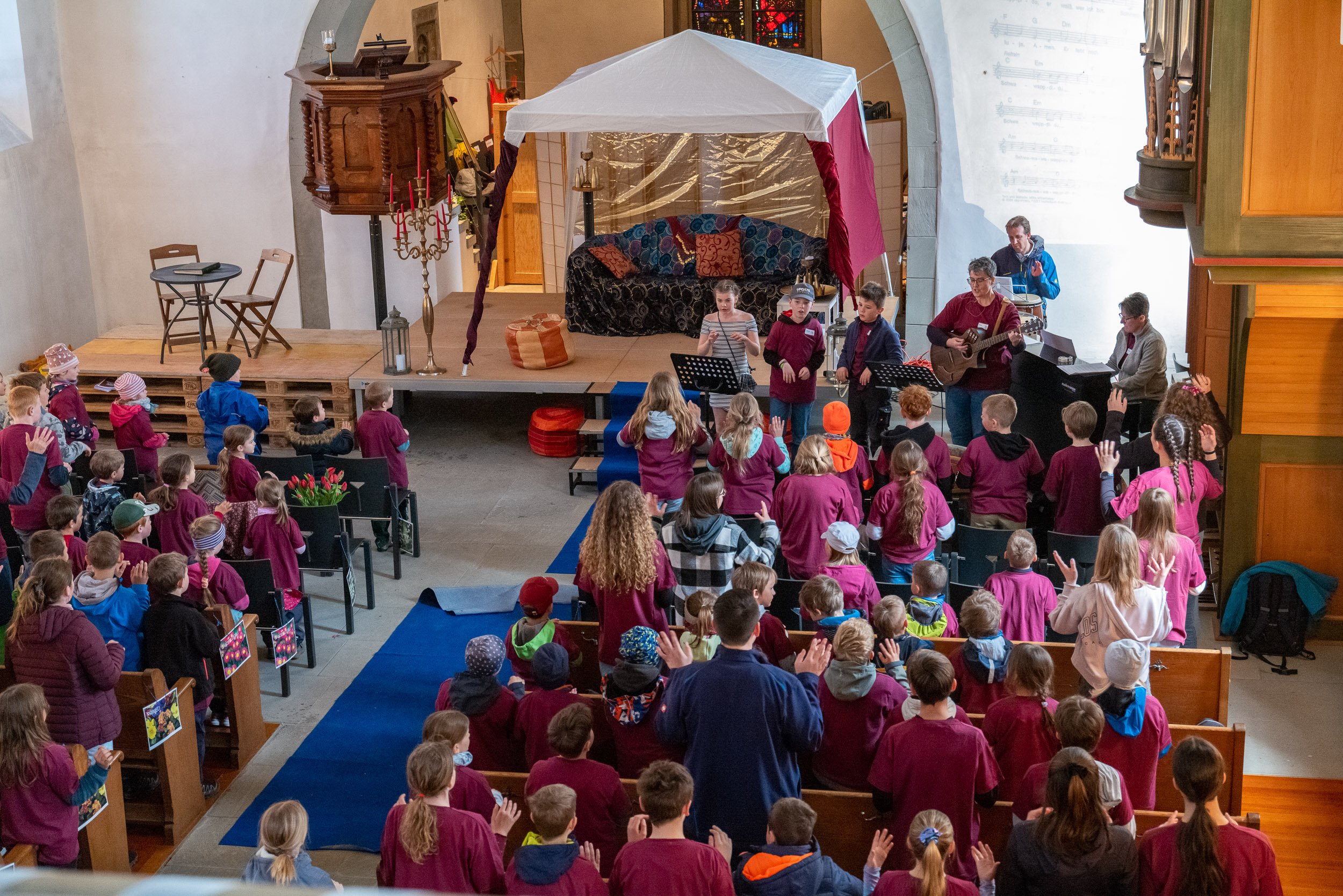
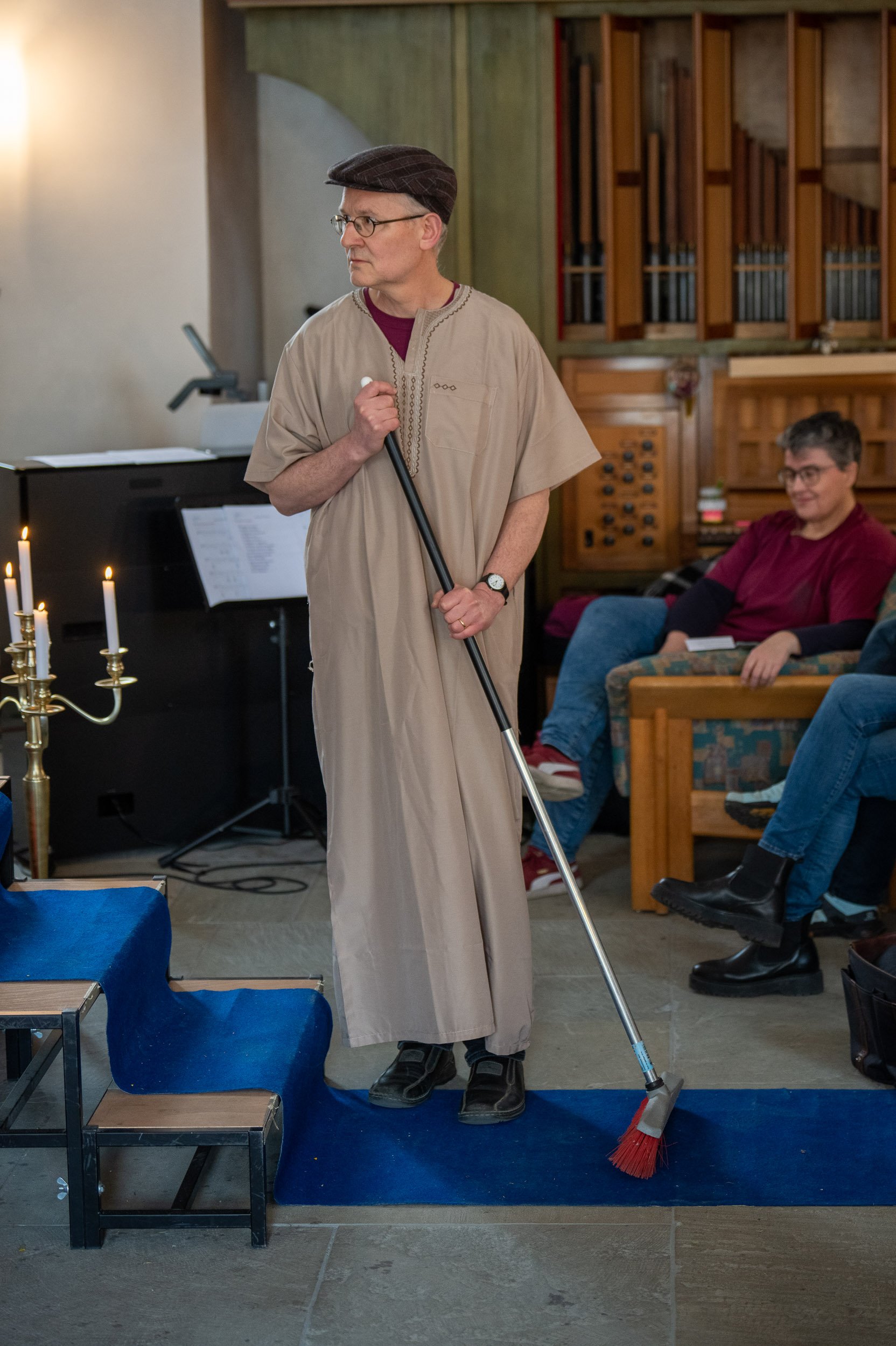
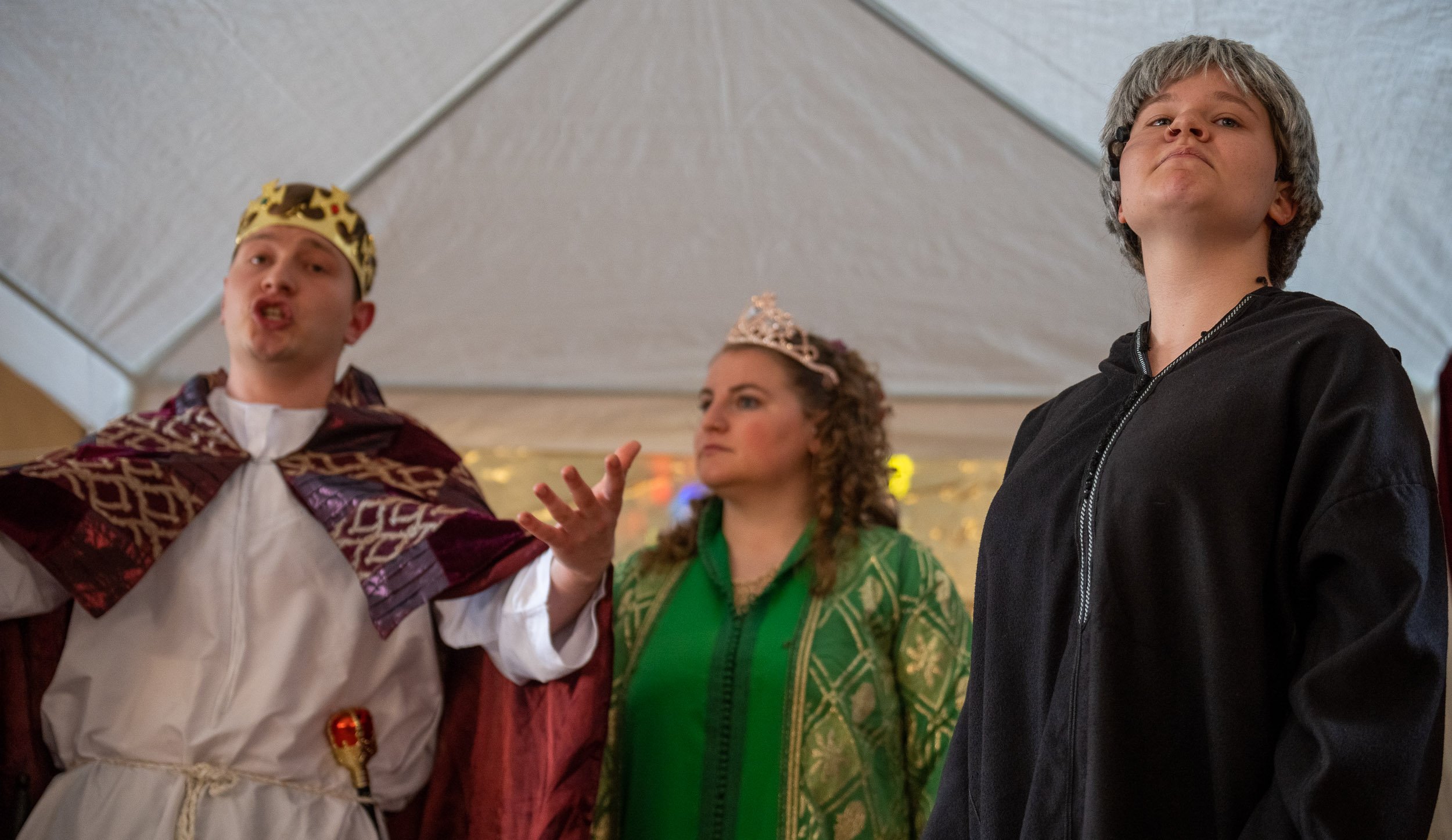
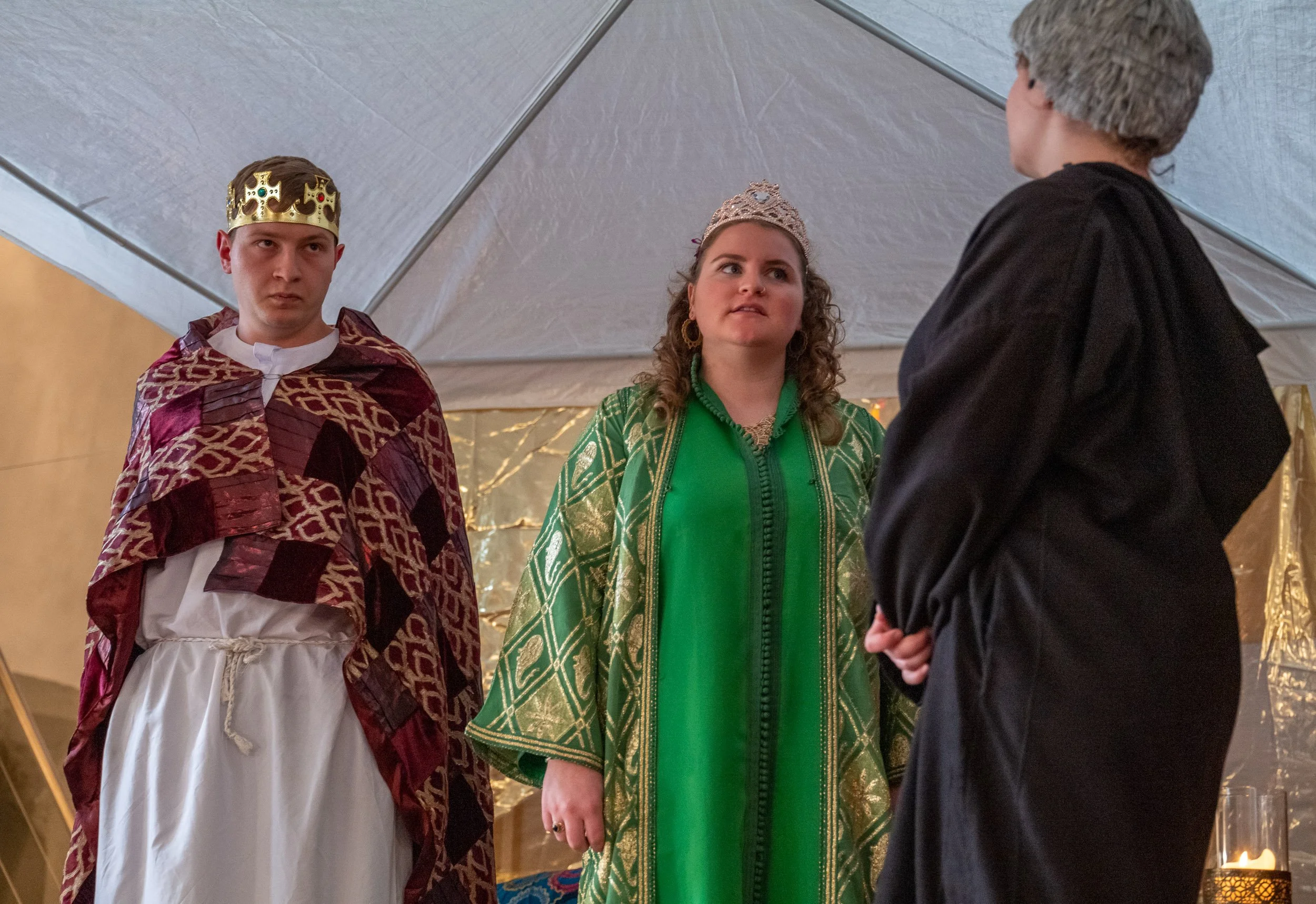
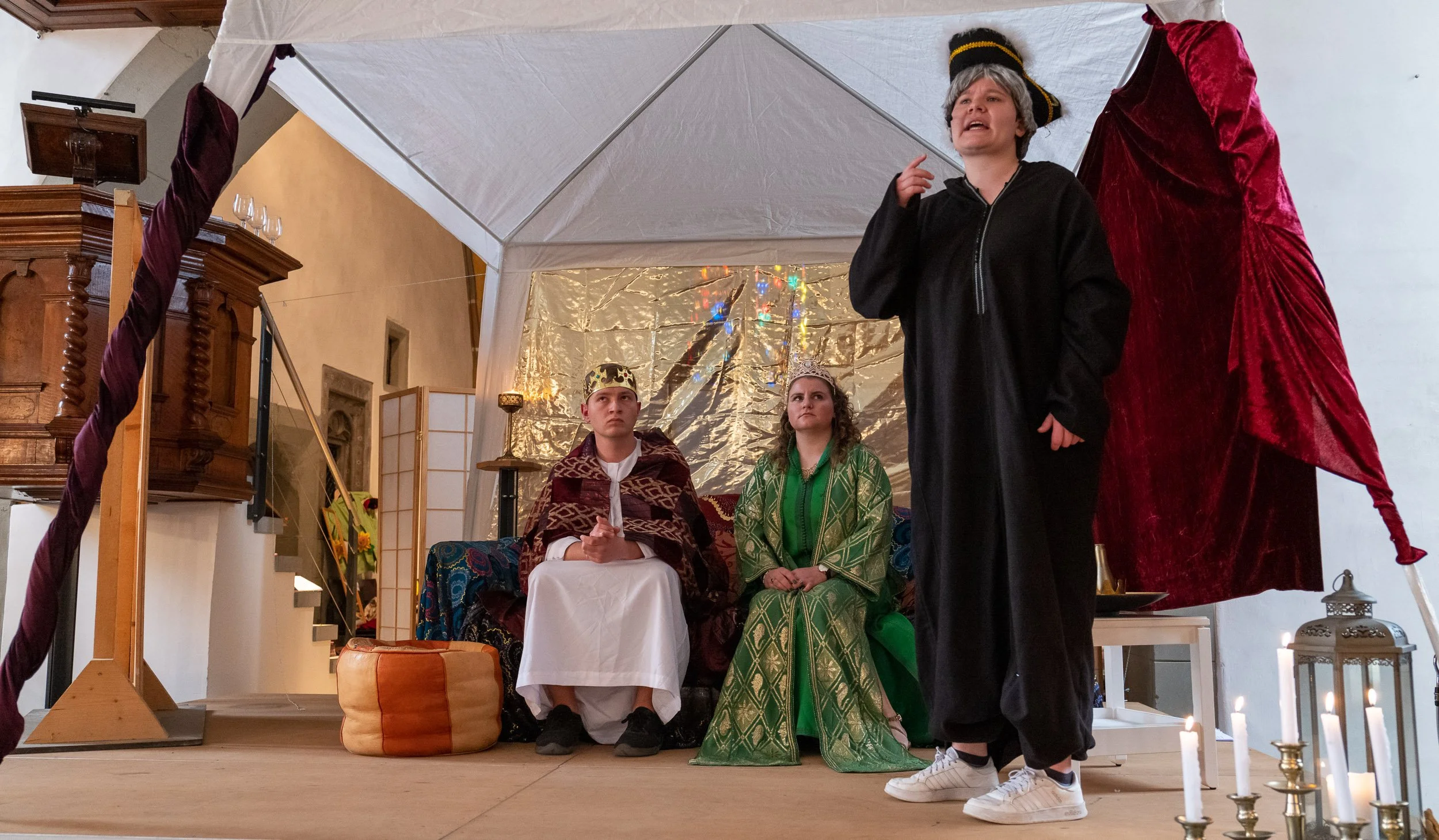
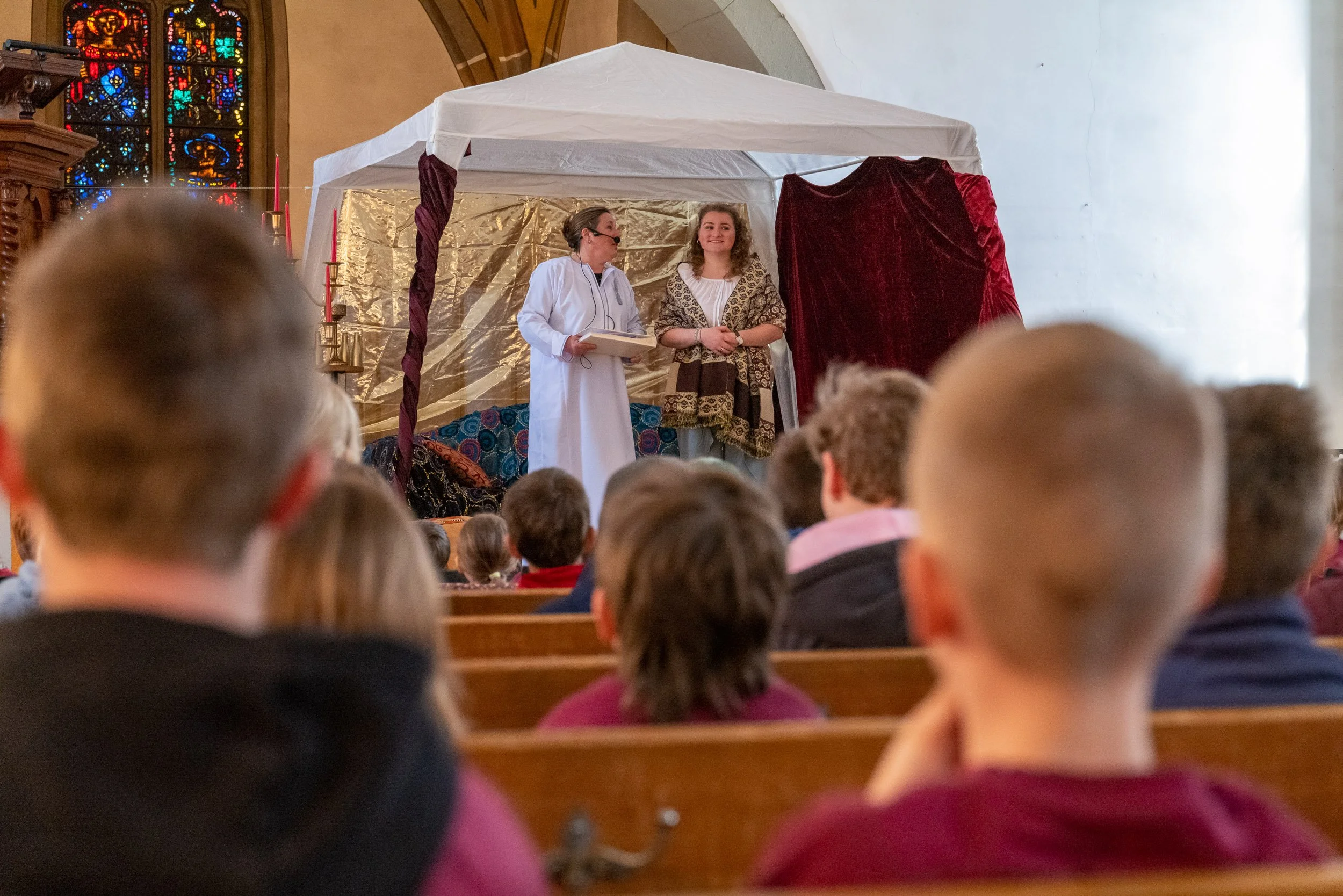
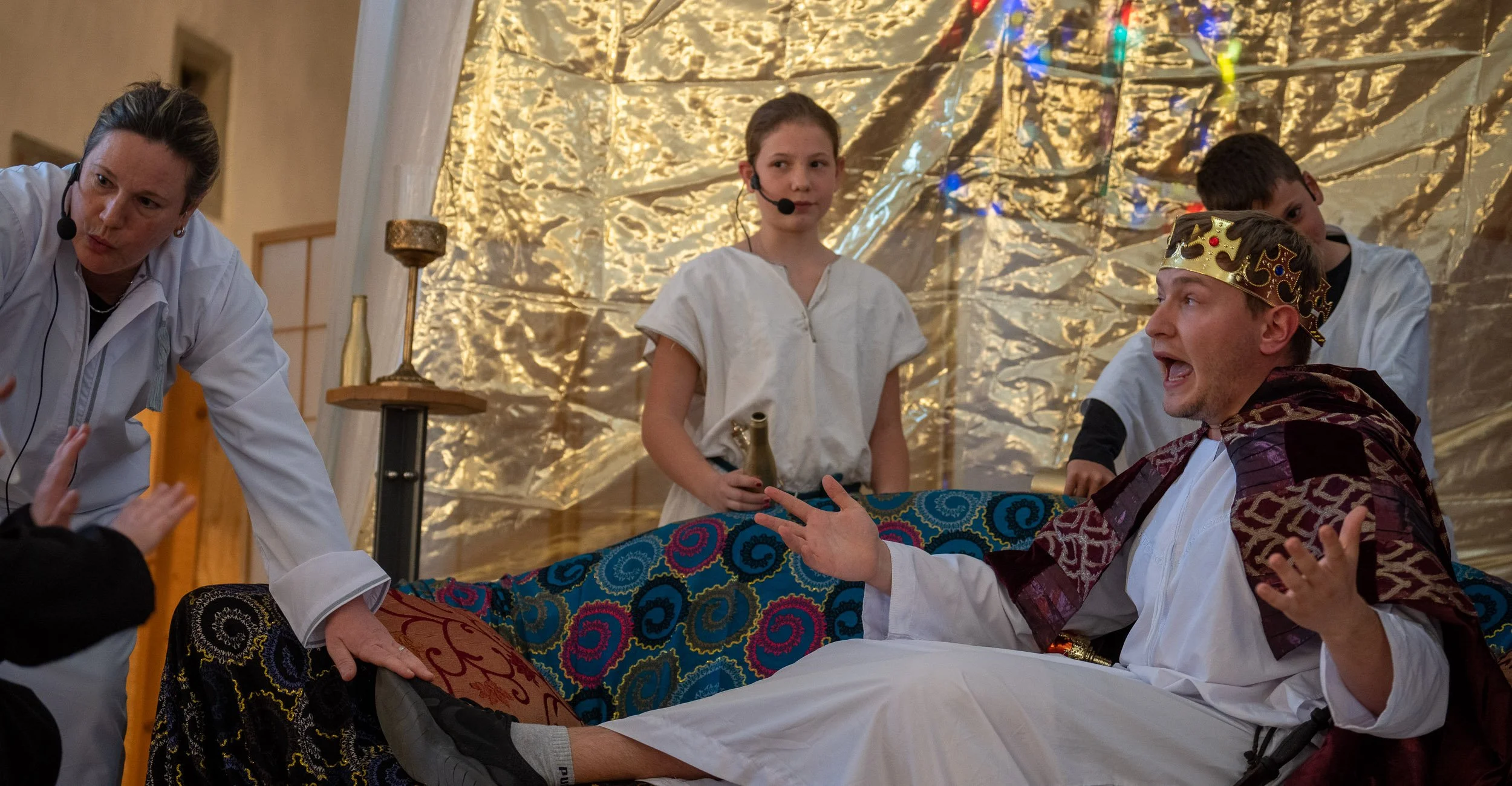
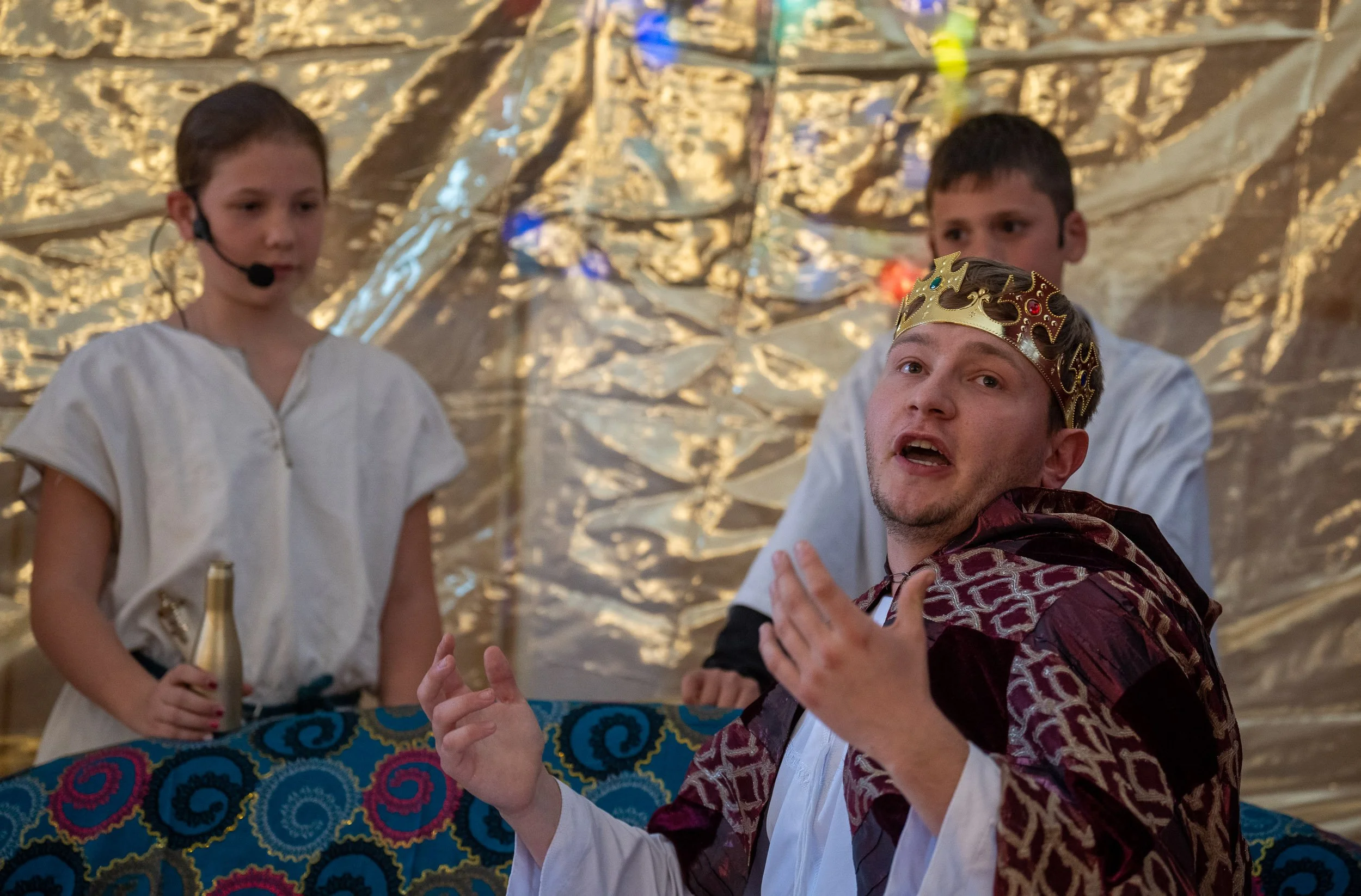
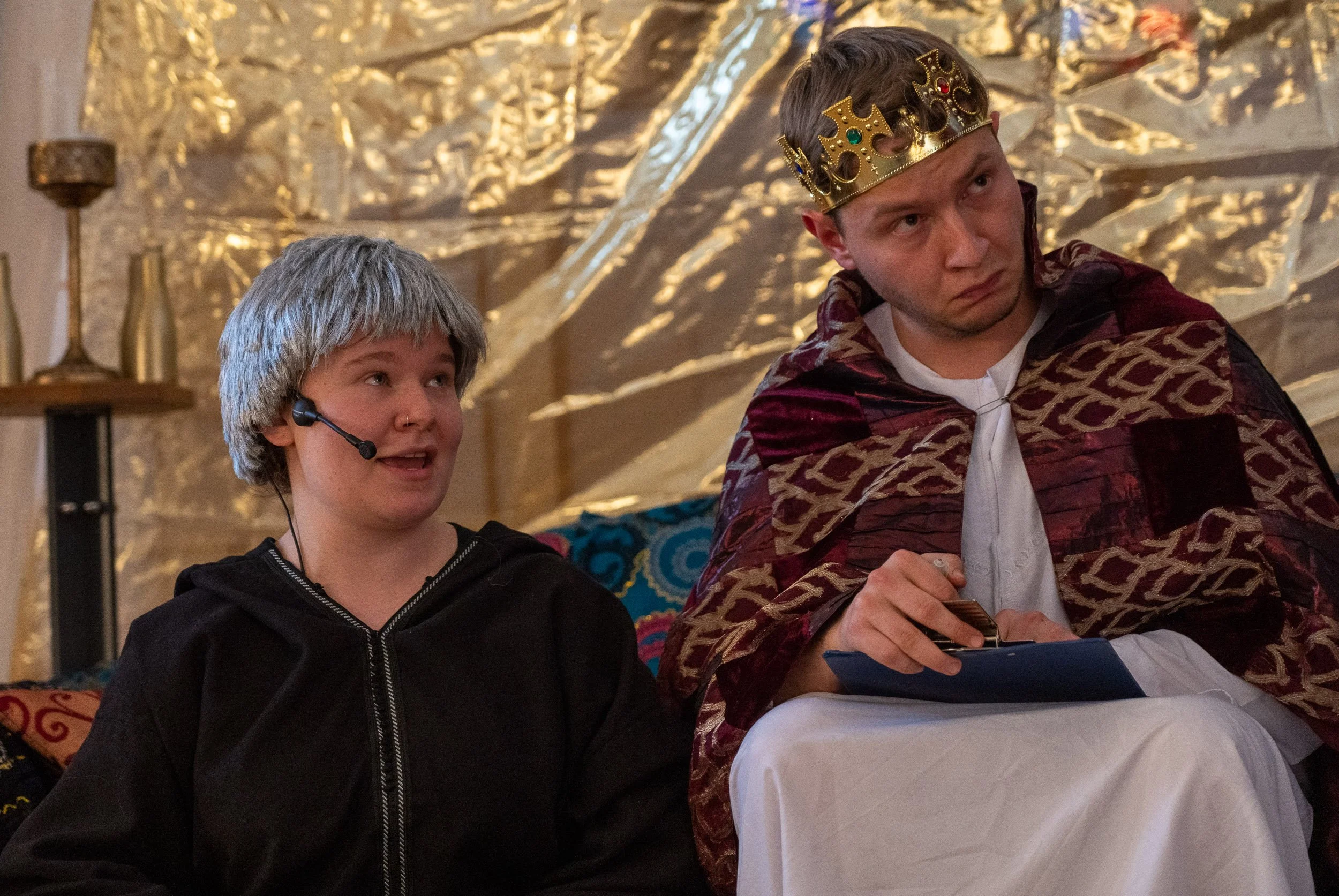
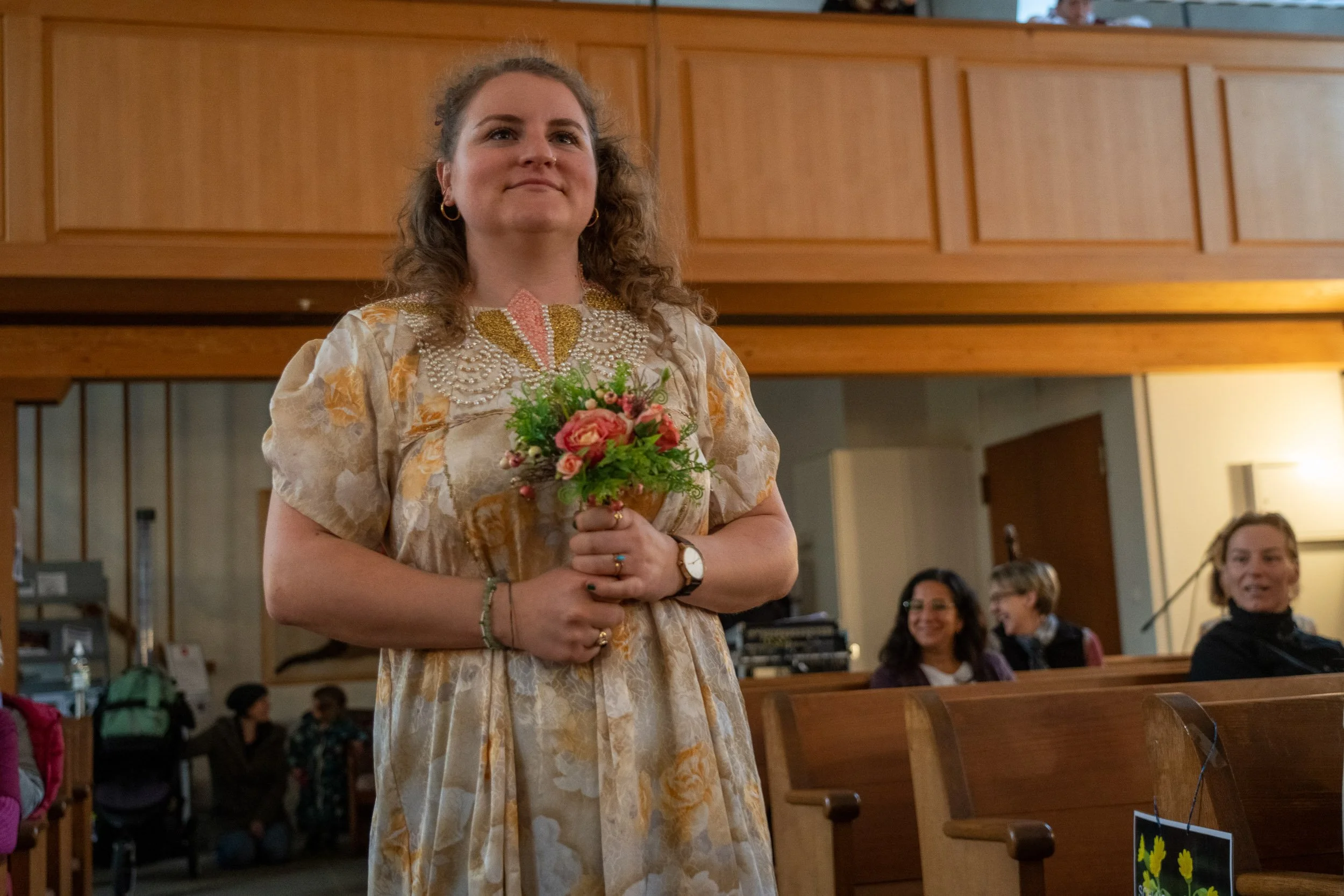
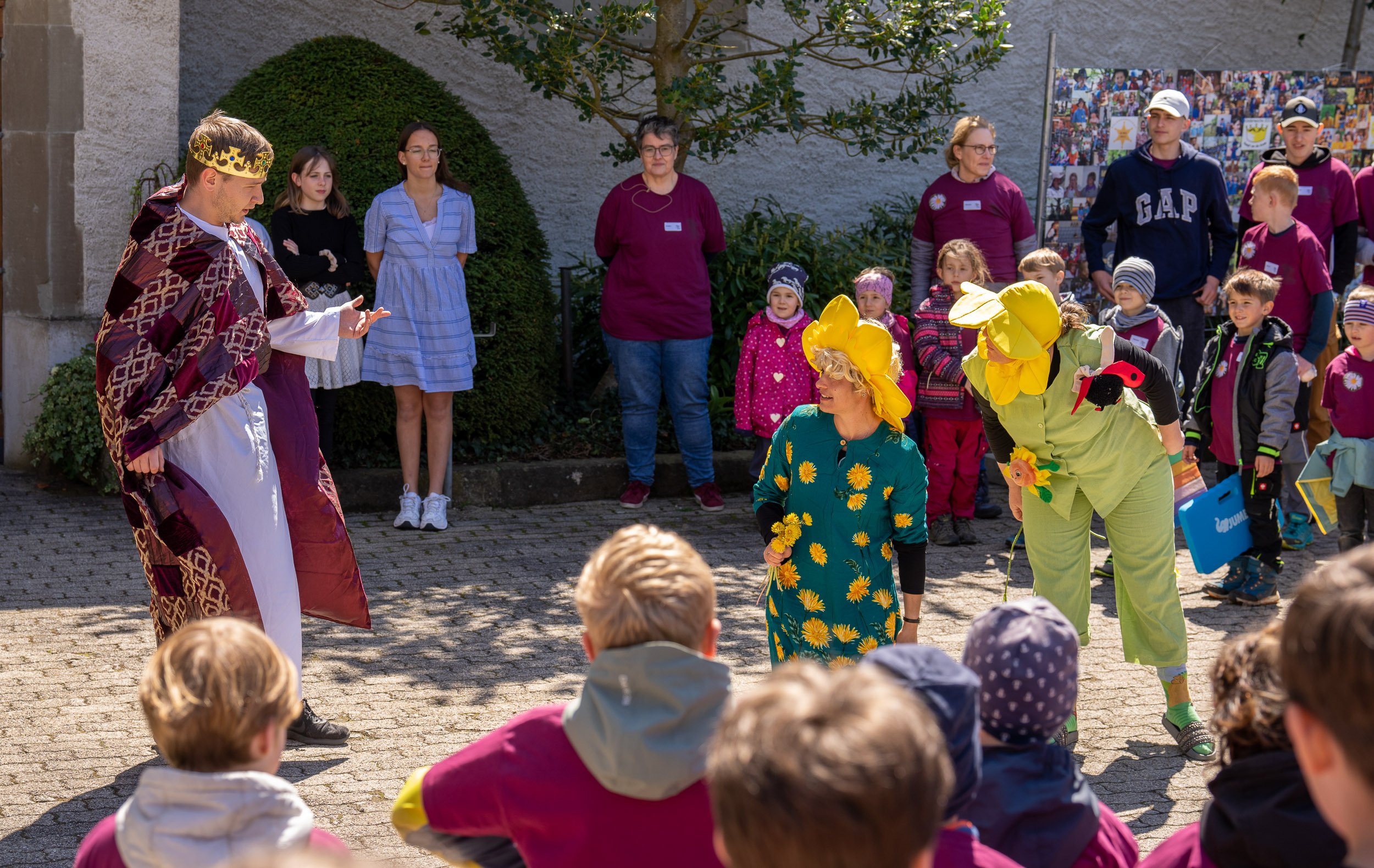
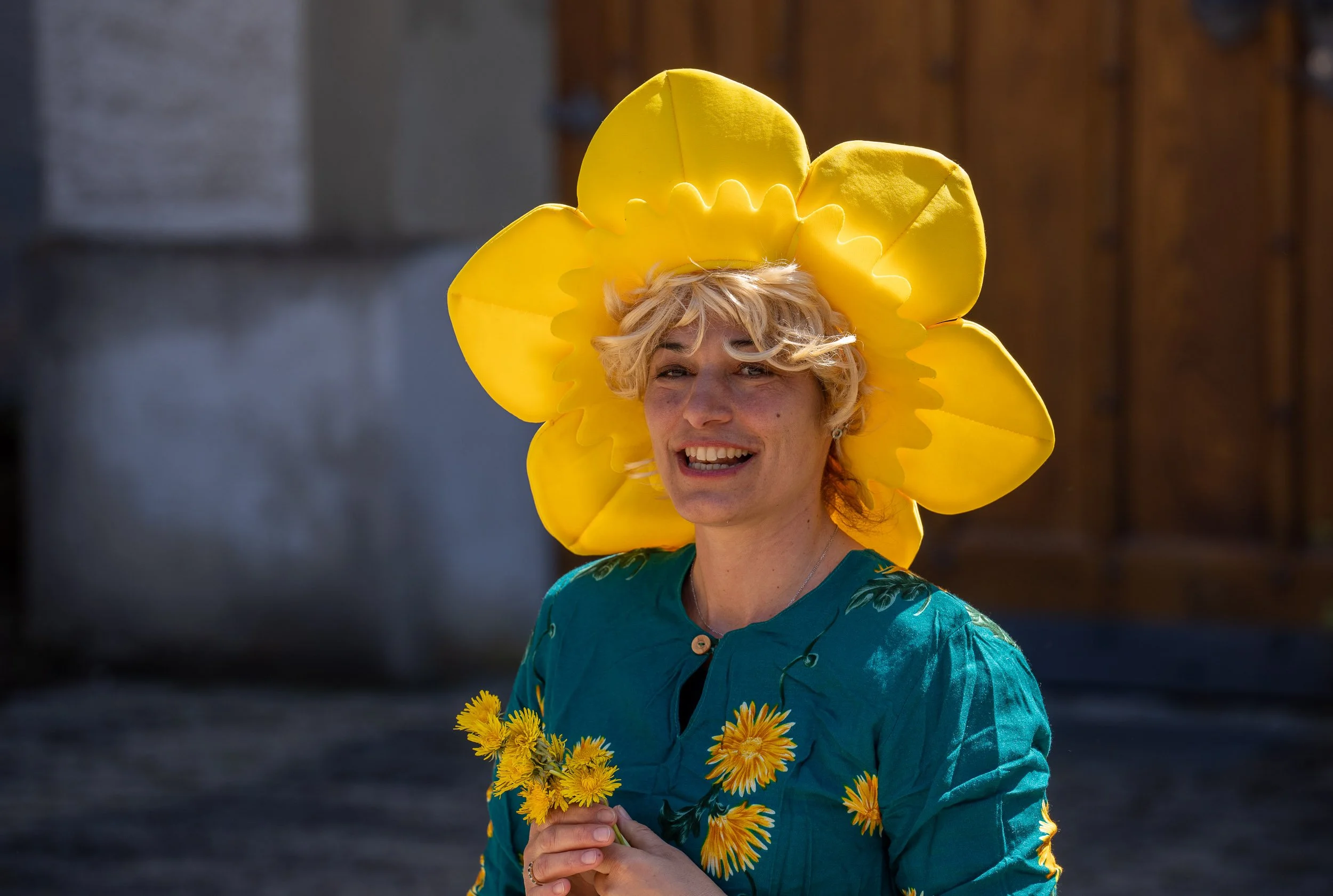
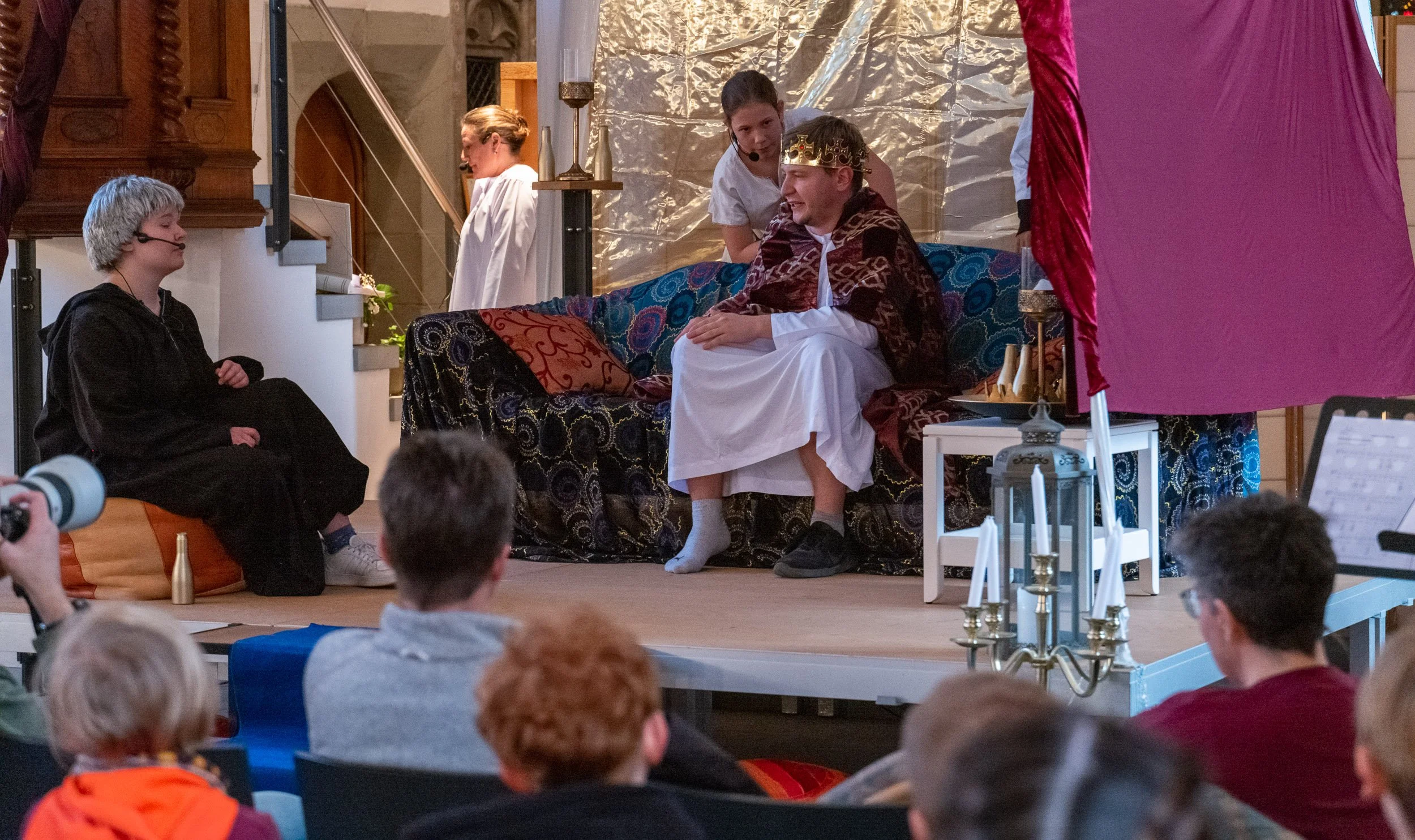
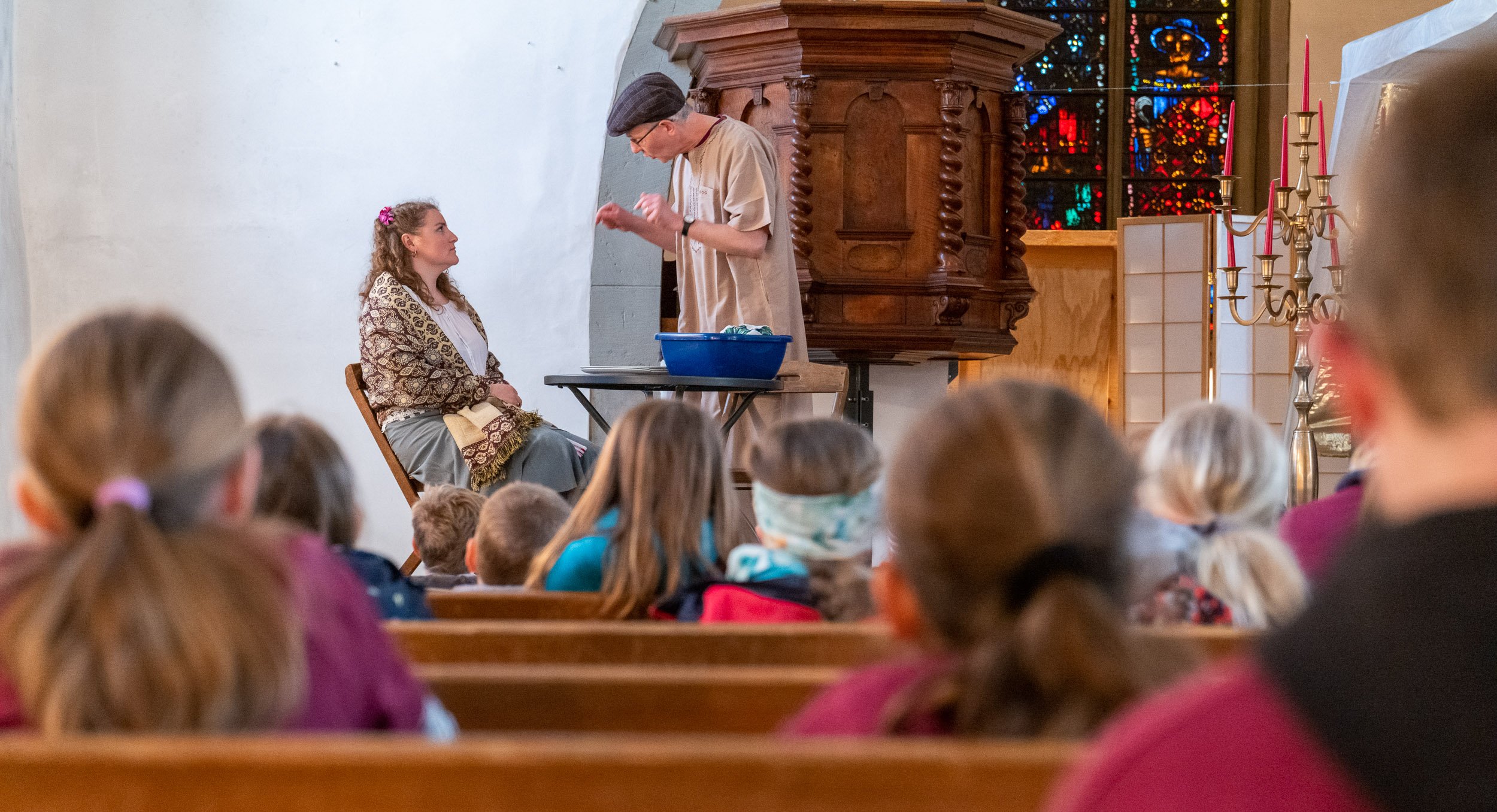
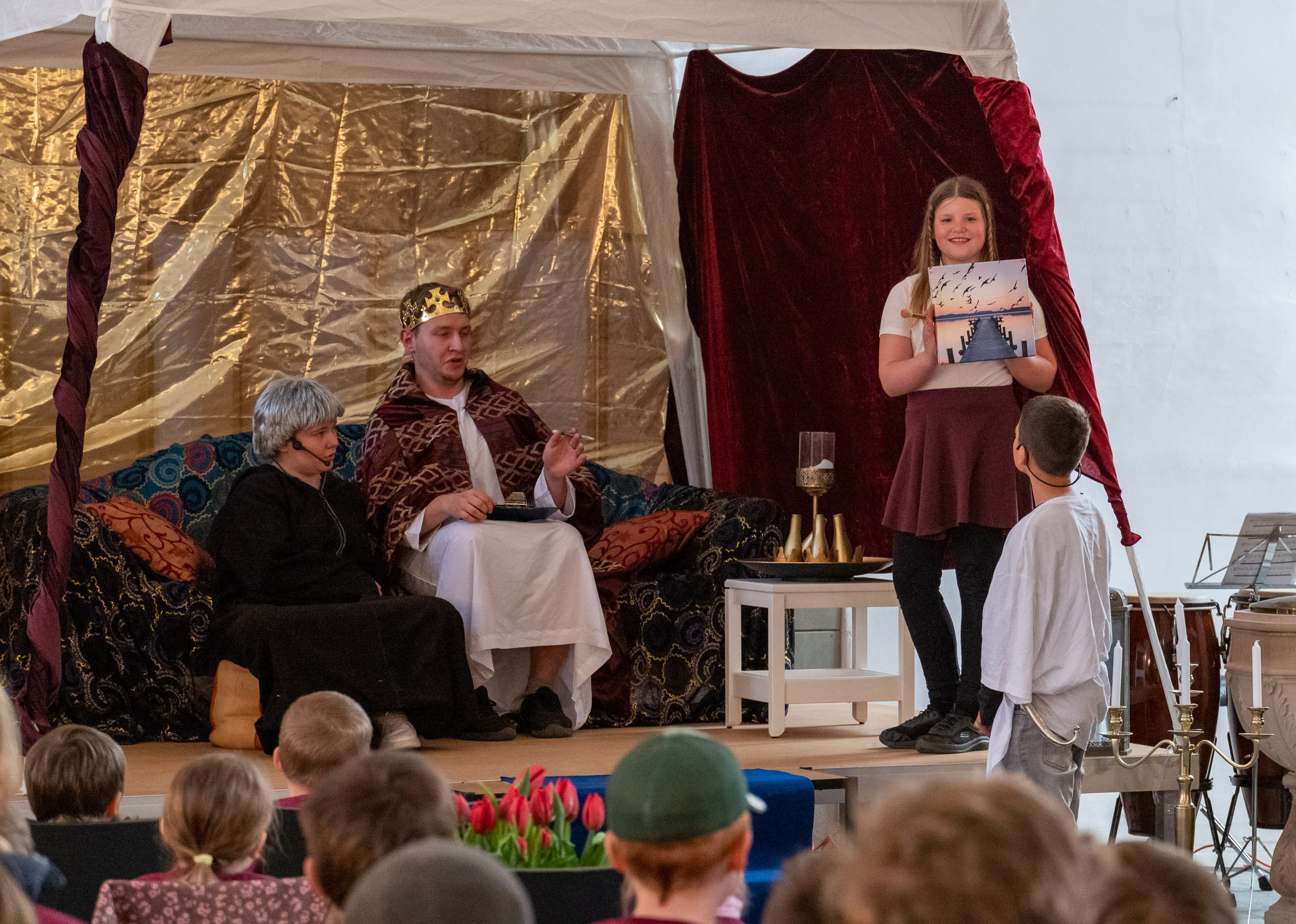
After the COVID-19 break, it's back, and with a bang: the Thayngen Reformed Church's Children's Week. The kids are fully engaged, and the theater is already legendary. This year's theme: Queen Esther.
We'll be posting some impressions every day. All photos by Ursula and Peter Schäublin.
28. April
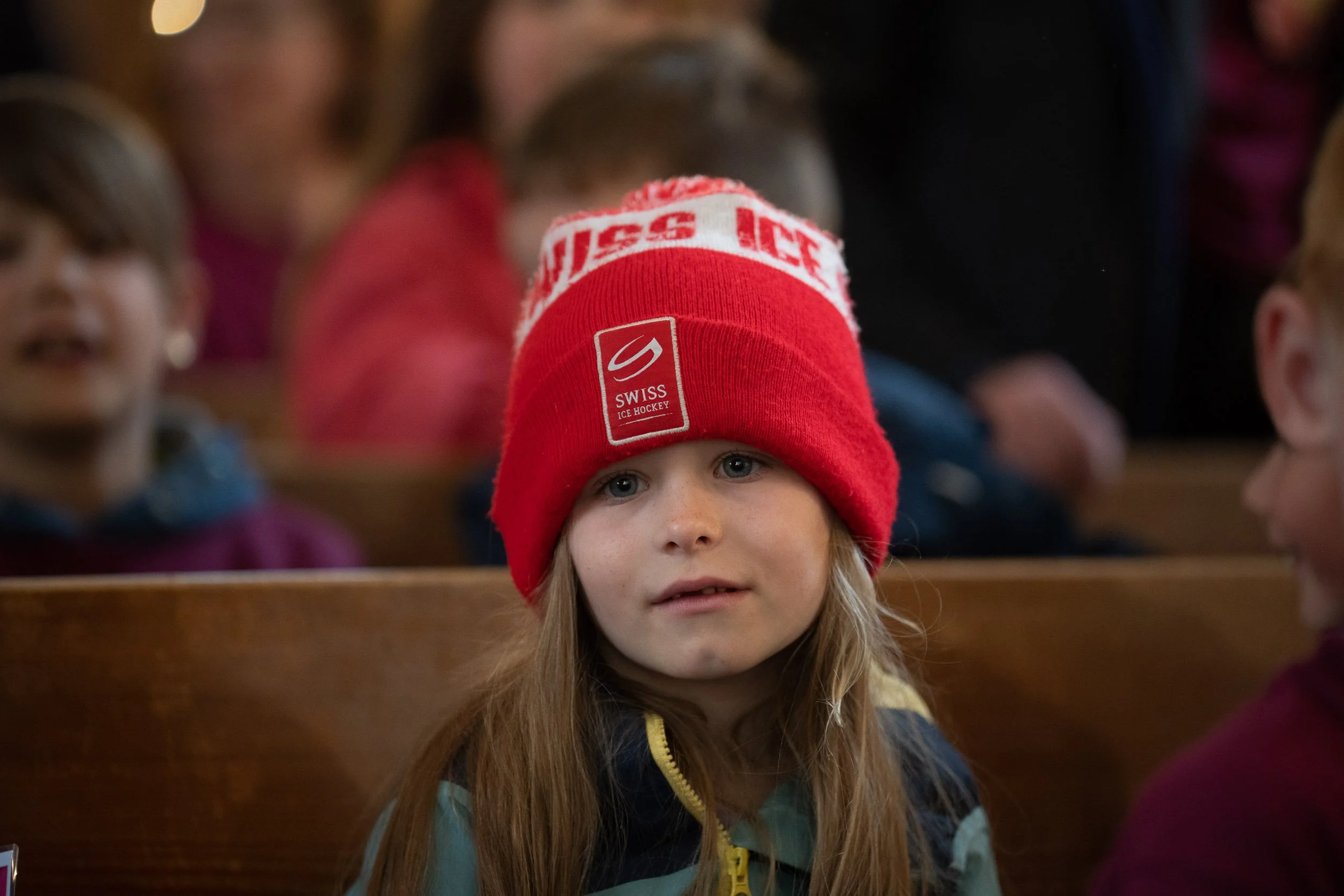

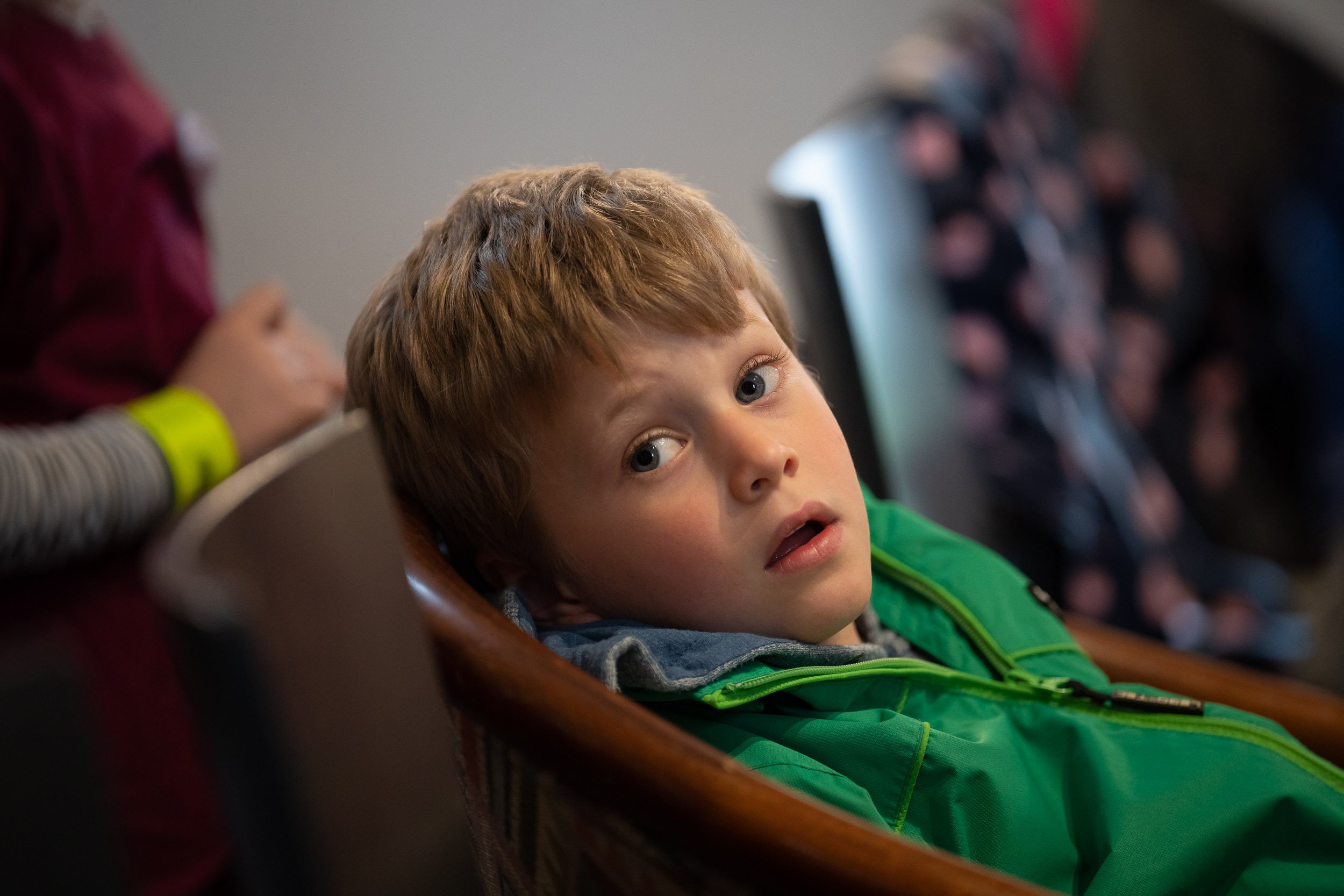


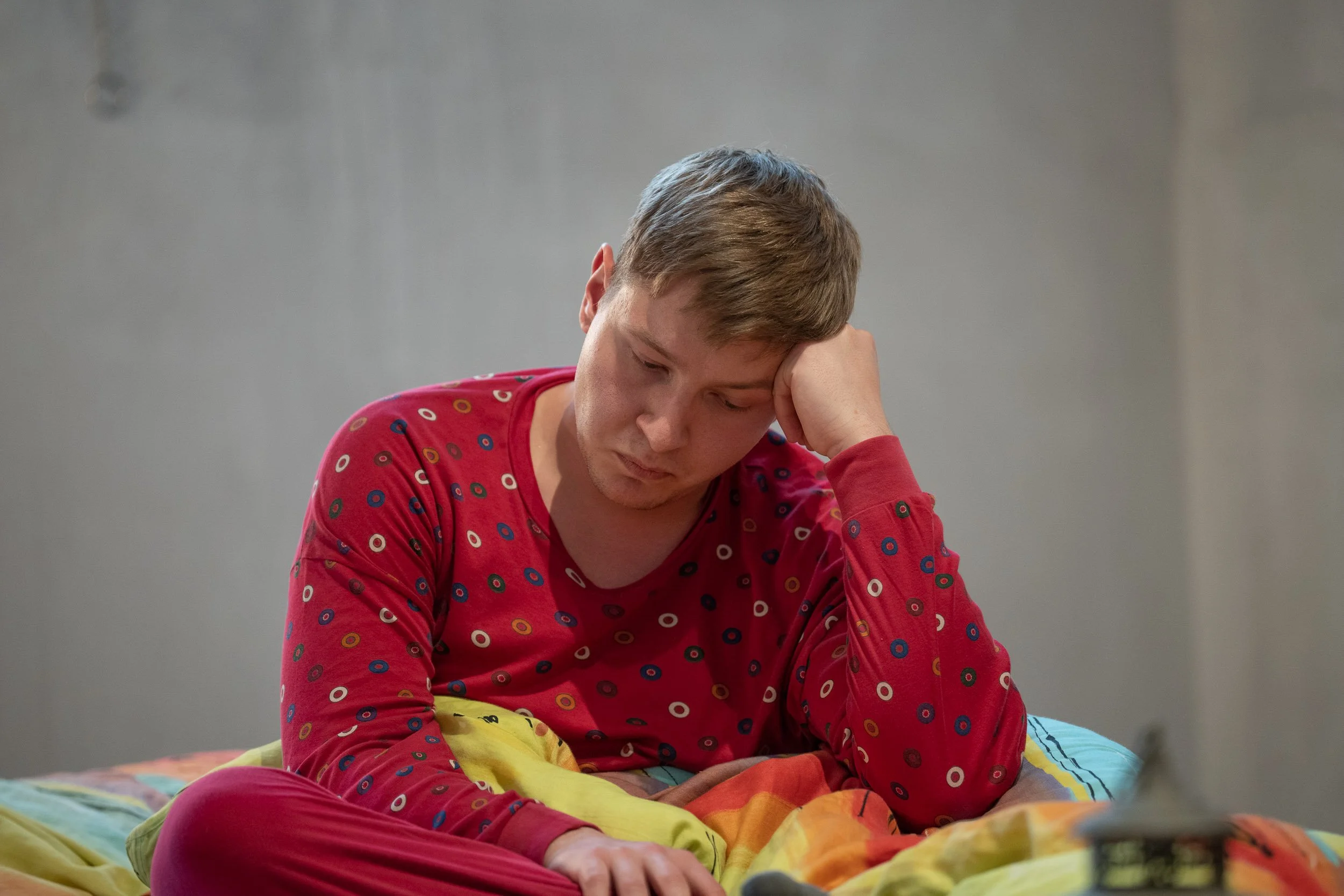


27. April


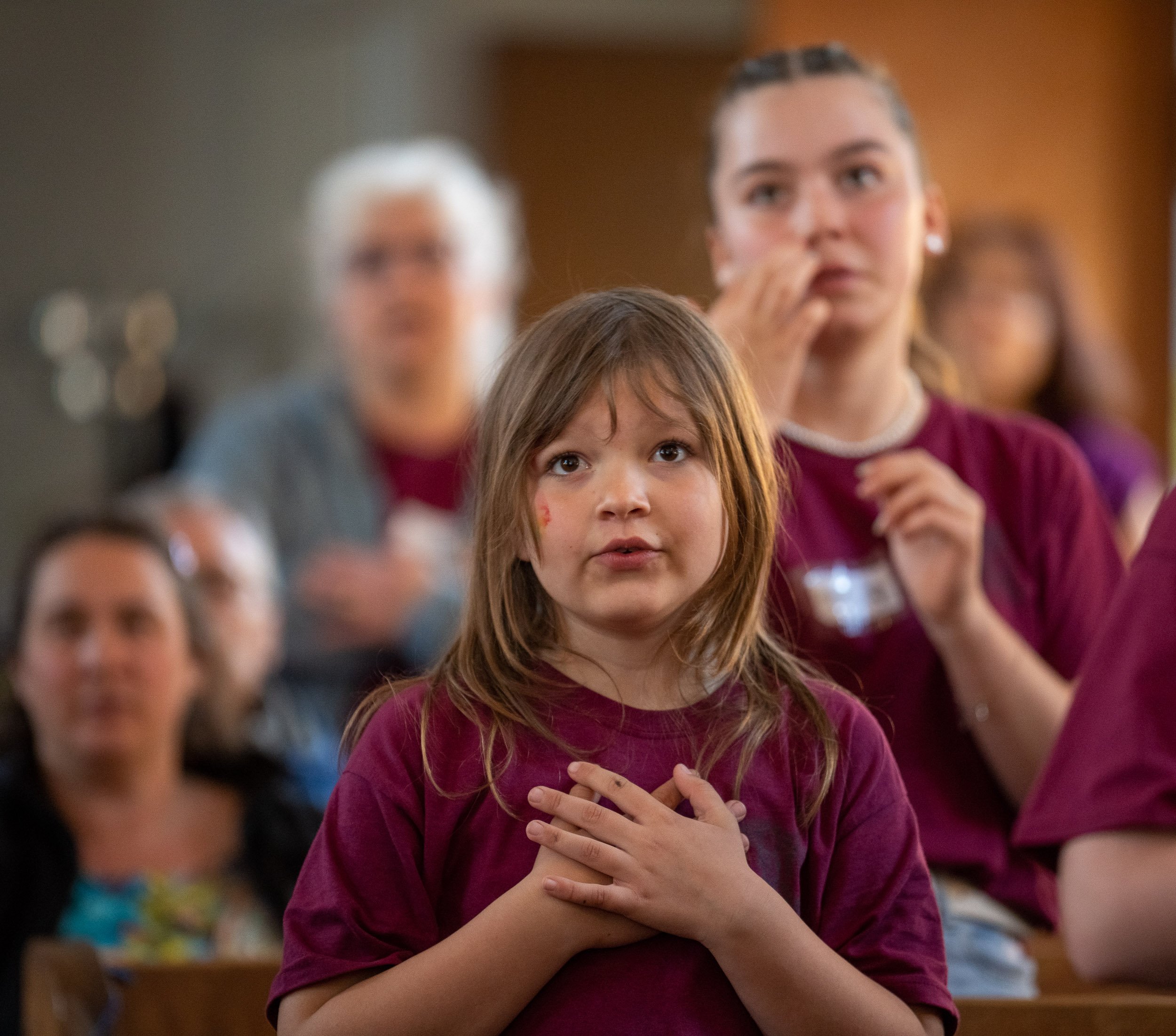








26. April









25. April





















Magnolia 2023
My long-exposure photography experiment with the magnolia tree in our garden is entering its tenth round…
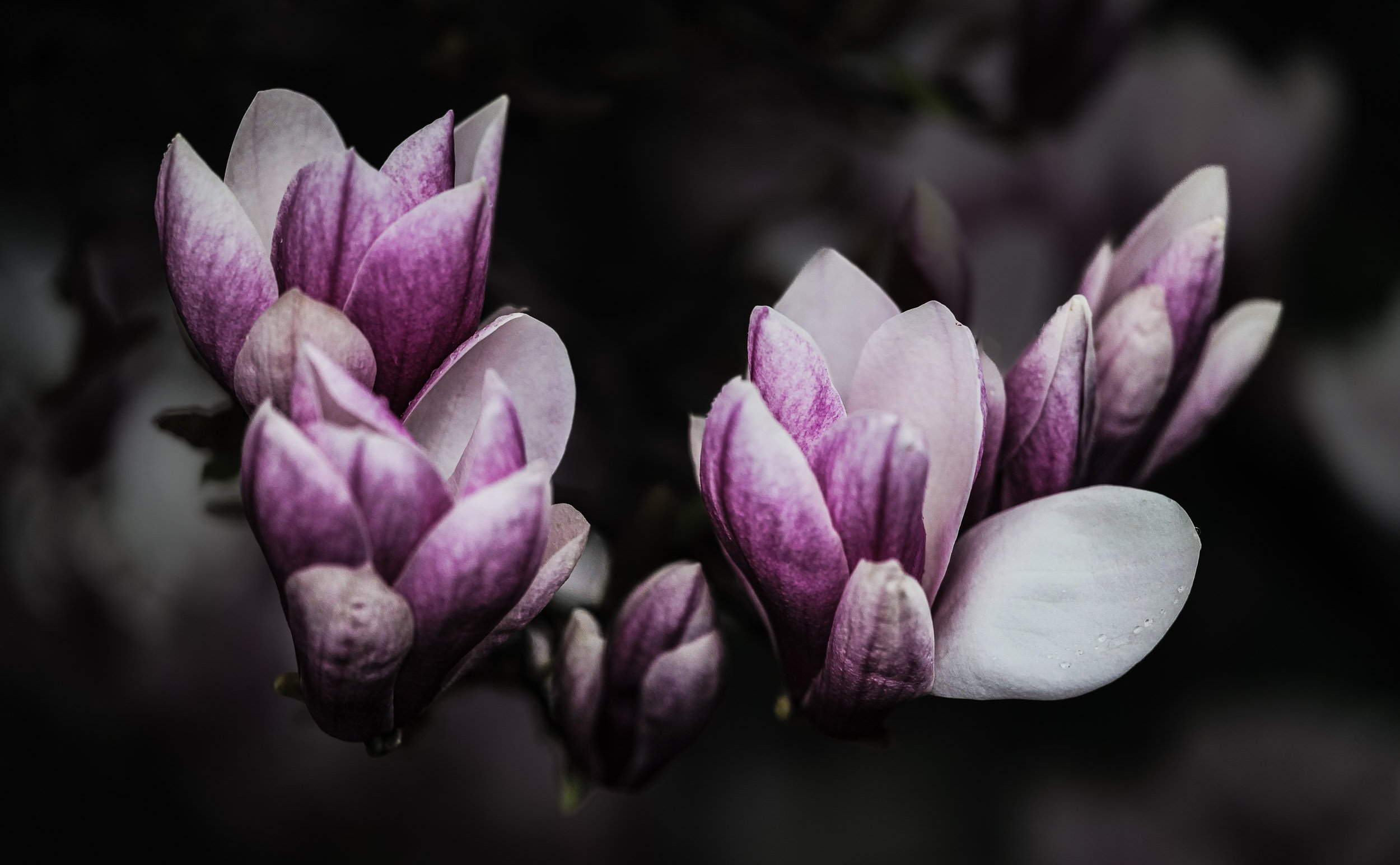
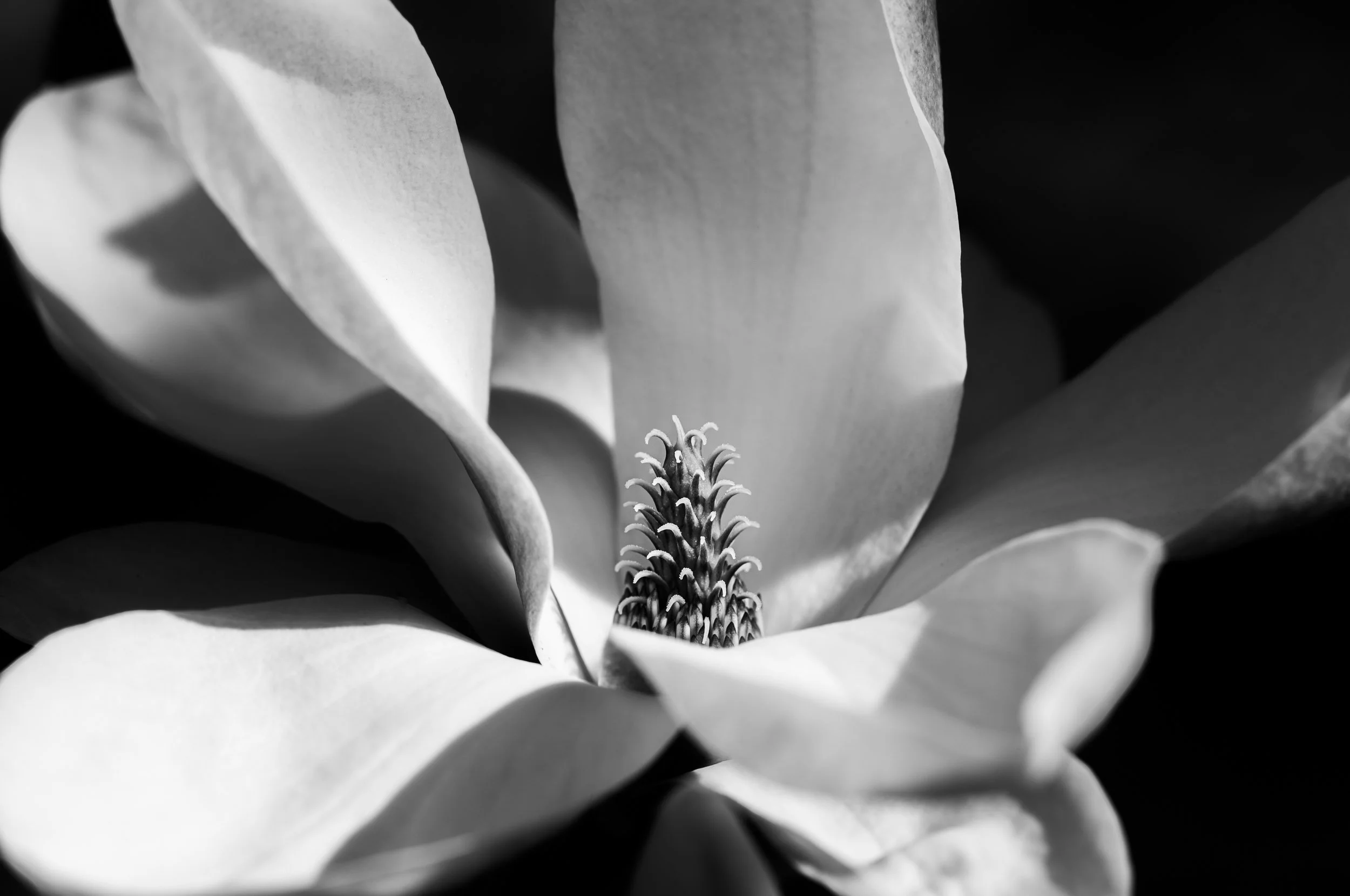
My "magnolia experiment" is entering its tenth year: Since 2014, every year – whenever I'm at home – I've photographed the blooming magnolia tree in our garden. I'm pursuing the theory that, on the one hand, my perception changes, and the style of the images is also influenced by the camera I use to create them. I consciously try to use a variety of cameras. In the nine years since, I've used eight different cameras.
This year, I shot with one camera and two prime lenses, and I wanted to create a series that was consistent in mood. To achieve this, I also worked with Adobe Lightroom's new AI masks.
Here's the updated gallery with the most recent shots. If you scroll down, you'll also see older shots, dating back to 2014. For the camera freaks, I've noted which camera I used.
2023
Leica SL2 with the two fixed focal lengths SL 35 mm and SL 90 mm
I limited myself to two fixed focal lengths.




2022
Leica S3, Leica SL2, Sony a1
For the first time, I photographed with more than one camera. Variety is the spice of life ;-).



2021
Leica SL2
In 2021, I missed the flowering period, so the yield was relatively poor.


2020
Leica SL2


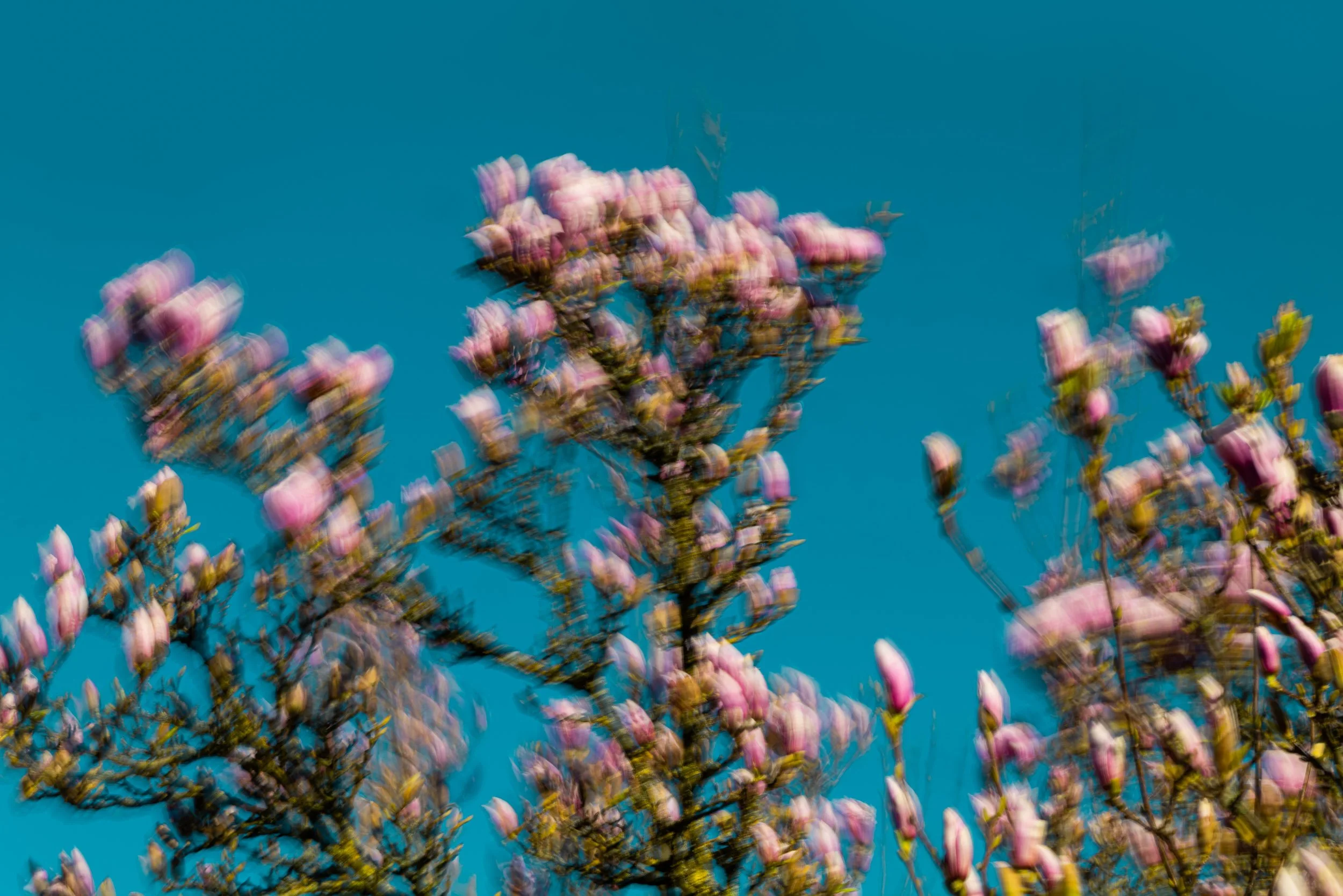


2019
Fujfilm GFX100


2018
Leica CL


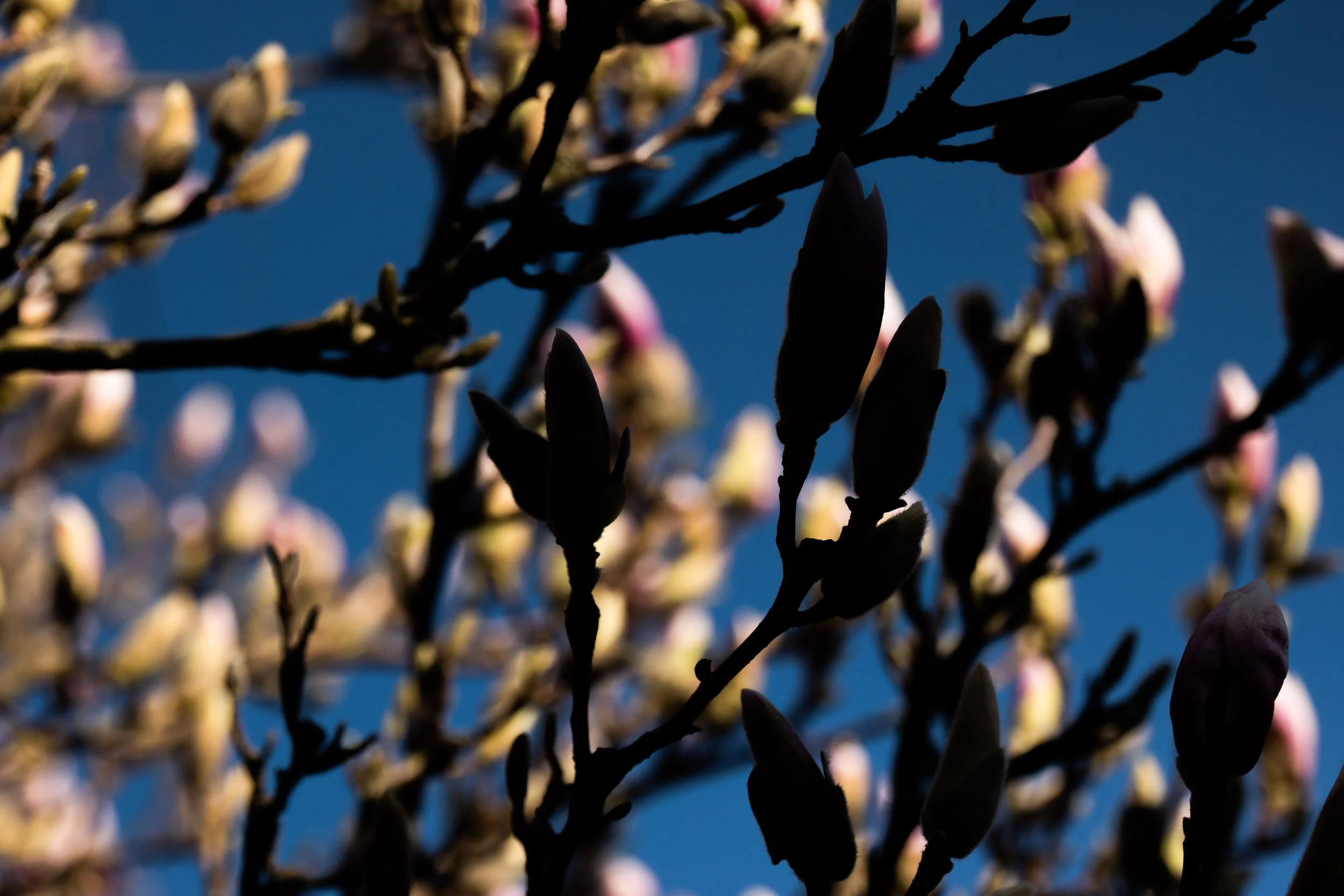


2017
Panasonic GH5


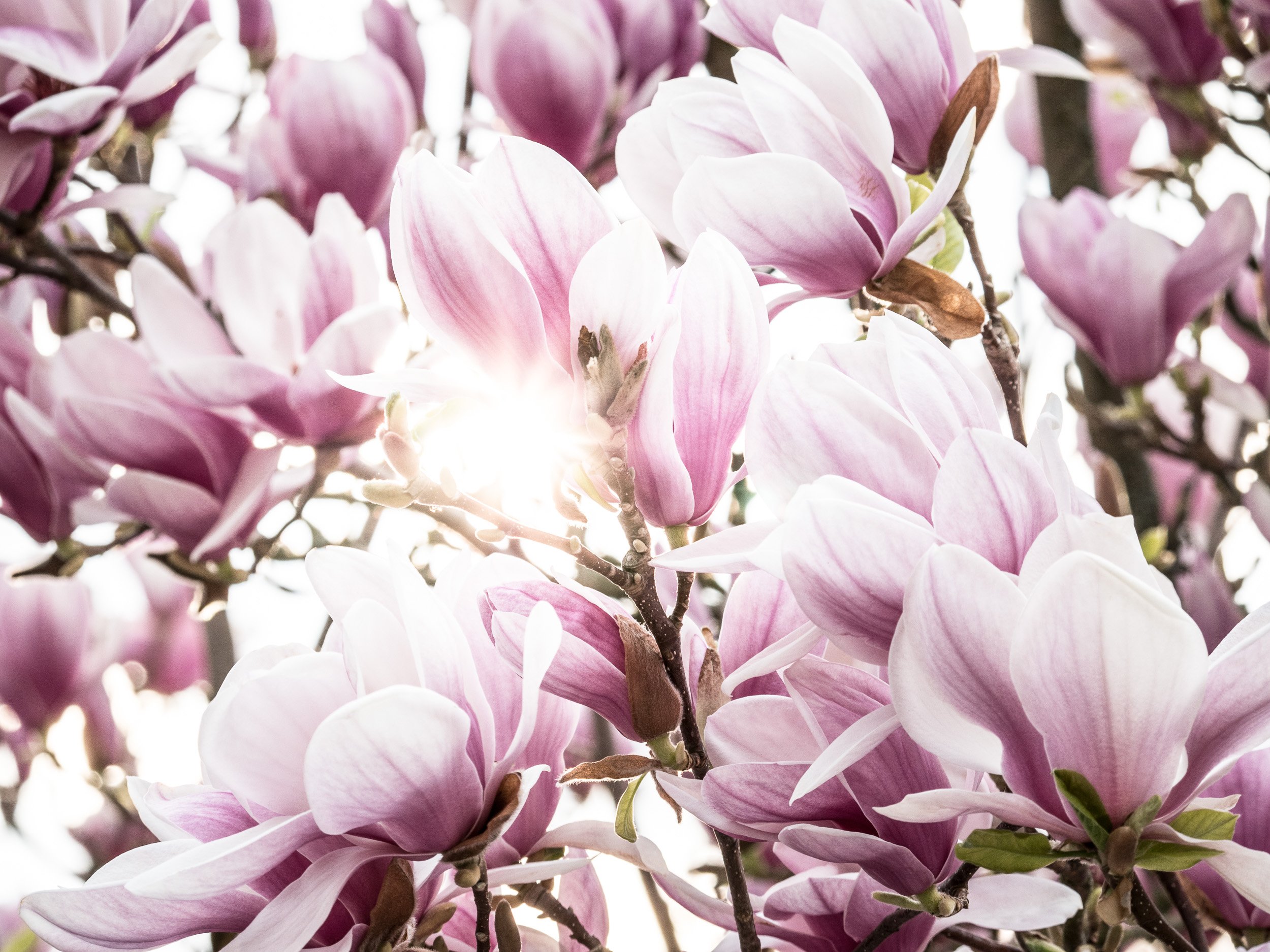
2016
Leica SL
The Leica SL was definitely a boost for my photography. Mirrorless photography with targeted over- and underexposure was (and still is) a brilliant experience. Moreover, the only lens available at the beginning—the SL 24-90mm—exhibited a quality that I had previously only experienced with prime lenses in the 35mm DSLR range.


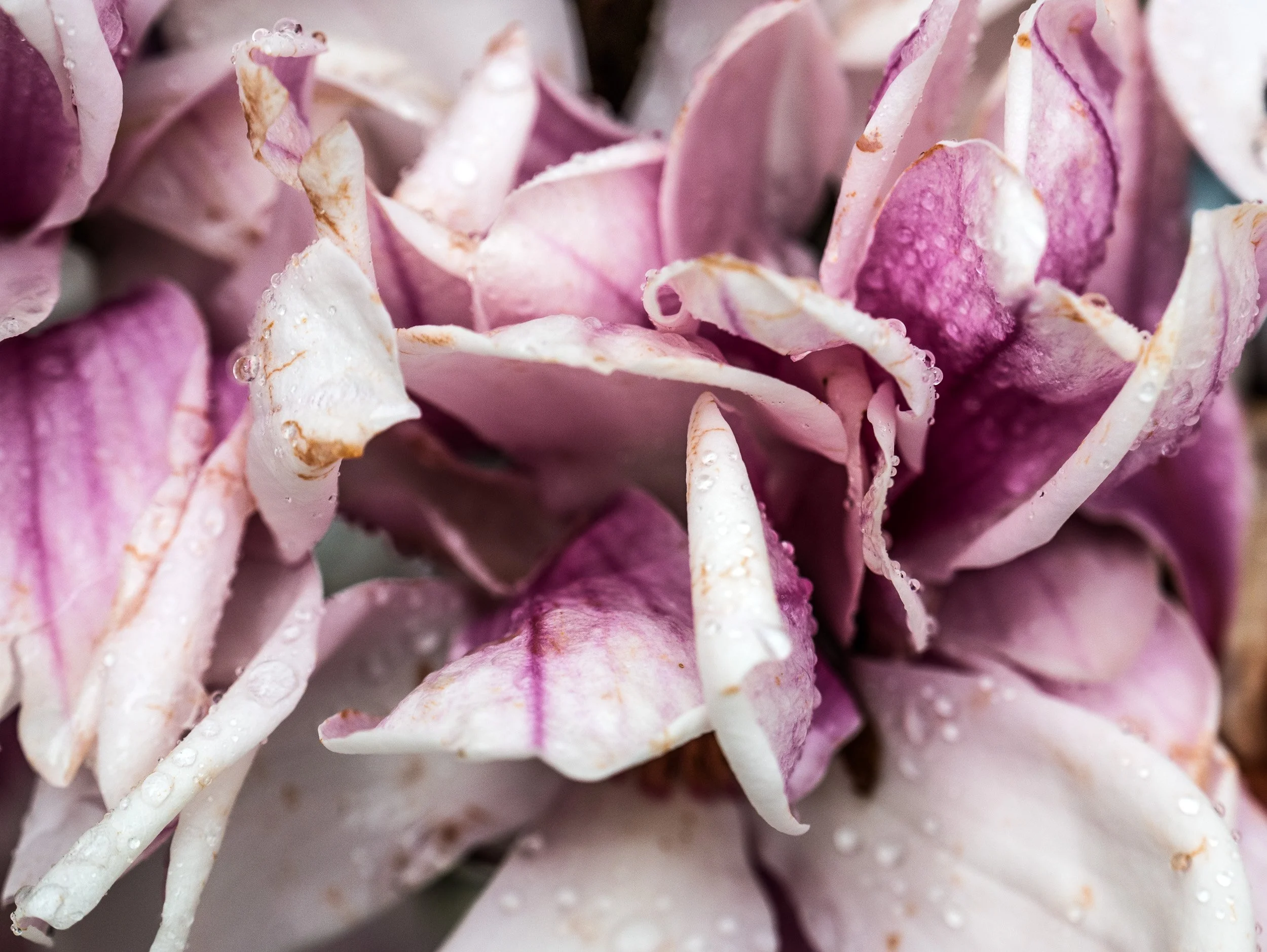
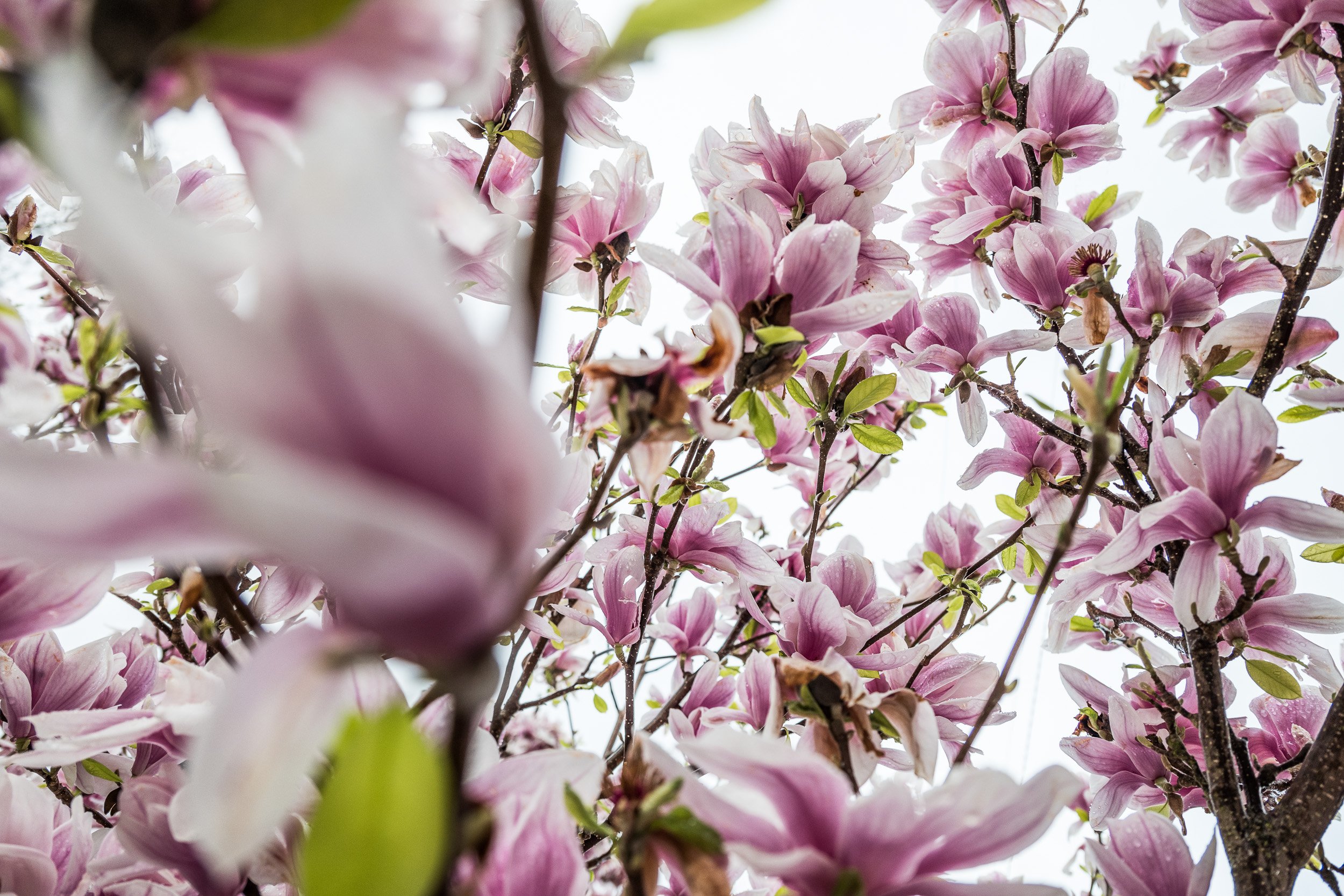


2015
Nikon D810


2014
Nikon D810


Impressions from the camera day course
For the first time, I gave a one-day course on "conscious photography." Perhaps this might be something for you?
The simplicity of conscious photography
In my photography course in Rasa TI, I teach participants the three areas of camera control, handling light, and image editing. The wish has been repeatedly expressed that these modules could be taken individually. Last year, for example, I held a one-day course on image editing with Adobe Lightroom , and now four participants have learned the secrets of conscious photography in a one-day course . After this day, they were all able to understand what their camera does and how they can influence the effect of the image by setting the parameters. First, there was a bit of theory, and then we moved straight into practical exercises in the 720-degree photo studio, and after dinner, in Schaffhausen at night.

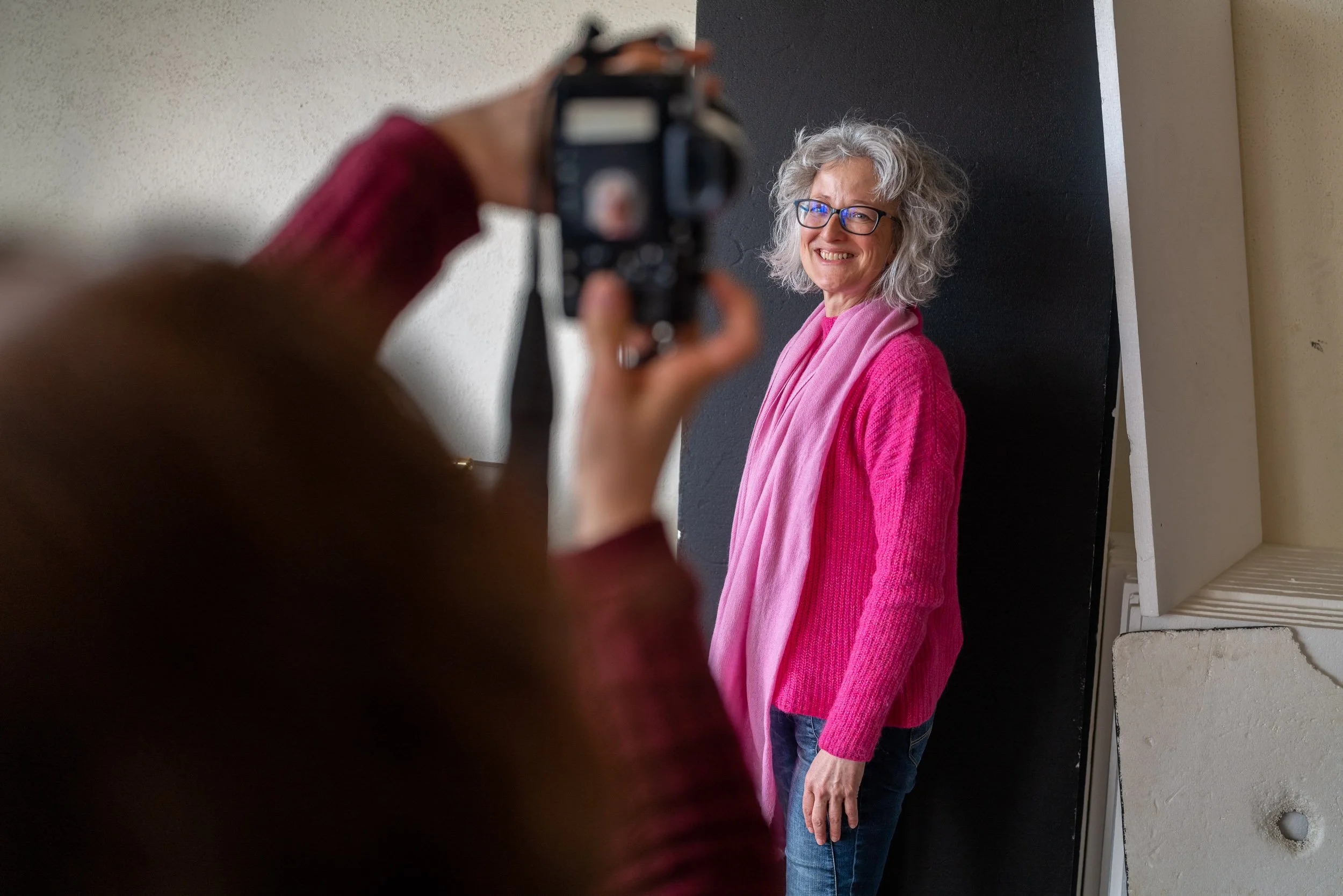

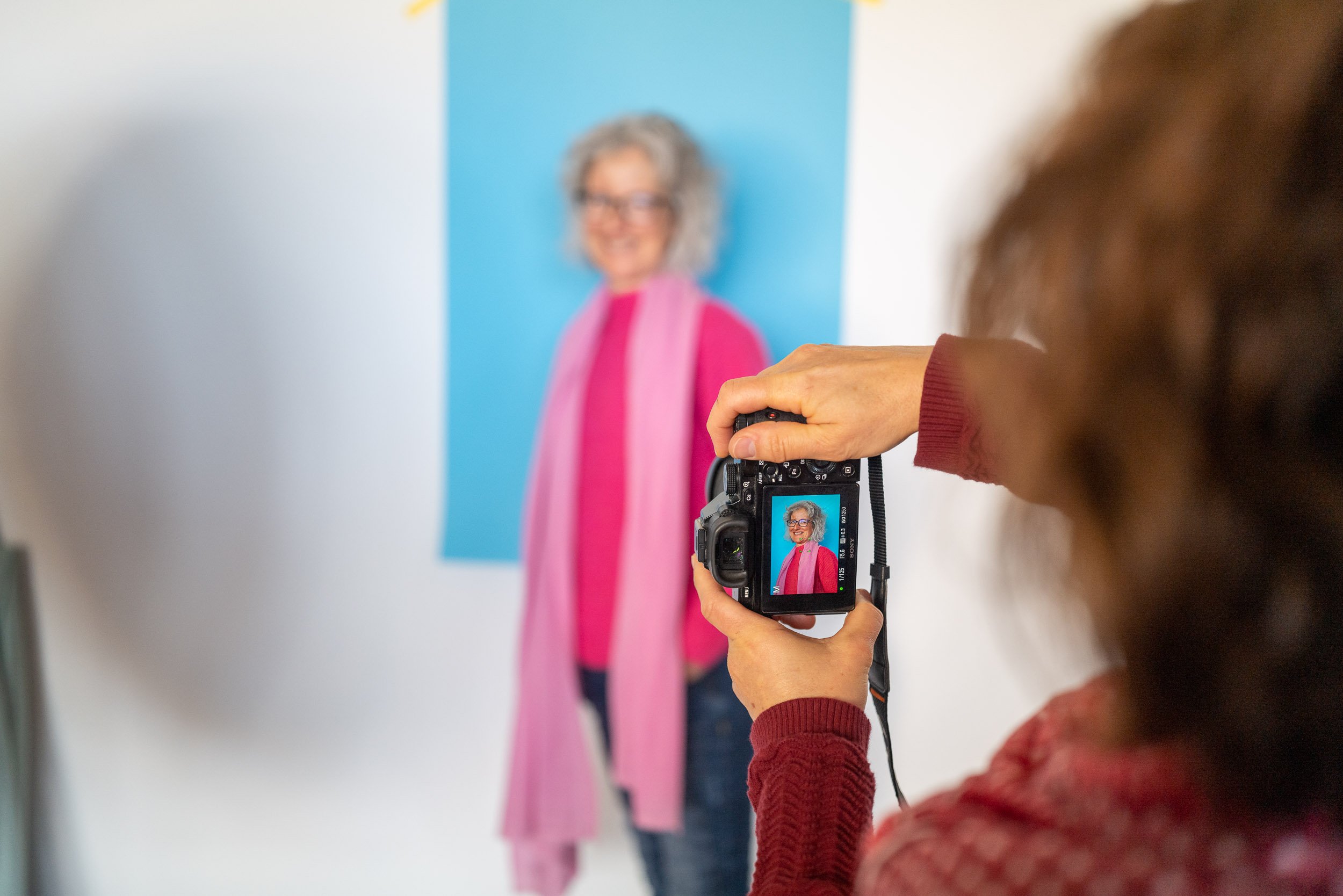


Pictures above: The participants immediately put what they have learned in theory into practice.
At the end of the course day, everyone agreed:
We now understand how a camera works and what we can influence with the different settings. Now it's time to put the knowledge we've gained into practice and practice as much as possible.
After dinner, we set off to explore the topic of "photography in the dark" in Schaffhausen at night, and even experiment a bit. The next course for beginners in conscious photography is scheduled for Saturday, May 18, 2024. If there is a lot of interest, I will offer another course in the fall (just send us an email if you are interested in a fall course). If you would like to be informed about new course dates, subscribe to our newsletter .


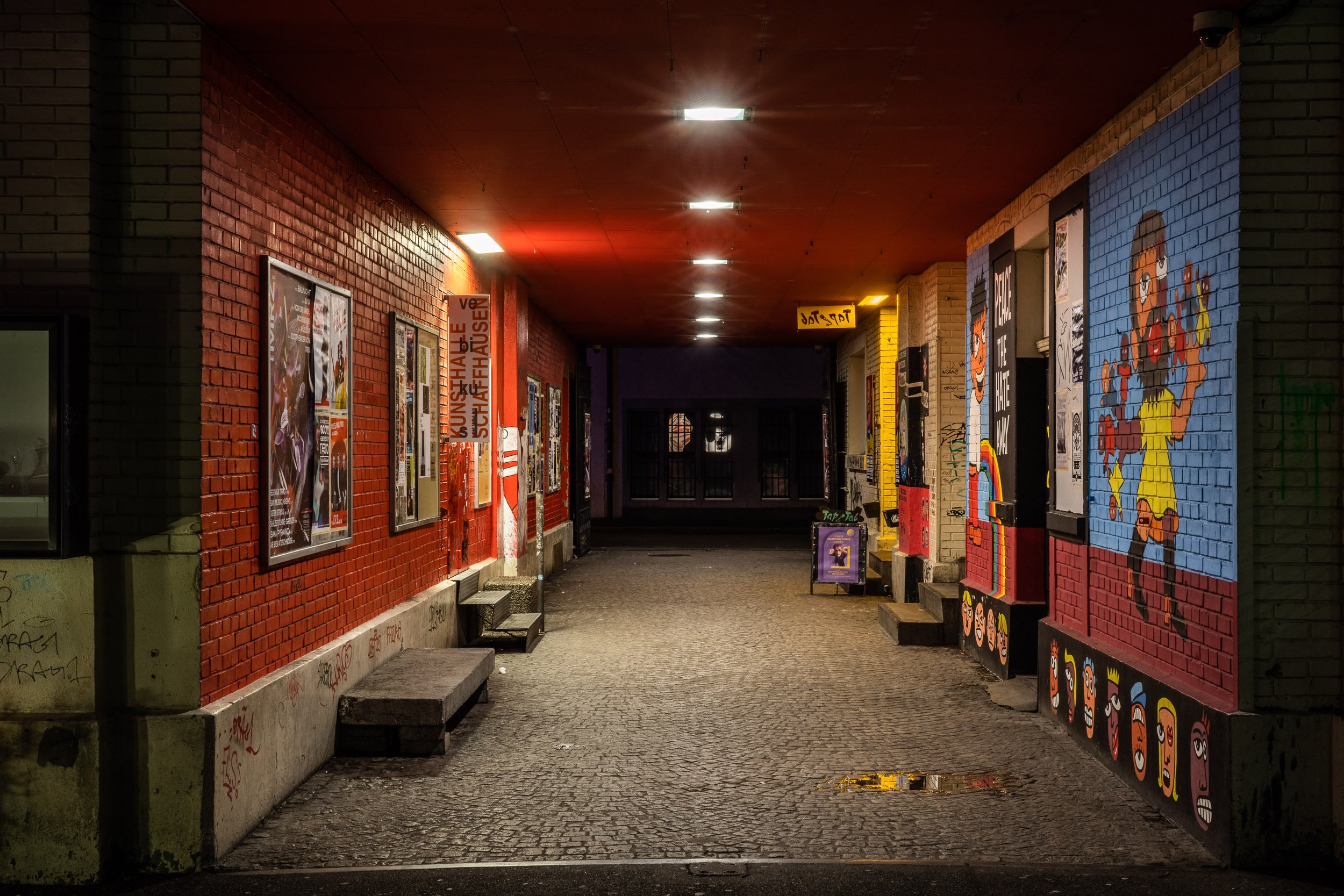

Above: Some impressions and results from the nighttime stroll through Schaffhausen.
Below: The participants took photos of each other and immediately applied their knowledge of shutter speed, aperture and ISO in practice.


New short film about ALTITUDE
It's always exciting when another editor puts together a video with our footage. Matthew Kostamo from Canada edited a cool short film about ALTITUDE using our clips.
Versatile material
A video/photo project always generates a lot of footage, of which only a small portion ends up in the finished product. The editor's intuition and personal taste determine which clips are used.
That's why it was very exciting for me to see what another film editor would do with the material from Daniel Rimann and me. Matthew Kostamo from Canada put together a nearly five-minute short film about ALTITUDE for Himalayan Life. Some scenes were also used in the trailer/film I edited, others were not.
Matthew did a great job, so I'd like to show you his version:

New homepage for personal photo projects
A new website for Peter Schäublin's personal photo and film projects
I've long wanted to develop my own, simple website for my personal photography and film projects. Now it's here – the new peterschaeublin.com homepage . Simple and with little text, but plenty of images. Immerse yourself in this world of images and let yourself be surprised...
Distinguishing between personal and commercial photo projects isn't always easy. Often, a commissioned project also results in a series of personal images, or vice versa. Therefore, certain motifs can be found both on the new website and in the photo section of the 720-degree website .

Simple and not even with a header navigation, but with even more photos when you click on the individual images: the new peterschaeublin.com homepage